
The Hindu New Year is more than a change of date on the calendar; it is a deeply spiritual and cultural moment that symbolizes renewal, fresh beginnin
The Hindu New Year is more than a change of date on the calendar; it is a deeply spiritual and cultural moment that symbolizes renewal, fresh beginnings, and harmony with nature. Observed across India and by Hindu communities worldwide, the Hindu New Year reflects the diversity and richness of Hindu traditions while carrying a shared message of hope, gratitude, and inner growth. With its gentle rituals, festive spirit, and philosophical depth, the Hindu New Year invites individuals to pause, reflect, and step forward with positive intentions.
The Meaning and Spiritual Essence of the Hindu New Year
At its heart, the Hindu New Year represents the cyclical nature of time. Unlike linear calendars, Hindu philosophy views time as a continuous flow of creation, preservation, and renewal. The New Year marks a symbolic rebirth, reminding people that every ending naturally leads to a new beginning. This belief encourages acceptance, resilience, and faith in life’s rhythms.
Spiritually, the Hindu New Year is a time for cleansing the mind and soul. People seek forgiveness for past mistakes, express gratitude for lessons learned, and pray for wisdom in the year ahead. It is not merely about external celebration but also about inner transformation, aligning one’s actions with values such as truth, compassion, and balance.
Different Hindu New Year Traditions Across Regions
One of the most beautiful aspects of the Hindu New Year is its diversity. Since Hinduism follows multiple regional calendars, the New Year is celebrated on different dates and under different names. Despite these variations, the essence remains the same: welcoming prosperity, peace, and positivity.
In many parts of India, the Hindu New Year begins with Ugadi, Gudi Padwa, or Cheti Chand, typically falling in March or April. In regions like Bengal, Assam, and Odisha, it is observed as Pohela Boishakh, Bohag Bihu, or Pana Sankranti. In the south, festivals such as Ugadi and Vishu mark the New Year, while in Gujarat and some northern regions, Diwali is considered the start of the new calendar year.
Each celebration reflects local customs, food, attire, and rituals, yet all share the same underlying message of renewal and optimism.
Rituals and Practices That Mark the Hindu New Year
The Hindu New Year often begins with early morning rituals that set a peaceful tone for the day. Homes are cleaned thoroughly, symbolizing the removal of negativity and stagnation. Many people decorate their entrances with rangoli or kolam, inviting positive energy and prosperity into their homes.
Visiting temples is a common practice, where devotees offer prayers and seek blessings for health, success, and spiritual growth. Reading sacred texts or listening to religious discourses helps individuals reconnect with ancient wisdom and moral guidance. These rituals, though simple, carry deep meaning and provide a sense of grounding.
Traditional Foods and Their Symbolism
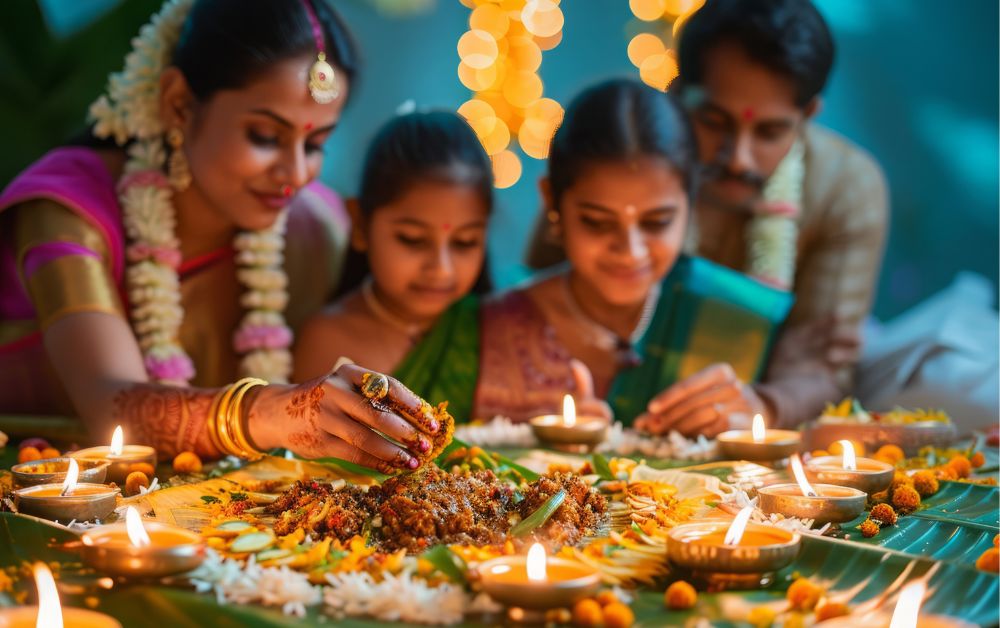
Food plays a central role in Hindu New Year celebrations, with each dish holding symbolic value. Many festivals include a balance of flavors—sweet, sour, bitter, salty, and spicy—representing the different experiences of life. This reminds people to accept both joy and challenges with grace.
For example, during Ugadi, a special dish made with neem flowers, jaggery, tamarind, and raw mango is prepared. Its mixed flavors symbolize the unpredictable nature of life, teaching acceptance and resilience. Sharing meals with family and neighbors strengthens bonds and reinforces the spirit of togetherness.
The Hindu New Year and Its Connection to Nature
The timing of the Hindu New Year is closely linked to nature and astronomy. Most Hindu calendars are lunar or lunisolar, aligning festivals with the movement of the sun and moon. The New Year often coincides with the arrival of spring, a season associated with growth, fertility, and renewal.
This connection to nature reflects a deep respect for the environment. It reminds people that human life is interconnected with the natural world, encouraging sustainable living and gratitude for Earth’s resources. The changing seasons become a metaphor for personal growth and transformation.
Cultural Significance and Social Harmony
Beyond religious observance, the Hindu New Year is a cultural celebration that brings communities together. Markets become lively with festive colors, traditional clothes, and handmade decorations. Music, dance, and storytelling add warmth and joy to the atmosphere.
Families gather to exchange greetings and blessings, strengthening emotional connections. Elders share wisdom and stories, passing traditions to younger generations. This continuity helps preserve cultural identity while fostering respect and unity within society.
The Hindu New Year in Modern Times
In today’s fast-paced world, the Hindu New Year continues to hold relevance. While lifestyles have changed, the core values of reflection, gratitude, and renewal remain meaningful. Many people now combine traditional rituals with modern practices, such as setting personal goals, practicing mindfulness, or engaging in community service.
For Hindu communities living abroad, the New Year becomes an important way to stay connected to their roots. Celebrations abroad may be smaller, but they carry a strong emotional significance, reinforcing identity and belonging.
Personal Reflection and New Beginnings
The Hindu New Year gently encourages introspection. It is a time to look inward, assess personal growth, and realign life’s direction. Rather than focusing solely on material success, it emphasizes balance between material and spiritual well-being.
This reflective aspect makes the Hindu New Year universally relatable. Even those outside the faith can appreciate its message of renewal, kindness, and mindful living. It serves as a reminder that every day offers an opportunity to start anew.
Conclusion
The Hindu New Year is a timeless celebration that beautifully blends spirituality, culture, and nature. It is not just about marking the passage of time but about honoring life’s cycles and embracing change with hope and humility. Through its rituals, traditions, and deeper philosophy, the Hindu New Year inspires people to live with awareness, gratitude, and compassion. Whether celebrated in a grand community gathering or a quiet personal prayer, its essence remains the same: a gentle invitation to begin again with faith and positivity.
Frequently Asked Questions
When is the Hindu New Year celebrated?
The Hindu New Year is celebrated on different dates depending on regional calendars, often between March and April, and in some regions during Diwali.
Why does the Hindu New Year vary by region?
Hinduism follows multiple lunar and lunisolar calendars, which leads to regional variations in New Year dates and names.
What is the spiritual importance of the Hindu New Year?
It symbolizes renewal, self-reflection, and alignment with nature and spiritual values.
How do people typically celebrate the Hindu New Year?
Celebrations include home cleaning, prayers, temple visits, festive meals, and family gatherings.
Can the Hindu New Year be celebrated by non-Hindus?
Yes, its universal themes of renewal, gratitude, and hope make it meaningful for anyone seeking a fresh start.

COMMENTS