
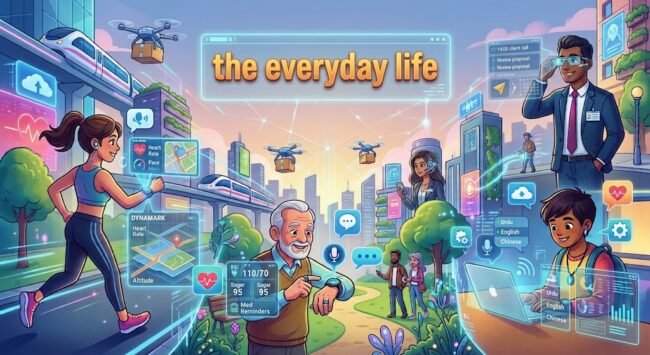
Artificial intelligence is becoming an important part of everyday life, changing how people communicate, work, learn, and manage their daily activities. While AI assistants have traditionally been accessed through smartphones and computers, wearable technology is introducing a more natural way to interact with intelligent systems. Smart glasses, AI-powered watches, earbuds, and other wearable devices are bringing artificial intelligence closer to users throughout the day.
The concept of a wearable AI agent goes beyond simply providing answers to questions. These intelligent systems can understand context, respond to voice commands, support everyday tasks, and help users make decisions. As wearable technology continues to improve, its most valuable applications are becoming increasingly practical.
The wearable AI agent killer use case refers to an application so useful that it encourages people to adopt and regularly use AI-powered wearable devices. From hands-free assistance to real-time translation and personalized productivity, these technologies have the potential to change how people interact with the digital world.
In this article, we will explore the most important wearable AI agent use cases, their benefits, and how they may influence everyday life.
What Is a Wearable AI Agent?
A wearable AI agent is an artificial intelligence system integrated into a wearable device that can assist users with different activities. These devices may include smart glasses, smartwatches, wireless earbuds, pendants, or other connected accessories.
Unlike traditional wearable devices that primarily track information or display notifications, AI-powered wearables can provide more interactive and personalized experiences.
For example, a wearable AI assistant may help a user remember an appointment, summarize information, answer questions, or provide contextual assistance while performing a task.
Some wearable AI systems use voice recognition, cameras, microphones, sensors, and internet connectivity to understand user requests. Their capabilities depend on the hardware, software, available AI models, and permissions provided by the user.
The main goal is to make AI assistance more accessible without requiring people to constantly look at their smartphones.
Top Killer Use Cases of Wearable AI Agents
1. Hands-Free Personal Assistance
One of the most promising applications of wearable AI agents is hands-free personal assistance. People often need quick answers or reminders while driving, walking, cooking, or working.
Wearable AI devices can provide assistance through voice commands, allowing users to interact with AI without opening an application or typing on a screen.
For example, someone preparing dinner could ask a wearable AI assistant to convert a recipe into simple steps, set a timer, or suggest an ingredient replacement.
Similarly, professionals can use wearable assistants to manage reminders, organize tasks, and retrieve information while working.
This convenience makes hands-free assistance one of the strongest potential use cases for wearable AI agents.
2. Real-Time Translation and Communication
Language barriers can make travel, business meetings, and everyday conversations difficult. Wearable AI agents can help address this challenge through real-time translation.
AI-powered earbuds and smart glasses can support spoken communication by translating conversations between different languages.
For example, a traveler visiting another country may use a wearable AI device to understand directions, communicate with local residents, or ask questions at a restaurant.
In professional environments, wearable translation tools may also help international teams communicate more effectively.
Although translation accuracy depends on language support, audio quality, and background noise, this technology can make communication more accessible.
3. Personalized Productivity and Task Management
Wearable AI agents can help users manage their daily responsibilities more efficiently.
Traditional productivity applications require users to manually enter tasks, check calendars, and organize reminders. Wearable AI systems can make these interactions more convenient through voice-based assistance and contextual information.
For example, a user could ask an AI assistant to summarize upcoming appointments, remind them about an important meeting, or help organize a daily schedule.
Some systems may also support meeting summaries and task extraction when appropriate recording permissions are provided.
This can be especially valuable for professionals who frequently move between meetings, offices, and other work environments.
4. Health and Fitness Assistance
Health and fitness represent another important area for wearable AI agents.
Smartwatches and fitness trackers already collect information such as heart rate, physical activity, sleep patterns, and workout performance. AI can help users interpret this information and identify useful patterns.
For example, a wearable AI assistant may provide personalized activity suggestions based on a user’s exercise history or help them understand changes in their sleep routine.
Some systems can also support reminders for movement, hydration, or scheduled activities.
However, wearable AI health insights should not be treated as medical diagnoses. Users should consult qualified healthcare professionals for medical concerns, and health-related AI features should be evaluated for accuracy and reliability.
5. Context-Aware Smart Glasses
Smart glasses are becoming an interesting platform for wearable AI agents because they can combine visual information with hands-free interaction.
Depending on their capabilities, AI-powered glasses may help users identify objects, understand signs, describe surroundings, or access information about something they are viewing.
For example, a person visiting a museum could use compatible smart glasses to ask questions about an exhibit.
In professional environments, smart glasses may also support technicians who need instructions while repairing equipment.
These applications demonstrate how wearable AI can provide information directly within a user’s environment.
6. Memory Assistance and Everyday Reminders
Remembering appointments, conversations, and small details can be difficult when people manage busy schedules.
Wearable AI agents may help users organize information and retrieve important details through voice-based interactions.
For example, a user could save a reminder about where they placed an item or ask an AI assistant to retrieve a previously recorded note.
Some systems may support conversation summaries or personal memory features, depending on their design and privacy settings.
These capabilities can make wearable AI useful for people who want to reduce the mental effort involved in managing everyday responsibilities.
Why Wearable AI Agents Are Becoming More Important
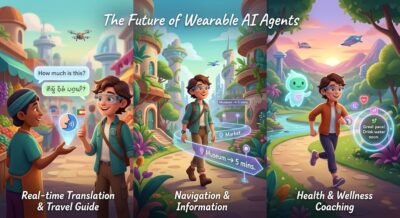
Wearable AI
Several technological developments are making wearable AI agents increasingly practical.
Smaller hardware components allow manufacturers to integrate microphones, cameras, and sensors into compact devices. Improvements in AI models also make it possible to process language, interpret images, and respond to user requests more effectively.
Another important development is the growing availability of cloud-based AI services and on-device processing. Some wearable devices can perform certain tasks locally, while others rely on connected smartphones or remote AI systems.
These developments can improve convenience, but battery life, connectivity, processing limitations, and device cost remain important considerations.
The most successful wearable AI products will likely be those that solve everyday problems without making the user experience unnecessarily complicated.
Challenges and Limitations of Wearable AI Agents
Despite their potential, wearable AI agents still face several challenges.
Privacy Concerns: Devices with microphones and cameras may collect sensitive information. Users need clear controls over recording, data storage, and sharing.
Battery Life: Continuous sensing, audio processing, and AI interactions can consume significant power.
Accuracy: AI systems may misunderstand voice commands, misinterpret visual information, or provide incorrect responses.
Cost and Accessibility: Advanced wearable devices may be expensive, limiting access for some users.
Social Acceptance: People may feel uncomfortable interacting with wearable devices in public, especially when cameras or recording features are involved.
Addressing these challenges will be essential for building trust and encouraging broader adoption.
The Future of Wearable AI Agents
The future of wearable AI agents will likely involve more personalized, context-aware, and convenient digital assistance.
As AI models become more capable and wearable hardware improves, devices may provide increasingly useful support across professional, educational, and personal environments.
Smart glasses could become more effective at providing contextual information, while AI-powered earbuds may offer improved communication and translation features.
Wearable AI agents may also become better at coordinating with smartphones, computers, calendars, and other connected services.
However, their long-term success will depend on more than technological innovation. Privacy, reliability, comfort, affordability, and practical usefulness will remain important factors.
The most successful products will likely be those that integrate naturally into everyday routines rather than requiring users to change how they live or work.
Frequently Asked Questions (FAQs)
1. What is the best killer use case for wearable AI agents?
Hands-free personal assistance is one of the strongest potential use cases because it allows users to access information, manage tasks, and receive assistance without constantly using a smartphone.
2. How are wearable AI agents different from smartwatches?
Traditional smartwatches primarily track activity, display notifications, and provide basic applications. Wearable AI agents can offer more interactive assistance through voice commands, contextual information, and AI-powered features.
3. Can wearable AI agents help with real-time translation?
Yes. Compatible wearable devices can support real-time translation of spoken conversations, although accuracy and language availability vary by product.
4. Are wearable AI agents useful for businesses?
Yes. Businesses can use wearable AI agents for hands-free assistance, task management, communication, training, and certain operational workflows.
5. Are wearable AI agents safe to use?
They can be useful, but users should understand their privacy settings, recording capabilities, and limitations. AI-generated information should also be verified when accuracy is important.
Conclusion
Wearable AI agents are creating new opportunities for people to interact with artificial intelligence throughout their daily lives. From hands-free assistance and real-time translation to personalized productivity and health insights, these devices can make AI more accessible and convenient.
The most powerful wearable AI agent killer use cases are those that solve real problems without introducing unnecessary complexity. As wearable technology continues to improve, AI-powered devices may become valuable tools for communication, work, learning, and everyday activities.
Although challenges involving privacy, accuracy, battery life, and affordability remain, the potential of wearable AI agents is significant. Their future will depend on how effectively developers combine intelligent software with practical, user-friendly hardware.
Ultimately, wearable AI agents are not simply about putting artificial intelligence into smaller devices. They are about creating more natural ways for people to access useful information and assistance whenever they need it
Related articles
Keep reading more from this topic.

Turbo AI for Students: How to Make Learning Easier
Studying can sometimes feel overwhelming, especially when students have multiple subjects, lengthy lectures, assignments,…
What Is appKey.ai? A Complete Guide to Its Features and Benefits
Introduction Artificial intelligence is changing the way businesses manage their daily operations, create content,…
SamanthaAI vs Zeta AI Chat: Features, Benefits, and Key Differences
Introduction Artificial intelligence is changing the way people interact with digital entertainment. From virtual…
COMMENTS