
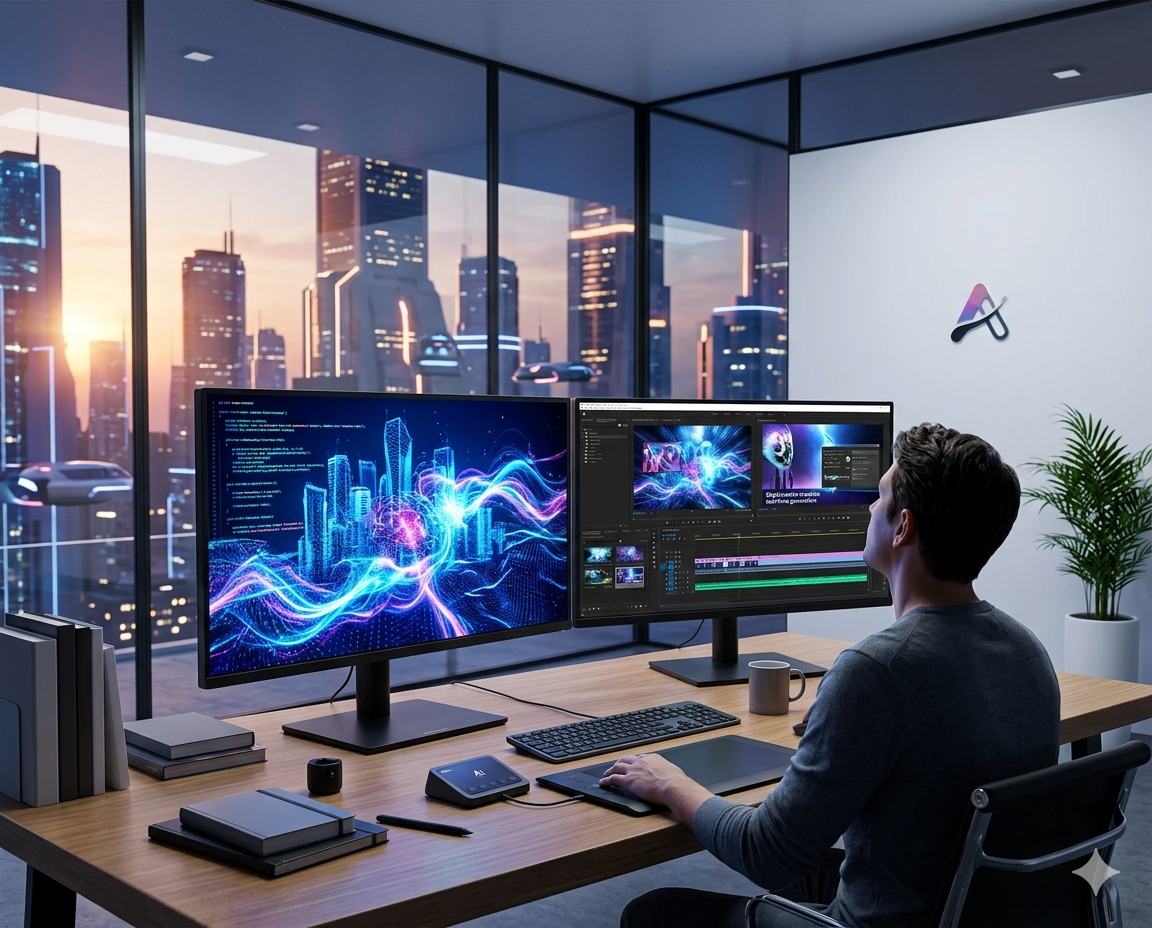
Introduction The digital content landscape is experiencing a dramatic transformation driven by artificial intelligence. What once required profession
Introduction
The digital content landscape is experiencing a dramatic transformation driven by artificial intelligence. What once required professional designers, photographers, videographers, and creative teams can now be accomplished in minutes using advanced AI tools. This shift, often referred to as The AI Visual Revolution, is changing how businesses, marketers, creators, and brands produce visual content. From creating realistic artwork to generating marketing videos and social media graphics, AI is redefining the creative process. As technology continues to evolve, organizations are discovering new ways to leverage AI-generated images, automate workflows, and enhance audience engagement. The AI Visual Revolution is not simply a technological trend it represents a fundamental change in the future of content creation.
Understanding The AI Visual Revolution
The AI Visual Revolution refers to the rapid adoption of artificial intelligence technologies for creating, editing, and enhancing visual media. These systems use advanced machine learning models to generate images, videos, illustrations, animations, and graphics based on user instructions.
Unlike traditional design methods that often require extensive technical expertise, AI-powered platforms allow users to create professional-quality visuals through simple text prompts. This accessibility is opening new opportunities for businesses and individuals who may not have access to large creative teams.
As AI technology becomes more sophisticated, the quality and realism of generated content continue to improve, making it increasingly difficult to distinguish between human-created and AI-generated visuals.
The Rise of AI-Generated Images
One of the most visible aspects of the AI Visual Revolution is the growing popularity of AI-generated images. Modern AI models can create highly detailed visuals based on written descriptions, allowing users to produce unique artwork, marketing materials, and design assets within seconds.
Businesses are using AI-generated images for various purposes, including:
- Social media content
- Advertising campaigns
- Website graphics
- Product mockups
- Blog illustrations
- Branding materials
The ability to quickly create customized visuals significantly reduces production costs and accelerates content creation timelines. This efficiency makes AI-generated images particularly valuable for businesses that need to produce large volumes of visual content.
How Generative AI Is Transforming Creativity
At the heart of The AI Visual Revolution is Generative AI, a branch of artificial intelligence focused on creating new content rather than simply analyzing existing information.
Generative AI models learn patterns from massive datasets and use that knowledge to produce original outputs. These systems can generate images, videos, text, music, and other creative assets that closely resemble human-created work.
For content creators, Generative AI serves as a powerful creative assistant. Rather than replacing human creativity, it enhances it by providing new ideas, accelerating production processes, and enabling experimentation with different visual styles.
As a result, creators can focus more on strategy and storytelling while AI handles many time-consuming production tasks.
The Growing Importance of AI Visual Content
The AI Visual Revolution
Modern audiences consume more visual content than ever before. Social media platforms, websites, digital advertisements, and online publications all rely heavily on visuals to attract attention and communicate messages effectively.
This growing demand has increased the importance of AI visual content. Businesses need scalable solutions that allow them to create engaging visuals consistently without overwhelming their creative resources.
AI-powered tools help organizations meet these demands by automating content production while maintaining high-quality standards. Marketing teams can rapidly generate visuals tailored to specific audiences, campaigns, and platforms.
The ability to produce personalized content at scale is one of the most significant advantages offered by AI visual technologies.
Benefits of The AI Visual Revolution
The widespread adoption of AI-driven creative tools offers numerous advantages for businesses and content creators.
Increased Efficiency
AI can generate high-quality visuals in minutes rather than hours or days, dramatically reducing production timelines.
Cost Reduction
Organizations can create professional visual content without hiring large creative teams or investing heavily in production resources.
Enhanced Creativity
Generative AI enables users to explore new concepts, styles, and creative directions that may not have been considered otherwise.
Scalability
Businesses can produce large volumes of content across multiple channels while maintaining consistency and quality.
These benefits are making AI an increasingly valuable asset in modern content strategies.
Challenges and Ethical Considerations
Despite its many advantages, the AI Visual Revolution also presents challenges. One major concern is content authenticity. As AI-generated images become more realistic, distinguishing between genuine and synthetic content becomes increasingly difficult.
Copyright and intellectual property issues are also important considerations. Questions surrounding ownership, licensing, and attribution continue to evolve as AI-generated content becomes more widespread.
There are also concerns about misinformation and the potential misuse of AI-generated visuals. Organizations must establish responsible practices to ensure ethical and transparent use of AI technologies.
Balancing innovation with accountability will be critical as AI continues transforming the creative landscape.
The Future of Content Creation
The future of content creation will likely be shaped by even more advanced AI capabilities. Emerging technologies are expected to produce increasingly realistic visuals, interactive experiences, and personalized content tailored to individual users.
Future developments may include:
- Real-time AI video generation
- Personalized visual marketing campaigns
- Interactive AI-powered media experiences
- Automated multimedia content production
- Advanced virtual and augmented reality content
As these innovations mature, businesses and creators will gain access to powerful tools that enhance productivity and creativity while opening entirely new forms of digital expression.
Why Businesses Are Embracing AI Visual Content
Companies across industries are adopting AI visual content because it helps them stay competitive in a fast-paced digital environment. Consumers expect fresh, engaging, and visually appealing content across all platforms.
AI allows organizations to respond quickly to trends, launch campaigns faster, and deliver highly personalized experiences. Businesses that successfully integrate AI into their content strategies often gain advantages in efficiency, engagement, and brand visibility.
The ability to create more content in less time while maintaining quality is one of the primary reasons AI visual tools continue gaining popularity.
Conclusion
The AI Visual Revolution is reshaping the future of content creation by making visual production faster, more accessible, and more scalable than ever before. Through AI-generated images, advanced Generative AI technologies, and innovative AI visual content platforms, businesses and creators can produce high-quality visuals with unprecedented efficiency.
While challenges related to ethics, authenticity, and intellectual property remain important considerations, the opportunities created by AI are immense. As technology continues evolving, The AI Visual Revolution will play a central role in defining how digital content is created, shared, and experienced in the years ahead.
FAQs
1. What is The AI Visual Revolution?
The AI Visual Revolution refers to the growing use of artificial intelligence to create, edit, and enhance visual content.
2. What are AI-generated images?
AI-generated images are visuals created by artificial intelligence systems based on user prompts or instructions.
3. How does Generative AI work?
Generative AI learns patterns from large datasets and creates original content such as images, videos, text, and music.
4. Why is AI visual content important?
AI visual content helps businesses create engaging visuals quickly, efficiently, and at scale.
5. Will AI replace human designers and creators?
AI is more likely to enhance human creativity by automating repetitive tasks and supporting content creation rather than completely replacing creative professionals.

COMMENTS