
Introduction In today's interconnected world, nearly every digital activity depends on the smooth transfer of information from one device to another.
Introduction
In today’s interconnected world, nearly every digital activity depends on the smooth transfer of information from one device to another. Whether you are sending an email, streaming a video, making an online payment, or participating in a video conference, data is constantly moving across systems and networks. Understanding Data Transmission Basics is essential because it forms the foundation of modern technology. Without reliable data transfer mechanisms, the internet, cloud computing, mobile communications, and countless digital services would not function effectively. As businesses and individuals become increasingly dependent on technology, learning the fundamentals of data transmission helps explain how digital systems communicate and exchange information efficiently.
Understanding Data Transmission Basics
Data Transmission Basics refer to the methods and processes used to transfer data between devices, systems, and networks. Data can be transmitted through various communication channels, including wired and wireless connections. The goal of data transmission is to ensure that information sent from one location arrives accurately and efficiently at its intended destination.
Modern digital systems rely on structured communication methods that allow computers, smartphones, servers, and other devices to exchange information. These systems use specific rules and protocols to organize and manage data transfers. Understanding these basics provides insight into how modern technologies support seamless communication across the globe.
The Importance of Data Communication
One of the key reasons Data Transmission Basics are important is their role in data communication. Data communication refers to the exchange of information between devices through transmission media such as cables, fiber optics, or wireless signals.
Effective data communication enables businesses to share information quickly, collaborate across locations, and provide digital services to customers. Without reliable communication systems, organizations would struggle to manage operations and maintain productivity.
From instant messaging applications to enterprise software platforms, data communication powers nearly every aspect of modern digital interaction. As technology continues evolving, the demand for faster and more secure communication methods continues to grow.
How Computer Networks Depend on Data Transmission
Computer networks serve as the infrastructure that enables devices to communicate with one another. Networks can range from small local systems within a home or office to massive global networks such as the internet.
Data transmission allows information to travel across these networks through a series of interconnected devices and communication pathways. Routers, switches, and servers work together to direct data packets to their destinations efficiently.
Without proper transmission methods, computer networks would be unable to deliver the speed, reliability, and connectivity that users expect. Understanding network communication helps explain how information travels across vast distances in a matter of seconds.
The Role of Digital Transmission in Modern Technology
Digital transmission is one of the most widely used methods of transferring information in today’s technological environment. Unlike analog communication, digital transmission converts information into binary data consisting of zeros and ones.
This approach offers several advantages, including improved accuracy, better resistance to interference, and enhanced security. Digital transmission is used in internet communications, mobile networks, streaming services, cloud computing platforms, and many other applications.
Because digital systems can efficiently process and transmit large amounts of information, they have become the foundation of modern communication technologies. The widespread adoption of digital transmission has significantly improved the speed and reliability of information exchange worldwide.
Common Types of Data Transmission
Data Transmission Basics
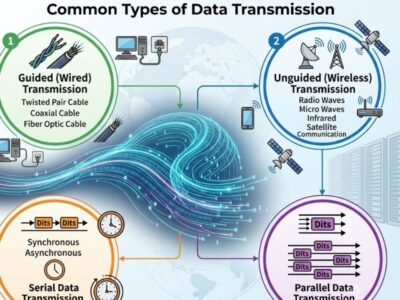
There are several methods used to transmit data depending on the communication requirements and infrastructure available.
Wired Transmission
Wired transmission uses physical cables such as Ethernet cables, coaxial cables, and fiber-optic connections. These methods provide high-speed and reliable communication, making them ideal for business networks and internet infrastructure.
Wireless Transmission
Wireless transmission uses radio waves, microwaves, and other electromagnetic signals to transfer data without physical connections. Technologies such as Wi-Fi, Bluetooth, and mobile networks rely on wireless communication to provide flexibility and mobility.
Both wired and wireless solutions play important roles in supporting modern digital ecosystems.
Benefits of Understanding Data Transmission Basics
Learning Data Transmission Basics offers several advantages for students, IT professionals, and technology enthusiasts. Understanding how information moves between systems provides a deeper appreciation of modern digital technologies.
Some key benefits include:
- Better understanding of computer networks
- Improved troubleshooting skills
- Enhanced cybersecurity awareness
- Greater knowledge of digital communication systems
- Stronger foundation for IT and networking careers
As organizations become increasingly dependent on technology, these skills are becoming more valuable across various industries.
Challenges in Data Transmission
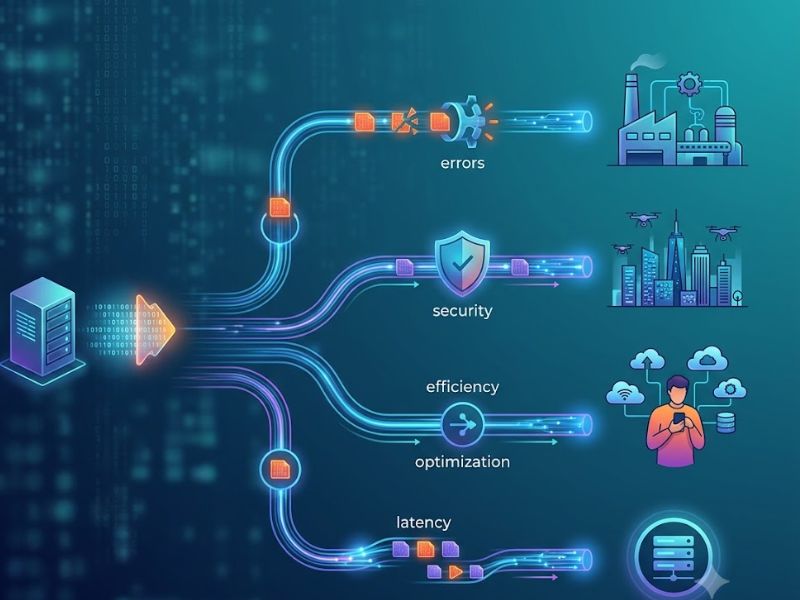
Despite significant advancements, data transmission still faces several challenges. Network congestion, signal interference, hardware failures, and cybersecurity threats can affect communication quality and reliability.
To address these issues, modern systems use error detection mechanisms, encryption technologies, and advanced networking protocols. These solutions help ensure accurate and secure data transfers even in complex communication environments.
Continuous innovation in networking technologies is helping organizations overcome these challenges while supporting growing demands for speed and connectivity.
The Future of Data Transmission
The future of Data Transmission Basics is closely linked to emerging technologies such as 5G, artificial intelligence, cloud computing, and the Internet of Things (IoT). These innovations require faster, more reliable, and more efficient communication systems.
Advancements in fiber-optic networks, satellite communications, and wireless technologies will continue improving how information is transmitted worldwide. As digital transformation accelerates, the importance of understanding data transmission fundamentals will only increase.
Organizations and individuals who understand these concepts will be better prepared to adapt to future technological developments.
Conclusion
Data Transmission Basics play a critical role in modern technology by enabling the exchange of information across devices, systems, and computer networks. Through effective data communication and reliable digital transmission, businesses and individuals can access the digital services they depend on every day.
From internet browsing and online collaboration to cloud computing and mobile connectivity, data transmission serves as the backbone of today’s digital world. Understanding these fundamentals provides valuable insight into how modern technologies operate and why reliable communication remains essential for future innovation.
FAQs
1. What are Data Transmission Basics?
Data Transmission Basics refer to the processes and methods used to transfer information between devices and systems.
2. What is data communication?
Data communication is the exchange of information between devices through wired or wireless communication channels.
3. Why are computer networks important for data transmission?
Computer networks provide the infrastructure that allows devices to communicate and share information efficiently.
4. What is digital transmission?
Digital transmission is the process of transferring information using binary data, typically represented as zeros and ones.
5. Where is data transmission used?
Data transmission is used in internet services, mobile communications, cloud computing, business networks, streaming platforms, and many other digital technologies.

COMMENTS