
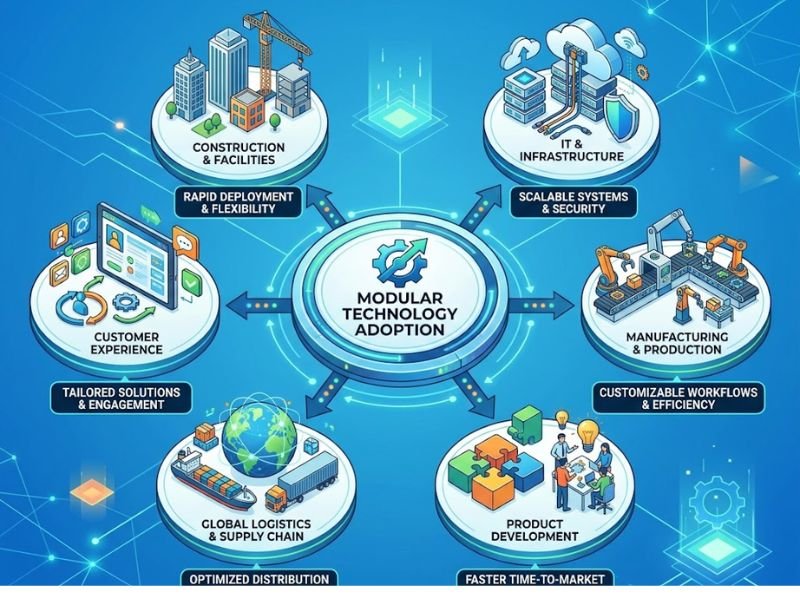
Introduction Businesses today operate in a rapidly changing digital environment where flexibility, efficiency, and scalability are more important tha
Introduction
Businesses today operate in a rapidly changing digital environment where flexibility, efficiency, and scalability are more important than ever. Companies can no longer rely only on rigid technology systems that are difficult to update or expand. This is why many organizations are choosing to Adopt Modular Technology as part of their long-term strategy. Modular systems allow businesses to build technology using separate components that can work together while remaining independently manageable. Instead of replacing an entire system when requirements change, organizations can update or add specific modules.
These modular technology solutions are becoming increasingly important for companies focused on digital transformation and scalable business technology. From software platforms and cloud infrastructure to manufacturing and workplace systems, modular technology is helping businesses become more adaptable.
What Does It Mean to Adopt Modular Technology?
To Adopt Modular Technology means using systems that are designed as separate but connected components. Each module performs a specific function and can often be developed, updated, replaced, or expanded independently. For example, a business software platform may contain separate modules for customer management, accounting, inventory, analytics, and employee management.
Instead of building everything as one large system, each part can operate as a specialized component. This approach gives businesses greater flexibility and makes technology easier to manage as organizational needs change.
Why Modern Businesses Need Modular Systems
Traditional technology systems can become difficult to maintain over time. When every function is tightly connected, changing one part of the system may affect everything else. Modular systems can reduce this problem by separating important functions into manageable components. When businesses Adopt Modular Technology, they can make changes without always rebuilding their entire infrastructure.
This is particularly useful for growing companies. A small business may begin with basic technology and add new capabilities as it expands. Instead of investing in an oversized system from the beginning, the company can add modules when needed.
Modular Technology Solutions for Business Growth
Modern modular technology solutions can support many different business functions. Software platforms may use modular architecture to provide flexible services. Cloud systems can allow companies to add computing resources when demand increases. Manufacturing businesses may use modular equipment that can be adapted for different production requirements.
Some common applications include:
- Business management software
- Cloud computing infrastructure
- E-commerce platforms
- Customer relationship management
- Data analytics systems
- Manufacturing technology
- Smart workplace systems
- Cybersecurity platforms
The main advantage is adaptability. Businesses can select the components they need instead of purchasing or developing unnecessary features.
How Modular Technology Supports Digital Transformation
Digital transformation involves more than simply introducing new software. It requires businesses to rethink how technology supports operations, customers, employees, and long-term growth. Modular technology can make this process easier.
Instead of attempting one massive technology upgrade, companies can introduce new modules gradually. For example, a company might first modernize its customer management system. Later, it could add analytics tools, automation systems, and artificial intelligence capabilities.
This gradual approach can reduce risk and make transformation easier to manage. When organizations Adopt Modular Technology, they can experiment with new tools without completely disrupting existing operations.
Flexibility and Scalability
One of the biggest reasons to Adopt Modular Technology is scalability. Business needs can change quickly. A company may experience rapid growth, enter new markets, launch new products, or need to respond to changing customer expectations. A modular system can make these transitions easier.
Scalable business technology allows organizations to expand their capabilities without rebuilding everything from the beginning. For example, an e-commerce company may begin with a basic online store and later add advanced payment systems, inventory automation, personalized recommendations, and customer analytics. Each new capability can be introduced as the business grows.
Modular Technology and Cost Efficiency
Technology investments can be expensive, especially for smaller businesses. Traditional systems sometimes require companies to purchase large platforms with features they may never use. Modular systems can provide a more flexible alternative. Businesses can invest in the components they actually need. Additional modules can be added later when requirements change.
This approach may help organizations manage technology spending more effectively. However, modular systems are not automatically cheaper in every situation. Companies still need to consider integration costs, licensing, maintenance, security, and employee training. A good technology strategy should focus on long-term value rather than simply the lowest initial cost.
Faster Innovation Through Modular Systems
Adopt Modular Technology
Innovation is easier when businesses can test new technologies without changing their entire infrastructure. A modular architecture can allow teams to experiment with new features independently. For example, a company could introduce an AI-powered customer service module while continuing to use its existing business systems.
If the new technology performs well, it can be expanded. If it does not provide the expected value, it may be easier to modify or replace. This flexibility can encourage businesses to innovate more quickly. The ability to test and adapt is becoming increasingly valuable in competitive industries.
Scalable Business Technology for Growing Companies
Growing companies often face a difficult question: Should they invest in technology for their current needs or prepare for future expansion? Scalable business technology helps solve this problem. Modular systems allow companies to start with essential functions and expand later. This is particularly useful for startups and small businesses that may not know exactly what their future requirements will be.
A modular approach allows them to remain flexible. As the organization grows, new technology components can be added to support additional employees, customers, products, and operations.
Challenges When Businesses Adopt Modular Technology
Although modular technology provides many advantages, it also has challenges. Integration is one important issue. Different modules must communicate effectively with each other. Poor integration can create data problems and inefficient workflows. Security is another major consideration. Each additional component can create potential risks if it is not properly managed.
Businesses need clear security standards and regular monitoring. Companies should also avoid adding too many unnecessary modules. A modular system should simplify operations rather than create a complicated collection of disconnected tools. Planning is essential.
How to Successfully Adopt Modular Technology
Businesses should follow a structured approach when introducing modular systems. The first step is identifying current business needs. Companies should understand which processes are inefficient and where technology can provide the greatest value. The second step is selecting compatible technology solutions. Modules should integrate well with existing systems and support future expansion.
The third step is starting with a manageable implementation. Instead of changing everything at once, businesses can introduce technology gradually. Employee training is also important. Even the best technology will not provide value if employees do not understand how to use it effectively. Finally, organizations should regularly review performance and make improvements.
The Future of Modular Technology
The future of modular technology solutions is closely connected to cloud computing, artificial intelligence, automation, and connected digital platforms. Businesses are increasingly looking for flexible technology ecosystems rather than single, rigid systems. Future platforms may become even more modular.
Companies could select AI tools, analytics systems, security features, and automation capabilities based on their specific requirements. This could create more personalized technology environments for businesses of different sizes and industries. The continued growth of APIs and cloud-based services will also support greater integration between different modules.
Why Businesses Should Adopt Modular Technology
The decision to Adopt Modular Technology can help businesses become more flexible and prepared for future changes. Instead of depending on a single technology system for everything, organizations can build connected ecosystems that evolve over time. This approach supports innovation, scalability, and gradual digital transformation.
It can also help companies respond more effectively to changing market conditions. However, successful implementation requires planning. Businesses should choose reliable technology partners, prioritize security, and ensure that modules work effectively together.
Conclusion
To Adopt Modular Technology is to take a more flexible approach to modern business systems. Modular solutions allow companies to build technology environments using separate components that can be updated, expanded, or replaced as needed. These modular technology solutions can support business growth while making digital transformation easier to manage. For companies focused on long-term expansion, scalable business technology provides the flexibility needed to adapt to changing markets and customer expectations. While integration, security, and planning remain important challenges, modular technology offers businesses a practical way to innovate without constantly rebuilding their entire technology infrastructure. As organizations continue to depend more heavily on digital systems, modular solutions are likely to become an increasingly important part of modern business strategy.
FAQs
What does it mean to adopt modular technology?
To Adopt Modular Technology means using technology systems built from separate components or modules that can work together while being independently managed or updated.
What are modular technology solutions?
Modular technology solutions are flexible systems made up of separate components that perform specific functions and can often be added, removed, or modified independently.
How does modular technology support digital transformation?
Modular technology allows businesses to introduce new digital capabilities gradually instead of replacing their entire technology infrastructure at once.
Is modular technology suitable for small businesses?
Yes. Small businesses can benefit from modular systems because they can start with essential features and add more capabilities as they grow.
What is scalable business technology?
Scalable business technology refers to systems that can expand and adapt as a company’s needs increase without requiring a complete replacement.
What are the challenges of modular technology?
Common challenges include system integration, cybersecurity, data management, compatibility, employee training, and avoiding unnecessary complexity.

COMMENTS