
Introduction Apple’s First Smart Home Display could become an important addition to the company’s growing home technology ecosystem. Apple has spent
Introduction
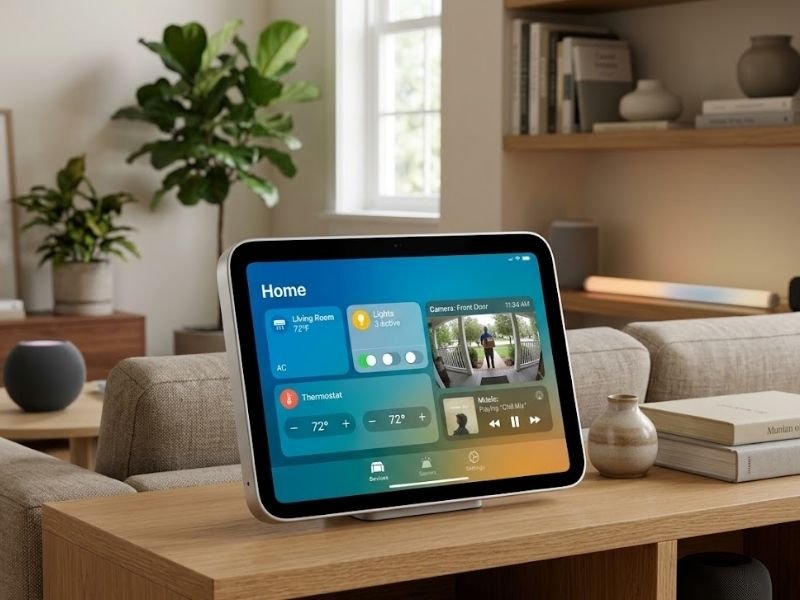
Apple’s First Smart Home Display could become an important addition to the company’s growing home technology ecosystem. Apple has spent years building an ecosystem around iPhone, iPad, Apple Watch, HomePod, and connected accessories, but a dedicated home display could bring many of these experiences together in one place. The expected device could function as a central Apple smart home device, giving users an easier way to control lights, cameras, thermostats, music, and other connected products. A dedicated smart home display could also make Apple’s home experience more visual and interactive, while Apple home automation could allow users to create routines that work automatically throughout the day.
What Is Apple’s First Smart Home Display?
Apple’s first smart home display is expected to focus on controlling and interacting with connected devices around the home. Rather than requiring users to pick up an iPhone every time they want to change a setting, a dedicated display could provide quick access to commonly used controls.
The device could potentially show information such as the time, weather, calendar appointments, reminders, photos, and controls for compatible smart-home accessories. The idea is similar to other smart displays already available in the market, but Apple’s approach would likely place strong emphasis on integration with its existing ecosystem.
How the Apple Smart Home Device Could Work
As an Apple smart home device, the display could work closely with Apple’s existing services and hardware. Users could potentially use their Apple accounts to connect the device with supported accessories and services. The display could provide a visual interface for controlling HomeKit-compatible or Matter-compatible devices, depending on Apple’s final implementation.
For example, a user might be able to turn lights on, adjust a thermostat, view a compatible security camera, or control music from one screen. This could make the device particularly useful in shared household spaces such as kitchens, living rooms, or entryways.
Apple Home Automation Could Be a Major Feature
One of the most interesting possibilities is Apple home automation. Apple already provides automation features through its Home ecosystem, but a dedicated display could make those controls easier to access and understand. Users could create routines for different times of the day. A morning routine might display the weather and calendar while adjusting connected lights.
An evening routine could turn off selected lights, adjust the thermostat, and activate compatible security accessories. The benefit of automation is that users do not need to manually control every device. The system can handle repetitive actions based on schedules, triggers, or user preferences.
A More Visual Smart Home Experience
A dedicated smart home display could make connected-home controls more accessible. Voice commands are convenient, but sometimes users want to see information rather than hear it. For example, a visual interface could show multiple rooms and their current lighting status.
It could also display a camera feed, thermostat information, music controls, or household reminders. This combination of visual and voice interaction could make Apple’s home ecosystem feel more complete.
Potential Integration With Siri
Siri is likely to play an important role in Apple’s connected-home strategy. A dedicated display could give Siri a more visible presence in the home. Instead of interacting with Siri only through an iPhone or HomePod, users could potentially ask questions and receive visual responses on the screen.
This could be particularly useful for tasks that benefit from visual information. For example, a user could ask about the weather and see a forecast, or ask about a calendar appointment and view the relevant details. Apple’s ongoing focus on artificial intelligence could also influence how the device interacts with users.
Apple’s First Smart Home Display and AI
AI could make Apple’s First Smart Home Display more useful over time. Rather than functioning only as a control panel, the device could potentially become an intelligent assistant for the home. AI could help users organize schedules, find information, manage routines, and interact with compatible devices through natural language.
However, AI features also raise questions about privacy and data processing. Apple has historically emphasized privacy as an important part of its product strategy, so the company’s approach to AI in the home will be closely watched.
Smart Home Security Features
Home security could become another important part of Apple’s home display strategy. A connected display could potentially provide access to compatible security cameras, doorbells, sensors, and locks. For example, users might be able to see who is at the front door without opening their phones. The display could also provide alerts when compatible sensors detect activity.
Security features would need to be designed carefully because a home device can potentially provide access to sensitive information. Strong authentication and appropriate privacy controls would therefore be essential.
Apple Home Automation for Everyday Routines

Apple’s First Smart Home Display
Apple home automation could help make everyday household routines easier. Imagine waking up and having the display show the day’s schedule, weather, and reminders. Later in the evening, the system could automatically adjust lighting and temperature according to a predefined routine. Users could also create custom scenes for activities such as watching movies, cooking, working, or going to bed.
The biggest advantage is simplicity. Instead of controlling individual products separately, users could manage multiple compatible devices through one ecosystem.
Design and Placement
Apple is known for placing significant attention on product design, so the appearance of its first home display will be an important part of the product. The device would need to look appropriate in different rooms while remaining easy to use.A compact design could allow it to sit on a kitchen counter, desk, or bedside table.
The screen size would also influence its purpose. A larger display could be better for cameras, calendars, and household controls, while a smaller device could be easier to place around the home.
Compatibility With Other Smart Home Devices
Compatibility will be one of the biggest factors determining how useful the Apple smart home device becomes. Many consumers already own smart lights, plugs, thermostats, cameras, and other connected products. If Apple’s display supports widely adopted standards such as Matter, users could potentially have more flexibility when choosing accessories.
This would be important because consumers generally do not want to replace every existing smart-home product simply to use a new central device. A strong ecosystem needs to work well with both Apple’s own products and compatible third-party accessories.
Privacy and Security Considerations
A home display can potentially collect information about household routines, voice commands, device activity, and personal schedules. Privacy will therefore be a major consideration. Consumers should understand what information the device collects and how that information is stored or processed.
Apple’s reputation for privacy could become an important selling point if the company provides clear controls over data and connected services. Users should also protect their Apple accounts with strong passwords and multi-factor authentication.
How It Could Compete With Existing Smart Displays
Apple will enter a market where consumers already have several options. Other companies offer smart displays that combine voice assistants, entertainment, smart-home controls, and information services. Apple’s potential advantage is its existing ecosystem. Millions of users already have Apple devices and services, which could make a dedicated home display easier to integrate into their daily routines.
However, the product will need to provide enough value to justify its price. Consumers may not buy another screen simply because it connects to their smart-home devices. Apple will need to offer a smooth experience that makes the device genuinely useful.
The Future of Apple Home Automation
The future of Apple home automation could involve more intelligent routines and better communication between devices. As smart-home standards become more widely adopted, consumers may have greater flexibility when choosing products. AI could also allow automation systems to understand natural-language requests instead of requiring complicated setup.
For example, users could potentially describe what they want their home to do and allow the system to create appropriate routines. This would make automation easier for people who are not technically experienced.
What Consumers Should Expect
Consumers should view Apple’s First Smart Home Display as a potential extension of Apple’s ecosystem rather than simply another smart speaker with a screen. Its success will depend on several factors, including software quality, device compatibility, AI capabilities, privacy, display quality, and pricing.
If Apple can combine these elements into a simple and reliable experience, the device could become an important hub for connected homes. However, the final features and capabilities will determine how competitive it becomes.
Conclusion
Apple’s First Smart Home Display could give Apple a stronger presence inside the connected home. As an Apple smart home device, it could bring home controls, information, entertainment, and communication into a single location. A dedicated smart home display could also make everyday interactions more visual, while Apple home automation could simplify repetitive household tasks through intelligent routines. The biggest questions will involve its final design, software capabilities, compatibility, AI features, privacy protections, and price. If Apple delivers a product that feels genuinely useful rather than simply adding another screen to the home, it could become an important part of the company’s long-term smart-home strategy.
FAQs
What is Apple’s First Smart Home Display?
Apple’s First Smart Home Display is an expected dedicated home device designed to provide a visual interface for information, entertainment, and connected-home controls.
What could Apple’s smart home device do?
An Apple smart home device could potentially control compatible lights, thermostats, cameras, locks, speakers, and other connected accessories while also displaying information such as weather and calendars.
How could a smart home display help users?
A smart home display could provide visual access to household controls, information, cameras, reminders, and other services without requiring users to constantly use a smartphone.
Will Apple home automation be supported?
Apple home automation is expected to be an important part of Apple’s broader connected-home strategy, although the exact features available on any future device will depend on Apple’s final software and hardware implementation.
Could the display use Siri?
Siri could play an important role in Apple’s home strategy, potentially allowing users to control compatible devices and access information through voice commands.
Will Apple’s smart home display work with third-party devices?
Compatibility will depend on the final product and supported standards. Support for widely adopted smart-home standards could make the device more useful with third-party accessories.

COMMENTS