
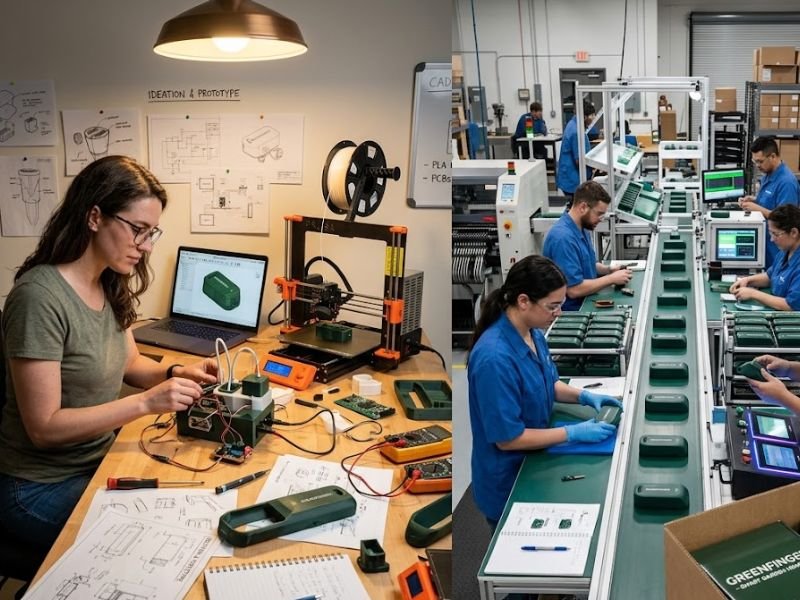
Introduction Turning a new idea into a product that customers can actually use is an exciting but challenging journey. From Prototype to Production,
Introduction
Turning a new idea into a product that customers can actually use is an exciting but challenging journey. From Prototype to Production, businesses must move through several important stages, including planning, design, testing, refinement, and manufacturing. A successful product development process helps teams identify potential problems before large amounts of money and resources are invested. Careful prototype testing can reveal weaknesses in design, usability, or performance, while effective planning for manufacturing and production helps ensure that the final product can be created consistently at the required scale. Whether you are a startup, inventor, or established business, understanding this journey can make the path from an initial concept to a market-ready product much more manageable.
Understanding the Product Development Process
The product development process is the structured journey used to transform an idea into a finished product. Although the exact steps vary between industries, most projects begin with identifying a problem or opportunity. A product should ideally solve a real customer need. Before investing heavily in design or manufacturing, businesses should understand who the product is for and why people might want to use it.
Research can help answer important questions. What alternatives already exist? What problems do customers experience? Which features are genuinely useful? The answers can guide the design process and reduce the risk of creating a product that does not have a clear purpose.
From Prototype to Production: Starting With a Strong Idea
The journey from Prototype to Production begins long before the first physical model is created. The original concept should be clearly defined. Teams need to understand the product’s purpose, key features, target users, expected price range, and basic technical requirements. At this stage, sketches, digital models, diagrams, or simple mockups may be used to explore different ideas.
The goal is not to create a perfect final product immediately. Instead, the team should identify the strongest concept and establish a clear direction. A well-defined concept can save time later because design and engineering decisions will be connected to specific product goals.
Designing the First Prototype
A prototype is an early version of a product created for learning, testing, and improvement. It may be simple or highly detailed depending on the stage of development. An early prototype might only demonstrate the basic shape or function of a product. Later versions can include more realistic materials, features, and components.
The purpose of a prototype is to answer questions. Does the product work as expected? Is it comfortable or easy to use? Are there design weaknesses? Can the product be manufactured efficiently? Creating multiple prototypes is common because each version can reveal new information.
The Importance of Prototype Testing
Prototype testing is one of the most valuable stages in product development. A design may look excellent on paper but behave differently in real-world conditions. Testing can examine functionality, durability, usability, safety, and performance. The type of testing depends on the product and the industry.
For example, a consumer product may be tested by potential users to identify usability problems. A technical product may require detailed performance testing. Feedback should be collected carefully and used to improve the next version. The goal is not simply to prove that the prototype works. Good testing should also identify where it fails and why.
Refining the Design
After testing, the development team can begin refining the product. Some features may need to be redesigned, simplified, or removed. New improvements may also be added based on user feedback and technical results. This stage can involve collaboration between designers, engineers, product managers, and manufacturing specialists.
Making changes early is often easier than changing a product after full-scale production has started. This is why moving From Prototype to Production should be treated as an iterative process rather than a single straight path. Each design revision can bring the product closer to the final version.
Choosing the Right Materials and Components
Material selection plays an important role in product quality, cost, durability, and manufacturing. A material that performs well in a prototype may not be the best choice for large-scale production. Businesses need to consider factors such as availability, price, strength, weight, appearance, and environmental conditions.
Component availability is also important. If a product depends on a difficult-to-source component, production could be delayed when demand increases. Working with suppliers early can help identify potential risks and provide a clearer understanding of long-term costs.
Planning for Manufacturing and Production
The transition to manufacturing and production requires careful preparation. A prototype may be created manually or using methods that are not practical for large quantities. The final product must therefore be designed with production processes in mind. This may involve selecting manufacturing methods, creating production specifications, developing assembly instructions, and planning quality-control procedures.
Businesses should also consider production capacity. A manufacturer that can create a few hundred units may not be able to support rapid growth into thousands or millions of products. Planning can reduce delays when demand increases.
Design for Manufacturability
One important concept in the product development process is designing a product so that it can be manufactured efficiently. This is often called design for manufacturability. The goal is to simplify production without compromising the product’s essential function or quality. For example, reducing unnecessary components can make assembly easier and potentially lower production costs.
Manufacturing specialists can provide useful feedback during the design stage because they understand the limitations and capabilities of production equipment. Including manufacturing expertise early can prevent expensive redesigns later.
From Prototype to Production: Creating a Pilot Run
From Prototype to Production
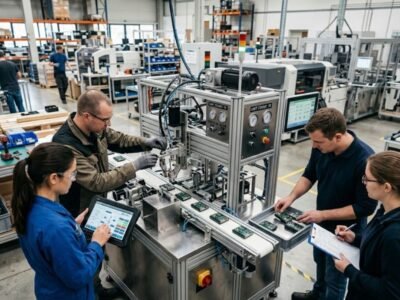
Before full-scale manufacturing begins, many businesses create a pilot run or small production batch. This stage allows the company to test the actual manufacturing process. A pilot run can reveal problems that were not visible during prototype development. These may include assembly difficulties, inconsistent quality, material waste, or equipment limitations.
The product should be inspected carefully during this stage. If major problems appear, it is usually better to correct them before committing to full production. A successful pilot run provides greater confidence that the product and manufacturing process are ready to scale.
Quality Control and Consistency
A good prototype does not automatically guarantee that every manufactured unit will meet the same standard. Quality control is therefore essential. Businesses should establish clear specifications for materials, dimensions, performance, and appearance. Inspection procedures can help identify products that do not meet those standards.
Quality should be considered throughout the entire supply chain, not only at the final stage. Consistent communication with suppliers and manufacturers can reduce misunderstandings and improve reliability. Strong quality control protects both the customer experience and the reputation of the business.
Managing Costs During Product Development
Cost management is important throughout the journey. A product may be technically impressive but difficult to sell if production costs make the final price unrealistic. Businesses should estimate costs for materials, components, labor, tooling, packaging, shipping, testing, and quality control.
It is also important to prepare for unexpected expenses. Changes during development can increase costs, particularly if they occur after manufacturing processes have already been established. Regular cost reviews can help businesses identify opportunities to improve efficiency without reducing product quality.
Supply Chain and Production Risks
Every manufacturing project involves some level of risk. Suppliers may experience delays, materials may become more expensive, and transportation problems can affect delivery schedules. Businesses can reduce some risks by avoiding unnecessary dependence on a single supplier when practical.
Clear communication and realistic planning are also important. A strong supply chain strategy should consider what happens if an important component becomes unavailable or production demand suddenly increases. Preparing for potential problems can make the transition to manufacturing and production more stable.
Preparing the Product for Market
Once the product is ready for large-scale production, the focus expands beyond manufacturing. Businesses need to consider packaging, branding, distribution, customer support, and marketing. The final product should be supported by clear instructions and appropriate information for customers.
Feedback from early users can continue to provide valuable insights even after launch. Product development does not necessarily end when manufacturing begins. Businesses may release updates, improve features, or develop future versions based on customer needs.
Common Challenges From Prototype to Production
The path from idea to finished product is rarely perfect. Common challenges include unexpected testing failures, high production costs, supplier delays, design changes, and difficulties scaling manufacturing. Another challenge is trying to move too quickly. Skipping important testing or rushing into large-scale production can create expensive problems later.
At the same time, businesses should avoid endless development without clear decisions. The key is to balance careful testing with practical progress. A structured plan can help teams know when a product is ready to move to the next stage.
How Technology Is Improving Product Development
Modern technology is making product development faster and more flexible. Computer-aided design allows teams to create detailed digital models before building physical prototypes. Simulation tools can help test certain aspects of a design virtually. Rapid prototyping and advanced manufacturing methods can also reduce the time needed to create and evaluate new concepts.
Digital collaboration tools make it easier for designers, engineers, manufacturers, and suppliers to work together. These technologies do not eliminate the need for physical testing, but they can improve decision-making and reduce unnecessary development cycles.
Conclusion
Moving From Prototype to Production requires more than creating a good idea. A successful product must go through research, design, prototype testing, refinement, manufacturing planning, pilot production, and quality control. A structured product development process helps businesses identify problems early and make better decisions before committing to large-scale investment. Careful planning for manufacturing and production can also improve consistency, control costs, and support future growth. By testing thoroughly, working closely with suppliers and manufacturers, and improving the product at every stage, businesses can increase their chances of turning an initial idea into a successful market-ready product.
FAQs
What does From Prototype to Production mean?
It describes the process of developing an early product concept, testing and refining it, and preparing it for consistent large-scale manufacturing.
Why is prototype testing important?
Prototype testing helps identify problems with functionality, usability, durability, and performance before full production begins.
How many prototypes are usually needed?
There is no fixed number. Some products require only a few versions, while complex products may go through many design and testing cycles.
What is a pilot production run?
A pilot run is a small batch produced before full-scale manufacturing. It helps test the production process and identify quality or assembly problems.
What is design for manufacturability?
It is an approach that considers manufacturing requirements during product design to make production more efficient, consistent, and practical.
What is the biggest challenge when moving from prototype to production?
Common challenges include controlling costs, maintaining quality, finding reliable suppliers, solving manufacturing problems, and scaling production to meet demand.

COMMENTS