
In today's fast-paced digital environment, businesses cannot afford to wait days or even hours for important insights. Real-time analytics has become
In today’s fast-paced digital environment, businesses cannot afford to wait days or even hours for important insights. Real-time analytics has become a critical tool for organizations that want to stay competitive and responsive. By processing data instantly as it is generated, companies can make faster and smarter decisions based on current information rather than outdated reports. This ability to access live insights is transforming how organizations operate, helping them achieve Better Data and Decisions across every department. From customer service and marketing to finance and operations, real-time analytics is becoming the foundation of modern business intelligence.
Why Real-Time Analytics Is Essential for Better Data and Decisions
Modern businesses generate massive amounts of data every second through websites, mobile apps, social media, customer interactions, and connected devices. Traditional reporting systems often process this information in batches, creating delays that can impact decision-making. Real-time analytics eliminates these delays by delivering immediate insights.
Organizations seeking Better Data and Decisions rely on real-time data because it allows them to respond quickly to changing conditions. Whether identifying sales opportunities, detecting operational issues, or monitoring customer behavior, instant access to information improves both efficiency and accuracy. Businesses no longer need to make assumptions because they can base decisions on current data.
Another important advantage is agility. Companies that can quickly adapt to market trends often outperform competitors. Real-time analytics provides the visibility needed to make proactive decisions instead of reacting after problems have already occurred.
How Real-Time Analytics Works
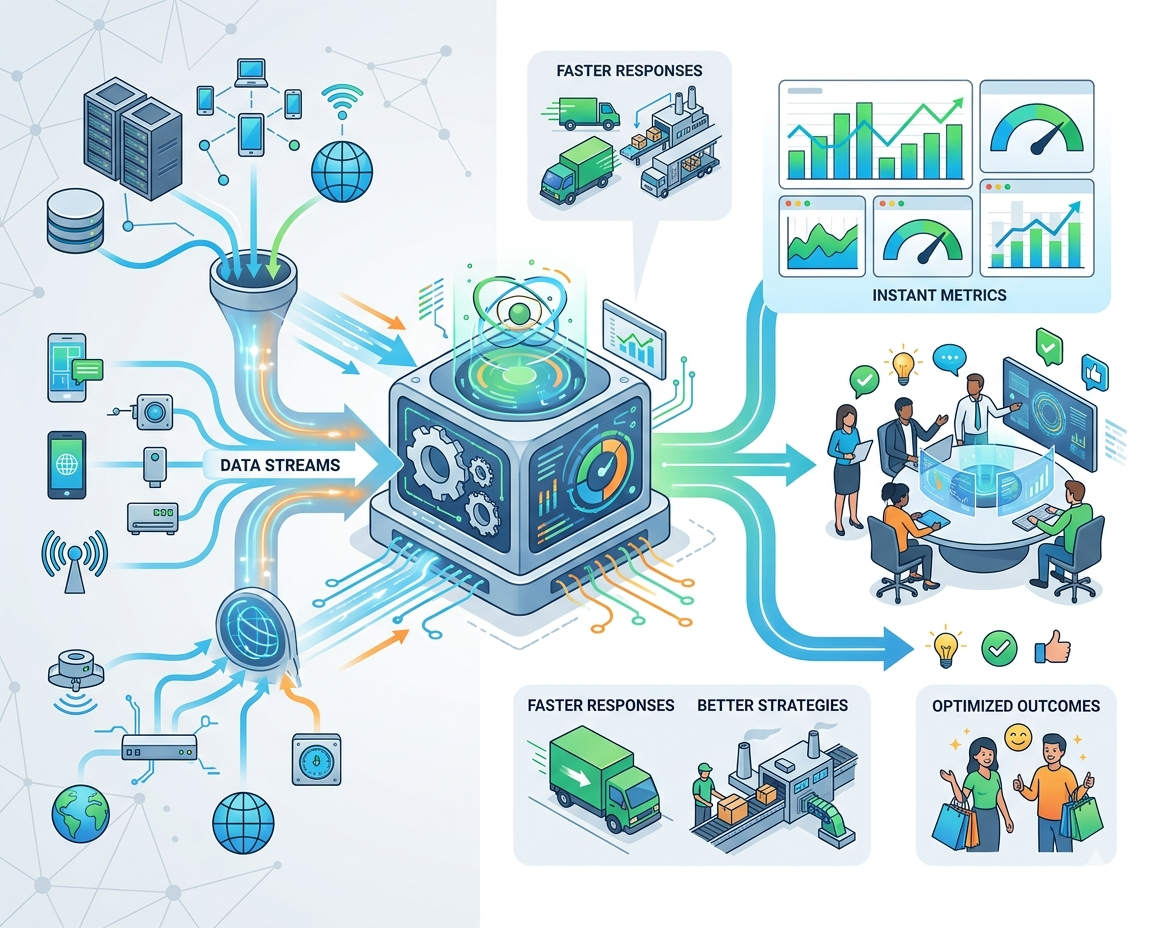
Real-time analytics collects, processes, and analyzes data as it is generated. Instead of storing information for later review, advanced systems continuously monitor incoming data streams and produce immediate insights. This process involves data collection, integration, processing, and visualization.
Modern cloud platforms, artificial intelligence, and machine learning technologies make real-time analytics possible. These systems can handle enormous volumes of information while identifying patterns and anomalies within seconds. The result is a continuous flow of actionable intelligence that supports Better Data and Decisions.
For example, an e-commerce company can track customer activity on its website in real time. If a sudden increase in demand occurs for a particular product, the business can adjust inventory, marketing campaigns, and pricing strategies immediately. This level of responsiveness was difficult to achieve with traditional reporting methods.
Benefits of Real-Time Analytics for Better Data and Decisions
One of the biggest benefits of real-time analytics is improved decision-making speed. Leaders no longer need to wait for end-of-day or weekly reports to understand business performance. Instant access to key metrics allows managers to act quickly and confidently.
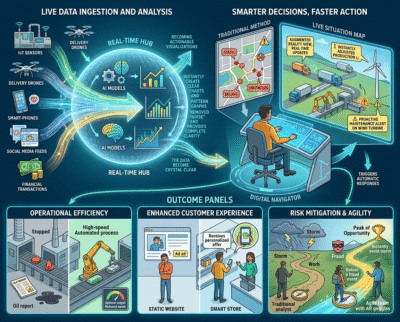
Another advantage is enhanced customer experience. Businesses can monitor customer behavior and preferences as they happen, enabling personalized interactions and faster support responses. This creates stronger customer relationships and higher satisfaction levels.
Real-time analytics also improves operational efficiency. Organizations can identify bottlenecks, equipment failures, or process inefficiencies before they become major problems. These proactive insights contribute significantly to Better Data and Decisions, helping companies reduce costs and optimize performance.
Risk management is another important benefit. Financial institutions, healthcare providers, and cybersecurity teams use real-time monitoring to detect unusual activities and prevent potential threats before they escalate.
Industries Using Real-Time Analytics
Better Data and Decisions
Many industries are embracing real-time analytics to gain a competitive advantage. In retail, companies use live sales and customer data to optimize inventory and marketing efforts. Online retailers can track purchasing trends instantly and adjust promotions based on customer demand.
Healthcare organizations use real-time analytics to monitor patient conditions and improve treatment outcomes. Medical professionals can receive immediate alerts when vital signs indicate potential health concerns.
Financial institutions rely on real-time systems to detect fraudulent transactions and manage investment risks. By analyzing transactions as they occur, banks can improve security and customer trust.
Manufacturing companies use sensors and connected devices to monitor equipment performance continuously. This allows them to predict maintenance needs and avoid costly downtime while achieving Better Data and Decisions throughout their operations.
Challenges of Implementing Real-Time Analytics
While the benefits are significant, implementing real-time analytics can present challenges. One common issue is handling large volumes of data efficiently. Organizations need scalable infrastructure capable of processing information without delays.
Data quality is another concern. Real-time insights are only valuable if the underlying data is accurate and reliable. Businesses must establish strong data governance practices to ensure consistency.
Security also plays a critical role. Since data is continuously moving through systems, organizations must protect sensitive information from cyber threats and unauthorized access. Investing in robust security measures is essential for maintaining trust and compliance.
Employee training can also be important. Teams need to understand how to interpret real-time insights and use them effectively to support Better Data and Decisions.
The Future of Real-Time Analytics
The future of real-time analytics is closely connected to advances in artificial intelligence, machine learning, and cloud computing. As technology evolves, organizations will gain even faster and more accurate insights from their data.
Predictive analytics will become more sophisticated, allowing businesses to anticipate trends and challenges before they occur. Automated decision-making systems may also play a larger role, helping organizations respond instantly to changing conditions.
Edge computing is expected to further improve real-time capabilities by processing data closer to where it is generated. This reduces latency and supports applications that require immediate responses.
As digital transformation continues, real-time analytics will remain a key driver of Better Data and Decisions, enabling businesses to operate more intelligently and competitively.
Conclusion
Real-time analytics is transforming the way organizations manage information and make strategic decisions. By providing immediate access to valuable insights, businesses can improve efficiency, enhance customer experiences, reduce risks, and respond quickly to market changes. Companies that embrace real-time analytics gain a significant advantage because they can achieve Better Data and Decisions using accurate and up-to-date information.
As technology continues to advance, real-time analytics will become even more important for organizations seeking growth, innovation, and long-term success. Businesses that invest in these capabilities today will be better prepared for the challenges and opportunities of tomorrow.
FAQs
1. What is real-time analytics?
Real-time analytics is the process of collecting, analyzing, and presenting data immediately as it is generated.
2. How does real-time analytics support better decision-making?
It provides instant insights that allow businesses to make informed decisions based on current information rather than historical reports.
3. Which industries benefit most from real-time analytics?
Retail, healthcare, finance, manufacturing, logistics, and e-commerce industries benefit significantly from real-time analytics.
4. What technologies power real-time analytics?
Cloud computing, artificial intelligence, machine learning, big data platforms, and edge computing are commonly used.
5. Why is real-time analytics important for business growth?
It improves operational efficiency, customer experiences, risk management, and strategic decision-making, helping businesses remain competitive.

COMMENTS