
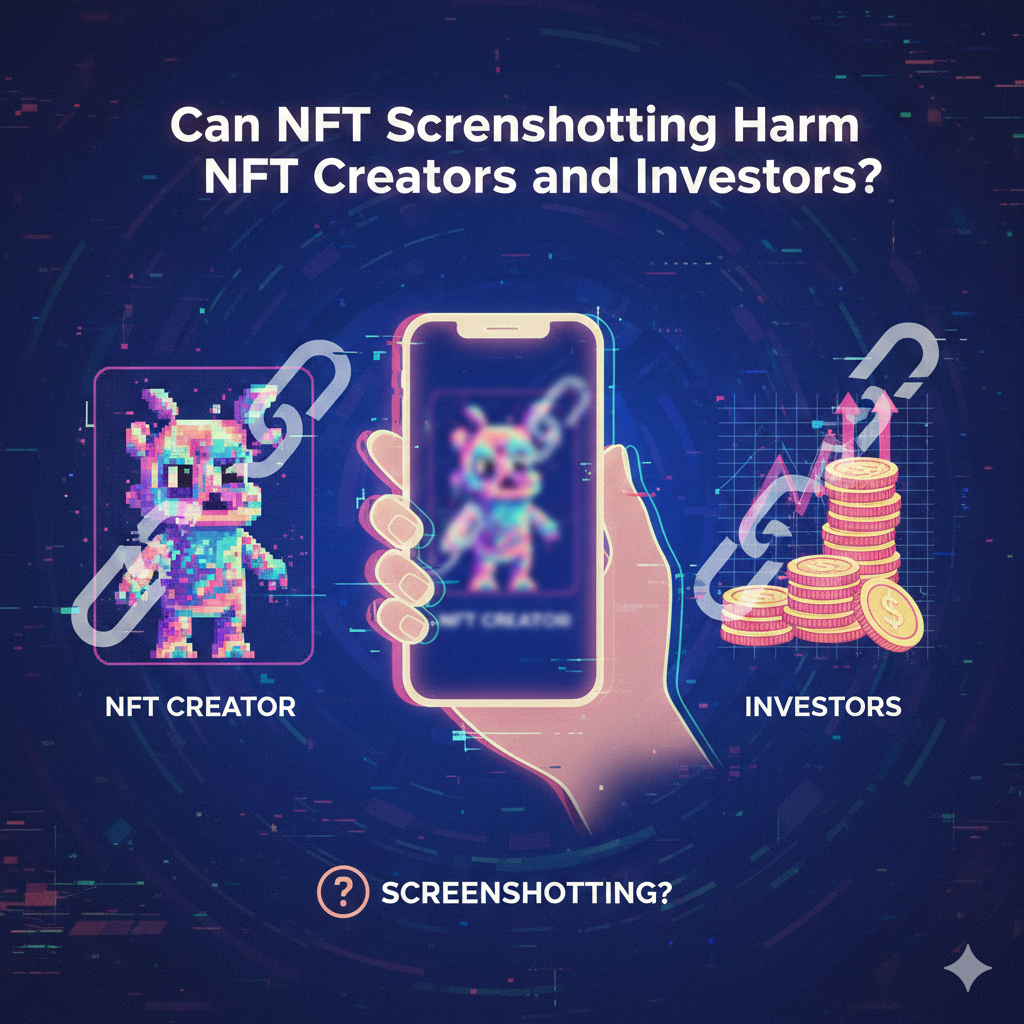
NFTs have shifted the paradigm of digital ownership, artwork, and value. They have opened up new avenues for both creators and investors, encompassing
NFTs have shifted the paradigm of digital ownership, artwork, and value. They have opened up new avenues for both creators and investors, encompassing everything from digital paintings and music to profile pictures and even virtual land. Despite the rapid expansion of this market, NFT screenshotting has been one of the hot topics around which a debate has taken place. Taking screenshots of the digital asset, are they really a threat to the rights of the original holder or just an innocuous internet practice? That’s what we are going to clarify in this article. We will thoroughly examine the concept of NFT screenshotting, elucidate its mechanism, and then point out its actual effect on NFT creators and investors, all this done in a straightforward, fair, and considerate tone.
Understanding NFT Screenshotting
NFT screenshotting is when someone takes a digital image of an NFT through either a screenshot or a screen recording. Usually, NFTs can be seen on marketplaces and social media, so anyone can look and take screenshots of them in a technical sense. This situation has given rise to a lot of confusion. Some individuals think that taking a screenshot of an NFT makes its ownership useless, while others contend that it has no impact at all on the NFTs’ value. To analyze whether NFT screenshotting is harmful, it is necessary to initially comprehend the real meaning of an NFT.
What NFT Ownership Really Means
An NFT, or a non-fungible token, is more than just a digital file. Rather, it represents a digital certificate of ownership that has been recorded on a blockchain. The certificate indicates the original owner of the digital asset, even though replicas might be found online. A user who takes a screenshot of an NFT is merely preserving a duplicate of the visual file and has not acquired the ownership record. The blockchain continues to identify the first purchaser as the rightful owner. The difference between these two is very important when the matter of NFT screenshotting is discussed.
Does NFT Screenshotting Harm Creators Financially?
The biggest financial concern is often the first one for creators. NFT screenshotting may look like a thing that diminishes the artist’s work at first sight, permitting the circulation of free copies. However, in most situations, screenshots do not directly interfere with a creator’s revenue. NFT creators make a profit when their NFTs are minted and sold, and occasionally through resale royalties. By taking screenshots, one does not change ownership, lose royalties, or substitute the original NFT. Moreover, exposure through screenshots and sharing may even result in a greater interest in an artist’s work than harming it. However, on the other hand, the misuse of screenshots, such as impersonation, scams, or unauthorized commercial use,e can negatively affect the creators if not properly managed.
Impact of NFT Screenshotting on Investors
Scarcity is one of the main aspects of NFT value, and it is a common fear of investors that the act of NFT screenshotting diminishes it. The question arises: if everyone can possess a duplicate of the image, then does the NFT still carry any weight? In truth, the value of an NFT is more linked to authenticated ownership, lineage, and community acceptance rather than just to the exclusivity of the image. Taking for example, with original painting ownership, the value is still retained even when there are prints made, in the same way, NFT ownership is still valuable even when there are screenshots. The main risks for investors lie in the factors of market volatility, project credibility, and long-term utility rather than the people who take screenshots.
The Psychological Effect of Screenshotting
Even though taking NFT screenshots might not lead to any immediate monetary loss, it could still alter the public’s view. Some artists and investors experience annoyance when this kind of attitude is being talked about in relation to NFTs, the one that goes, “I can just screenshot it.” Such an attitude can devalue the emotional aspect that artists have linked to their artworks and the whole feeling of pride that investors get from being owners. Yet, with the progression of the NFT industry, the awareness of digital ownership is on the rise, thereby influencing such psychological influence.
Legal and Copyright Considerations
NFT screenshotting is a tenuous legal matter as far as the law is concerned. Taking a screenshot for individual use is generally not illegal, but commercial use of that image, owning it by claiming so, or reselling it can infringe copyrights. Creators retain copyright unless they transfer it intentionally. That implies the creators can still claim their right to safeguard their creations from being used improperly, even if there are screenshots. For the artists, to empower them, the main weaponry would be educational outreach and unambiguous licensing terms.
Can NFT Screenshotting Be Used for Scams?
One of the actual threats coming from NFT screenshotting is its use in scams. Scammers might screenshot well-known NFTs and try to sell them as originals in non-existent marketplaces or through social media. This scam could affect creators and investors negatively by leading to the already prevailing confusion and distrust. On the other hand, the possibility of confirming the authenticity through blockchain verification is making it a bit harder for scams to flourish in the long run.
Why Screenshotting Does Not Destroy NFT Value
NFTs get their worth from the limited number of owners, trust in the community, and the fact that they are recorded on the blockchain rather than the image being kept secret. Taking a screenshot does not change any of these fundamental aspects. In numerous respects, NFT screenshotting resembles the practice of saving images of renowned paintings on the Internet. You can look at or keep the image, but you cannot have the original or its rights. With the growing understanding of this concept among the public, the worries regarding screenshotting have been dissipating.
How Creators Can Protect Themselves
By taking some smart steps, creators can lessen the harm caused by NFT screenshotting. Among the solutions to keep value and make it stronger are watermarking of preview images, giving utility beyond visuals, and building good communities. Nowadays, many creators consider perks such as exclusive access, events, or future drops as benefits that screenshots cannot provide. This changes the value from the image alone to the experience.
The Bigger Picture: Education Over Fear
Misunderstanding is the main source of fear surrounding NFT screenshotting. With better education, creators and investors are gradually realizing that copyrights do not come along with just the simple act of taking a screenshot. The NFT space is, however, already taking its time in maturing and thus setting the right ways of treating digital ownership. Screenshotting may continue being the norm, but with the ecosystem still developing, the fear attached to it is gradually going down.
Conclusion
So, does NFT screenshotting, if only indirectly, hurt NFT creators and investors? The answer in most situations is no. Taking screenshots does not give rights, lower the value of the blockchain, or take away the rights of the creators. Although the process can be annoying and lead to misunderstandings or fraudulent activities, it does not really shake the ground of NFTs. The main thing that defines the worth of NFTs is the trust of the community through verified ownership and long-term usability. With increasing awareness, creators and investors are now professionals who have learned to view screenshots as copies, not substitutes for the real thing, in terms of digital ownership.
FAQs
- Is NFT screenshotting illegal?
Screenshotting for personal use is usually legal, but using the image commercially or claiming ownership can violate copyright laws. - Does NFT screenshotting reduce NFT value?
No, NFT value is based on blockchain ownership, not image exclusivity. - Can someone sell a screenshot as an NFT?
They can try, but without blockchain verification, it is considered fake and has no legitimate value. - Why do people screenshot NFTs?
Some do it for fun, others out of curiosity, and some misunderstand how NFTs work. - How can NFT creators protect their work?
Creators can use watermarks, clear licensing, and add utility beyond the image itself.

COMMENTS