
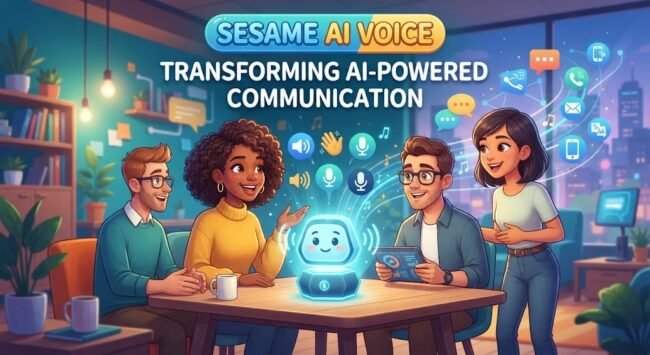
Artificial intelligence is changing the way people communicate with technology. Traditional digital assistants often rely on robotic voices and scripted responses, making conversations feel less natural. However, modern voice AI is introducing more realistic speech, better conversational flow, and improved emotional expression. One technology gaining attention in this space is Sesame AI Voice, which focuses on creating natural and engaging voice interactions between humans and machines.
As voice-based AI continues to evolve, Sesame is helping demonstrate how digital conversations can feel more expressive, responsive, and human-like. From virtual assistants to customer support and interactive applications, advanced AI voice technology is opening new possibilities for communication.
What Is Sesame AI Voice?
Sesame AI Voice is an advanced voice AI technology associated with the development of natural conversational experiences. Its goal is to make interactions between people and AI systems feel more comfortable and realistic.
Unlike traditional text-to-speech systems that primarily convert written text into spoken audio, conversational voice AI focuses on the overall interaction. It aims to support natural pacing, expressive speech, conversational timing, and responses that feel appropriate to the context.
This approach can make digital assistants more engaging and easier to use, especially for people who prefer speaking instead of typing.
How Sesame AI Voice Works
AI voice systems combine several technologies to understand spoken language and generate responses. Sesame’s conversational approach focuses on creating a more natural experience through voice understanding, response generation, and expressive speech.
The process generally involves several stages:
- Speech Recognition: The system processes a user’s spoken words and converts them into information it can understand.
- Language Understanding: AI analyzes the meaning, intent, and context of the conversation.
- Response Generation: The system creates a suitable response based on the conversation.
- Voice Generation: The response is transformed into spoken audio with natural-sounding delivery.
- Conversational Timing: The system manages pauses, timing, and conversational flow to make interactions feel less robotic.
Combining these capabilities allows voice AI to support more interactive conversations rather than simply reading prepared sentences aloud.
Natural and Human-Like Speech
One of the most important developments in Sesame AI Voice is the focus on realistic speech. Human communication involves more than words. Tone, pauses, emphasis, rhythm, and emotional expression all influence how a message is understood.
Traditional synthetic voices may sound flat or repetitive, especially during longer conversations. Modern AI voice systems aim to improve these characteristics by producing speech with more natural variation.
This can make virtual assistants more pleasant to listen to and improve the overall user experience. Natural-sounding voices may also help users feel more comfortable interacting with technology during everyday tasks.
How Sesame AI Voice Is Improving Digital Communication
Voice AI is making digital communication more convenient by allowing users to interact with technology through spoken language. Sesame AI Voice represents a broader shift toward conversational interfaces that are easier and more accessible.
Instead of navigating complex menus or typing lengthy instructions, users may be able to ask questions, explain their needs, and receive spoken responses.
This approach can benefit several areas:
Virtual Assistants
AI voice assistants can help users organize information, answer questions, and complete simple tasks through conversation. More natural speech can make these interactions easier and less frustrating.
Customer Support
Businesses can use voice AI to provide automated assistance, answer frequently asked questions, and guide customers through basic support processes. Conversational systems may help reduce waiting times while improving service availability.
Education and Learning
Voice-based AI can support language practice, interactive lessons, and educational conversations. Students may benefit from asking questions aloud and receiving explanations in a conversational format.
Accessibility
Voice interfaces can provide additional ways to interact with digital services for people who find typing or navigating traditional interfaces difficult. This can help make technology more accessible in different situations.
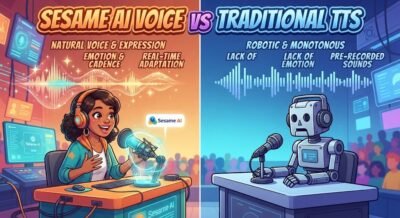
Sesame AI Voice vs Traditional Text-to-Speech
Sesame AI Voice
Traditional text-to-speech technology mainly focuses on converting written text into audio. While modern TTS systems can produce clear and realistic voices, their primary function is often speech playback.
Conversational voice AI takes a broader approach. It combines speech generation with listening, understanding, responding, and managing real-time interactions.
Traditional TTS is useful for audiobooks, announcements, navigation, and reading digital content. Conversational AI voice systems are better suited to interactive situations where users want to ask questions and participate in ongoing discussions.
The difference is that voice AI focuses on the conversation itself, not just the sound of the generated speech.
Benefits and Challenges of AI Voice Technology
AI voice technology offers several benefits, including convenience, faster communication, accessibility, and more engaging digital experiences. It can help businesses automate repetitive conversations while allowing users to interact with services more naturally.
However, this technology also presents challenges. AI-generated voices can be misused for impersonation, scams, and spreading misleading information. Privacy is another important concern because voice interactions may involve personal or sensitive data.
Developers and businesses must prioritize consent, security, transparency, and responsible use to ensure voice AI benefits users without creating unnecessary risks.
The Future of Sesame AI Voice and Conversational AI
The future of conversational AI will likely involve more responsive assistants, better speech quality, and stronger understanding of context. Voice AI may become increasingly integrated into smartphones, computers, smart devices, customer service platforms, and educational applications.
As technology improves, users may experience smoother conversations with fewer interruptions and more appropriate responses. The focus will continue to move toward making AI interactions helpful, natural, and accessible.
Sesame AI Voice reflects this growing trend toward human-centered communication technology, where the goal is to make interacting with machines feel more intuitive.
Conclusion
Sesame AI Voice highlights how artificial intelligence is transforming digital communication through more natural speech and interactive conversations. By combining speech recognition, language understanding, response generation, and expressive voice technology, conversational AI is moving beyond traditional robotic interactions.
Although privacy, security, and responsible use remain important challenges, voice AI has significant potential in customer support, education, accessibility, and everyday digital experiences. As these technologies continue to develop, natural voice interaction may become one of the most common ways people communicate with artificial intelligence.
Frequently Asked Questions (FAQs)
- What is Sesame AI Voice?
Sesame AI Voice is a conversational voice AI technology focused on making interactions between humans and artificial intelligence more natural, expressive, and engaging.
- How does Sesame AI Voice work?
It uses voice-processing and AI technologies to understand spoken input, interpret context, generate responses, and deliver them through synthesized speech.
- What makes Sesame AI Voice different from traditional text-to-speech?
Traditional text-to-speech primarily converts written content into audio, while conversational voice AI is designed to listen, understand, respond, and maintain interactive conversations.
- Where can AI voice technology be used?
AI voice technology can be used in virtual assistants, customer support, education, accessibility tools, smart devices, and conversational applications.
- Is AI voice technology the future of communication?
AI voice technology is likely to become an increasingly important part of digital communication because it offers hands-free interaction, convenience, and more natural conversational experiences.
Related articles
Keep reading more from this topic.

How JanitorAI Works and Why It Is Becoming Popular Among AI Users
Artificial intelligence is changing the way people interact with digital platforms. From virtual assistants…

How AI Decision Intelligence Connects Data, Insights, and Business Actions
Modern businesses generate enormous amounts of data every day. From customer interactions and sales…
Same.new AI and the Future of AI-Powered Website Creation
Website development is evolving rapidly as artificial intelligence transforms how people design, build, and…
COMMENTS