
Introduction In today's fast-paced digital landscape, the biggest bottleneck for most companies isn't technology—it's the communication gap between d
Introduction
In today’s fast-paced digital landscape, the biggest bottleneck for most companies isn’t technology—it’s the communication gap between developers and content editors. Developers want clean code and structured APIs, while editors want freedom and flexibility. This is exactly where Storyblok for modern content teams becomes a game-changer.
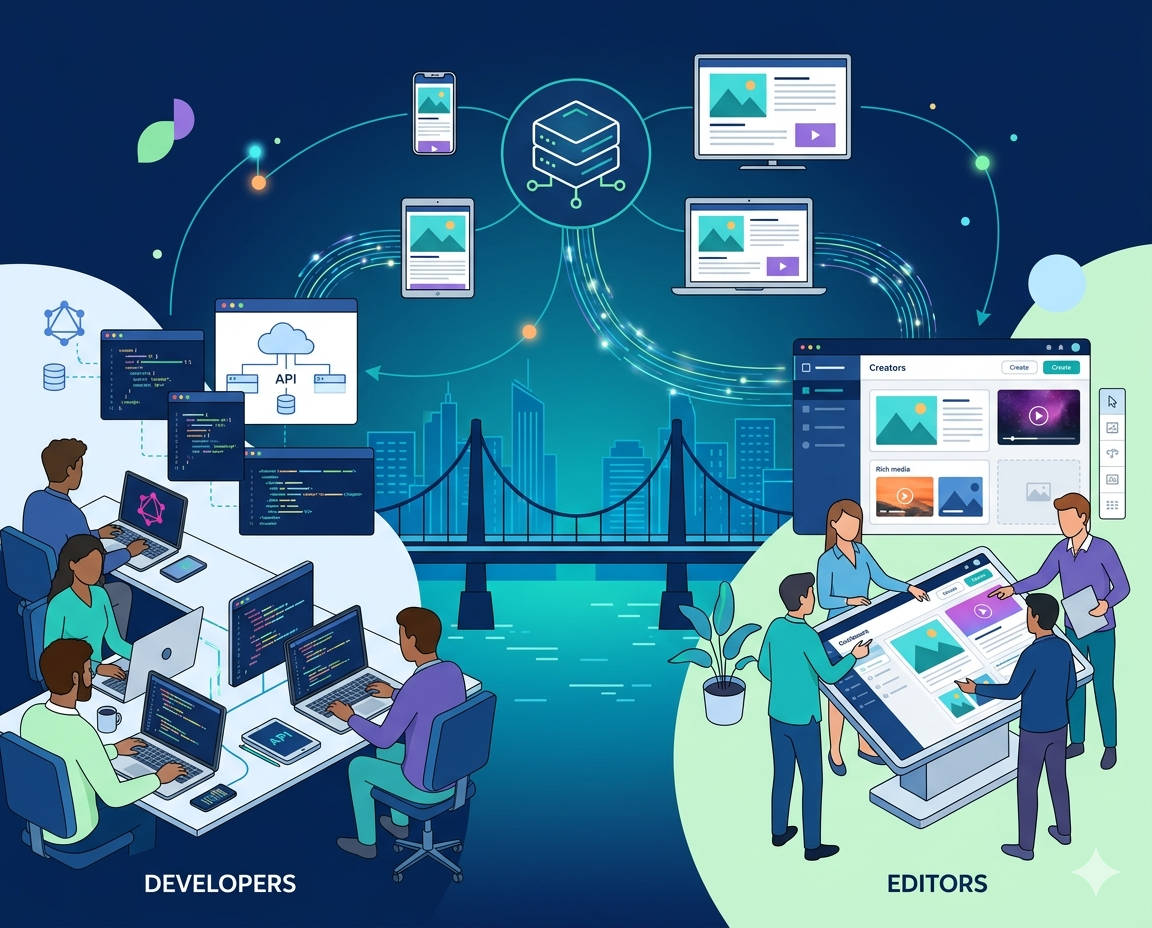
Storyblok is a headless CMS that comes with a unique visual editor, allowing both technical and non-technical teams to work together without stepping on each other’s toes. When you choose Storyblok for modern workflows, you are not just picking a tool; you are adopting a philosophy of collaboration, speed, and independence. Let us explore how this platform bridges the oldest gap in web development.
What Makes Storyblok Different from Traditional CMS?
Traditional CMS platforms like WordPress or Drupal force editors to work within rigid templates that developers must pre-build. Any change in content structure requires a developer to touch code. However, Storyblok for modern teams flips this model completely.
It offers something called “Component-Based Architecture.” Developers create reusable building blocks (like a hero section, a card grid, or a testimonial slider). Then, editors can drag, drop, and rearrange these blocks freely without ever touching HTML or CSS. This means Storyblok for modern content operations gives editors autonomy while keeping developers free from constant “small content change” requests. The result? Faster launches, happier teams, and cleaner codebases.
How Developers and Editors Work Together Seamlessly
The real magic of Storyblok for modern collaboration lies in its Visual Editor and Field-Level Permissions. Imagine an editor wants to change the headline of a landing page. In old systems, they would need to ask a developer. With Storyblok, they simply log in, click on the text, and type. The developer, meanwhile, controls the structure at a higher level—defining which fields exist and what validation rules apply.
This separation of concerns is why Storyblok for modern teams is gaining popularity among enterprises. Additionally, Storyblok provides a real-time preview that shows exactly how the content will look on the live site. Editors can experiment, and developers can review the final output without any fear of breaking the design. Both sides finally speak the same language.
Real Benefits for Content Teams Using Storyblok
When a company adopts Storyblok for modern content management, the benefits become visible immediately. First, time-to-market reduces drastically because editors are not waiting for developers. Second, content consistency improves because reusable components automatically enforce brand guidelines.
Third, developers can focus on performance, security, and new features instead of fixing text alignment issues. Many leading brands like Adidas, Pizza Hut, and O2 have already switched to Storyblok for modern architectures for this exact reason. The platform also supports multi-language content, scheduling, and workflows for approval—all without a single line of code from the editor. In short, Storyblok for modern teams is not a compromise; it is an upgrade for both sides.
Challenges and How Storyblok Solves Them
No solution is perfect, and some teams initially worry about the learning curve of a headless CMS. However, Storyblok for modern onboarding is surprisingly smooth because of its visual approach. Editors do not need to understand APIs or JSON. They simply see a “What You See Is What You Get” (WYSIWYG) interface. Another challenge is maintaining a consistent design across hundreds of components.
Here, Storyblok for modern teams can use global styles and preset components to ensure visual harmony. For developers, Storyblok offers webhooks and SDKs for React, Vue, and Angular, making integration painless. The platform also provides role-based access, so an intern editor cannot accidentally delete a developer’s component library. These thoughtful features make Storyblok for modern collaboration both safe and productive.
Conclusion
The gap between developers and editors has traditionally slowed down digital projects, caused frustration, and delayed launches. Storyblok solves this not by forcing one side to change, but by creating a neutral, visual, and structured playground where both can excel.
Whether you are a small marketing team or a large enterprise, choosing Storyblok for modern content workflows means choosing speed without sacrificing quality. Developers keep their clean architecture, editors get their creative freedom, and businesses finally ship content faster. If you want to truly bridge the developer-editor divide, Storyblok is the bridge you have been looking for.
Frequently Asked Questions (FAQs)
Q1. What exactly makes Storyblok different for modern teams compared to older CMS?
Answer: Older CMS platforms mix content and design, forcing developers to be involved in every small text change. Storyblok for modern teams separates content structure from presentation. Editors use a visual drag-and-drop interface, while developers control the underlying components. This separation is the key difference.
Q2. Can non-technical editors really use Storyblok without developer help?
Answer: Absolutely. That is the entire purpose of Storyblok for modern content teams. The visual editor works just like building a slide deck. Editors can add, remove, or rearrange sections, change text and images, and see a live preview—all without writing a single line of code. Developers only need to set up the component library once.
Q3. Is Storyblok suitable for large enterprises with many content contributors?
Answer: Yes, very much so. Storyblok for modern enterprise needs includes role-based permissions, content workflows (draft, review, publish), and multi-language support. You can have hundreds of editors working across dozens of websites while maintaining brand consistency. Many global brands trust Storyblok for exactly this reason.
Q4. How does Storyblok handle website speed and performance?
Answer: Because Storyblok for modern architecture is headless and API-first, it delivers only pure JSON data. Your frontend (like Next.js or Nuxt) fetches this data and builds lightning-fast static pages. This approach is much faster than traditional CMS systems that generate heavy HTML on every request. Speed is a major advantage.
Q5. Can we migrate from WordPress to Storyblok easily?
Answer: Yes, migration is possible. Many teams choose Storyblok for modern flexibility after outgrowing WordPress. Storyblok provides import APIs and migration guides. You can move content gradually, run both systems side by side, and then fully switch. The visual editor makes the transition smooth for editors who are used to page builders.

COMMENTS