

Artificial intelligence is becoming part of everyday business operations, software applications, healthcare, finance, customer service, and many other
Artificial intelligence is becoming part of everyday business operations, software applications, healthcare, finance, customer service, and many other industries. As organizations rely more heavily on AI-powered systems, protecting these technologies from cyber threats has become increasingly important. AI System Security focuses on protecting artificial intelligence models, applications, data, infrastructure, and connected systems from unauthorized access, manipulation, data leaks, and other security risks. Unlike traditional software, AI systems can introduce additional challenges because they depend heavily on data, models, prompts, and automated decision-making. A strong security strategy can help organizations use AI while reducing potential risks and protecting valuable information.
What Is AI System Security?
AI System Security means the steps, tools, and rules that keep AI systems safe during the whole lifecycle. Safety work can start when people plan and build the system. It then goes on as the system is sent to users, observed in daily use, updated over time, and finally taken out. This can cover several areas. Teams may protect the training data used to teach the AI. They may also lock down the AI model itself. User access should be limited and controlled. The system should be watched so odd behavior shows up early. Suspicious activity should be spotted and handled.
It also helps to look beyond the core AI. Many groups rely on outside AI services. They use APIs. Their AI may run on cloud platforms. It may connect to other apps too. All of that needs attention. Using one broad plan matters. Weak spots can show up in more than one place. They are not limited to the AI model alone.
Why AI System Security Matters
AI systems often process valuable or sensitive information, making them potential targets for attackers. Businesses may use AI to analyze customer data, internal documents, financial information, or proprietary business processes. If unauthorized users gain access to these systems, they may expose confidential information or manipulate outputs. AI models can also be targeted in ways that are different from traditional applications. For example, attackers may attempt to manipulate inputs or exploit weaknesses in how an AI system processes information. Strong AI System Security helps organizations identify these risks and establish controls before they lead to serious problems.
Common Security Threats to AI Systems
AI systems deal with more than just bugs. They can be hit by different kinds of security issues. One issue is data poisoning. Here, bad or wrong data gets added to what the system learns from, or to the data it uses while running. The aim is to push the model toward bad behavior. Another issue is adversarial input. In this case, someone crafts inputs on purpose so the AI gives a wrong answer or something off in a way the user did not expect.
There is also prompt injection. This shows up when an AI app takes text instructions from a user. If the app can use outside tools or access private details, an attacker can try to steer it with the prompt. Model theft is another risk. Attackers may try to copy a model or pull out details about a private model. On top of that, older attacks still apply. Malware can target the environment. Stolen logins and weak or unsafe interfaces can cause trouble. Unauthorized access can also reach AI systems and their data.
Protecting AI Data
Data is one of the most important components of an AI system, so protecting it should be a major security priority. Organizations should understand what information is collected, where it is stored, who can access it, and how it is used. Sensitive data should be protected using appropriate access controls and encryption. Companies should also avoid placing confidential information into AI services without understanding the provider’s data handling practices. Data validation can help identify suspicious or poor-quality information before it affects an AI model. Regular audits can further help organizations determine whether data access and retention practices follow internal security requirements.
AI System Security and Access Control
Access control matters. It stops people who should not be using an AI system from doing anything or from altering settings. Most companies should give workers only the access they need for their own jobs. Good login checks help. Role-based access is also important, since it limits what each user can do. Using strong secrets for accounts can further lower the chance of a break-in.
Admin features should be guarded even more. If an attacker gets into the settings, they might shift how the model acts or reach data that should stay private. Keeping access logs helps too. Security staff can review the logs when something looks off. This can show signs that an account may have been taken over.
Securing AI Models and Applications
AI models should be protected throughout development and deployment. Developers can use secure development practices, vulnerability testing, code reviews, and controlled deployment environments to reduce potential weaknesses. AI applications should also validate inputs and limit the actions that an AI model can perform. This is particularly important when an AI assistant is connected to email, databases, financial systems, or other external tools. Instead of giving an AI system unrestricted access, organizations can create specific permissions and approval requirements for sensitive operations. These controls can reduce the potential impact of unexpected or malicious behavior.
Monitoring and Detecting AI Security Risks
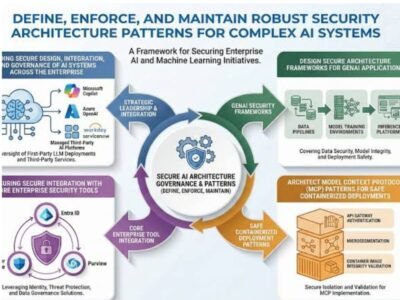
AI System Security
Continuous monitoring is an important part of AI System Security because threats may appear after a system has already been deployed. Organizations can monitor authentication attempts, unusual requests, model activity, API usage, data access, and system errors. Security teams can establish alerts for suspicious behavior and investigate unusual changes in AI performance. Monitoring can also help identify attempts to manipulate prompts or exploit connected tools. Detailed logging makes it easier to understand what happened during a security incident and can support investigations and remediation efforts.
Employee Training and AI Security Awareness
Technology alone cannot provide complete protection. Employees who use AI systems should understand basic security practices and know what information should not be entered into AI tools. Training can cover password protection, phishing awareness, data privacy, safe prompt practices, and appropriate use of AI-generated information. Employees should also understand how to report suspicious behavior or possible security incidents. Regular training is particularly important because AI tools and workplace policies can change quickly. Building security awareness across an organization can reduce the risk of accidental data exposure and other preventable security problems.
Best Practices for AI System Security
Organizations can strengthen AI security by combining technical controls with clear policies and ongoing evaluation. Important practices include encrypting sensitive information, restricting access, monitoring AI activity, testing applications for vulnerabilities, and keeping software and dependencies updated. Companies should also maintain an inventory of AI systems and understand which external services and data sources each system uses. Security assessments should be repeated as models and applications change. For higher-risk applications, organizations may also establish human approval requirements for important actions. These practices help create multiple layers of protection rather than relying on a single security mechanism.
The Future of AI System Security
As AI gets stronger and easier to connect across tools, the security rules will keep changing. In time, AI agents will likely touch databases, apps, devices, and core business systems. That can speed up automation, but it also brings fresh risks. Companies will have to tighten identity setup and access rules. They will also need better checks on activity, more careful testing of models, and stronger protection for data. Governance work must be clear and kept up to date.
Security teams may start using AI to spot odd actions sooner. It may help them find weaknesses faster too. So AI system security will not be a one-time effort. It will need ongoing updates as new AI designs, new apps, and new attack methods appear.
Conclusion
AI System Security is essential for organizations that want to benefit from artificial intelligence while protecting their systems and information. AI introduces security considerations involving data, models, prompts, applications, APIs, and automated actions. Organizations can reduce these risks by implementing strong access controls, protecting sensitive data, testing AI applications, monitoring system behavior, and training employees. Security should be considered throughout the AI lifecycle rather than added only after deployment. As AI adoption continues to grow, a proactive and layered security strategy will become increasingly important for building reliable and resilient AI systems.
FAQs
What is AI System Security?
AI System Security involves protecting artificial intelligence models, applications, data, infrastructure, and connected services from cyber threats, unauthorized access, manipulation, and data exposure.
What are common AI security threats?
Common threats include data poisoning, adversarial attacks, prompt injection, model theft, unauthorized access, insecure APIs, malware, and data leakage.
How can companies protect AI data?
Companies can use encryption, access controls, data validation, secure storage, monitoring, and clear policies governing how sensitive information is collected and used.
Why is access control important for AI systems?
Access control limits who can use, modify, or administer an AI system. Restricting permissions can reduce the potential impact of compromised accounts or unauthorized activity.
Does AI security require employee training?
Yes. Employees should understand how to handle sensitive information, use AI tools securely, recognize common cyber threats, and report suspicious activity.

COMMENTS