
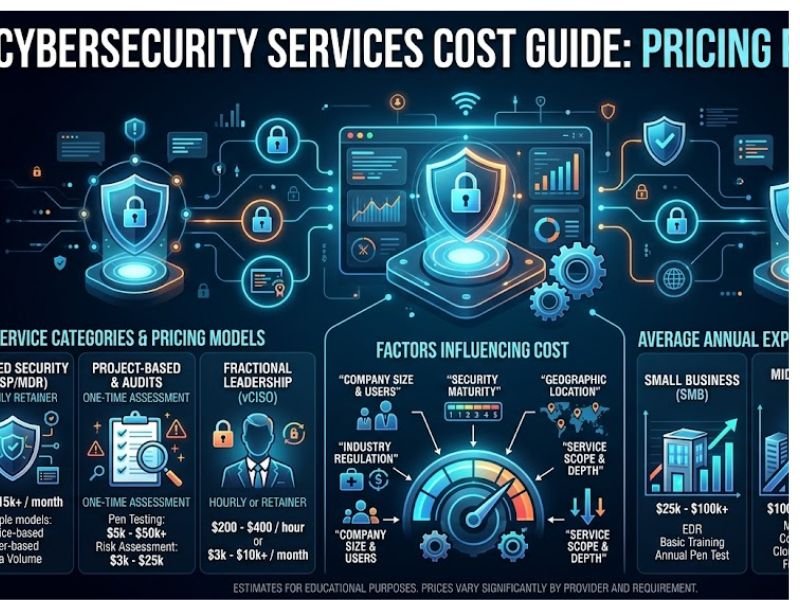
Introduction Cybersecurity has become a critical investment for businesses of all sizes. As cyber threats continue to evolve, organizations need reli
Introduction
Cybersecurity has become a critical investment for businesses of all sizes. As cyber threats continue to evolve, organizations need reliable protection for their networks, applications, data, employees, and digital infrastructure. However, one of the most common questions business owners ask is how much cybersecurity actually costs. Cybersecurity pricing can vary significantly depending on the size of a business, the level of protection required, the number of users, and the complexity of the IT environment. Understanding cybersecurity services cost, managed security pricing, and available cybersecurity solutions can help businesses choose the right level of protection without overspending. In 2026, companies are increasingly looking for flexible and scalable security services that match their specific risks and operational needs.
What Is Cybersecurity Pricing?
Cybersecurity pricing refers to the cost businesses pay for security tools, services, software, consulting, monitoring, and protection against cyber threats.
There is no single standard price because every organization has different security requirements.
A small business with ten employees will usually need a different security strategy than a large enterprise managing thousands of users and multiple cloud environments.
Cybersecurity services may include protection against malware, ransomware, phishing, data breaches, unauthorized access, and other digital threats.
The total cost depends on the services included in a security package.
Factors That Affect Cybersecurity Services Cost
The cybersecurity services cost for a business depends on several important factors.
Business Size
Larger organizations usually have more employees, devices, applications, and systems to protect.
As the digital environment becomes more complex, security costs can increase.
Number of Users and Devices
Many security providers charge based on the number of users, endpoints, servers, or devices being protected.
A company with more computers and connected devices may require a larger security budget.
Type of Security Services
Basic antivirus protection costs less than a complete managed security service with continuous monitoring and threat detection.
Advanced services may include:
- Endpoint security
- Network monitoring
- Cloud security
- Email protection
- Vulnerability management
- Incident response
- Security awareness training
- Threat detection
Compliance Requirements
Businesses operating in regulated industries may need additional security controls.
Healthcare, finance, legal, and other industries may have stricter requirements for protecting sensitive information.
IT Infrastructure Complexity
A company using multiple cloud platforms, remote employees, applications, and data centers may require more advanced protection.
Common Cybersecurity Pricing Models
Different providers use different pricing structures.
Understanding these models can help businesses compare services more effectively.
Per-User Pricing
Some providers charge a fixed monthly or annual price for each user.
This model can work well for companies with a clear number of employees.
Per-Device Pricing
Security providers may charge based on the number of computers, servers, mobile devices, or other endpoints.
Subscription Pricing
Many cybersecurity platforms operate through monthly or annual subscriptions.
This allows businesses to spread costs over time.
Tiered Pricing Plans
Providers may offer different packages, such as basic, professional, and enterprise plans.
Each level includes different security features.
Custom Enterprise Pricing
Large organizations may require customized cybersecurity solutions based on their infrastructure and risk profile.
Managed Security Pricing Explained
Managed security pricing usually applies to outsourced cybersecurity services where a provider manages some or all aspects of an organization’s security.
Instead of hiring a large internal cybersecurity team, businesses can work with managed security providers.
These services may include continuous monitoring, threat detection, incident response, and security management.
Managed services can be especially useful for businesses that do not have in-house cybersecurity expertise.
The cost depends on the level of support required.
Basic monitoring services may cost less than a fully managed security operation with 24/7 monitoring.
Basic Cybersecurity Solutions for Small Businesses
Small businesses often have limited budgets, but they still face serious cyber risks.
Cybercriminals frequently target smaller organizations because they may have weaker security systems.
Basic cybersecurity solutions for small businesses may include:
- Antivirus or endpoint protection
- Multi-factor authentication
- Secure password management
- Email security
- Data backup
- Firewall protection
- Employee security training
The goal should not be to purchase every available security product.
Instead, businesses should identify their biggest risks and invest in appropriate protection.
Advanced Cybersecurity Services for Larger Companies
Larger organizations may need more advanced protection.
Their systems often include cloud infrastructure, remote work environments, customer databases, and multiple applications.
Advanced security services can include:
- Security operations center monitoring
- Managed detection and response
- Threat intelligence
- Penetration testing
- Vulnerability management
- Cloud security monitoring
- Incident response planning
- Identity and access management
These services can increase the overall cybersecurity budget, but they may also provide stronger protection against serious threats.
How Much Should a Business Budget for Cybersecurity?

Cybersecurity pricing
There is no universal answer to this question.
The right cybersecurity budget depends on business size, industry, data sensitivity, and risk exposure.
Instead of asking only, “What is the cheapest option?” businesses should consider the potential cost of a security incident.
A successful cyberattack can result in:
- Financial losses
- Business interruption
- Data loss
- Reputation damage
- Customer trust issues
- Legal or regulatory consequences
Effective cybersecurity pricing should be viewed as an investment in risk reduction rather than simply another business expense.
Comparing Cybersecurity Services Cost
When comparing providers, businesses should avoid focusing only on the advertised price.
A lower-cost service may not include important features.
For example, one provider may offer basic endpoint protection, while another includes continuous monitoring and incident response.
Businesses should compare:
- Features included
- Level of monitoring
- Customer support
- Response times
- Security expertise
- Contract terms
- Scalability
The best option is not always the cheapest or most expensive.
It should match the organization’s actual security requirements.
How Managed Security Services Can Reduce Costs
Hiring a full internal cybersecurity team can be expensive.
Businesses may need security analysts, engineers, managers, and incident response specialists.
Managed security providers can give organizations access to security expertise without requiring them to build an entire internal team.
This can make managed security pricing attractive for small and medium-sized businesses.
Outsourced services can provide predictable monthly costs and access to specialized technology.
However, businesses should carefully review service agreements to understand exactly what is included.
The Importance of Scalable Cybersecurity Solutions
Businesses grow and change over time.
A company may hire more employees, adopt new cloud services, or expand into new markets.
Security needs can change as well.
Scalable cybersecurity solutions allow businesses to add protection when necessary.
For example, a company may begin with endpoint protection and later add cloud security, threat monitoring, or managed detection services.
Choosing flexible solutions can prevent businesses from replacing their entire security system as they grow.
Hidden Costs to Consider
Businesses should also consider potential hidden costs when evaluating cybersecurity services.
These may include:
- Setup fees
- Implementation costs
- Training expenses
- Additional support charges
- Hardware requirements
- Integration costs
- Incident response fees
Before signing a contract, businesses should ask for a clear explanation of all expected costs.
Transparent pricing can make it easier to manage long-term cybersecurity budgets.
How to Choose the Right Cybersecurity Provider
Choosing a cybersecurity provider requires more than comparing prices.
Businesses should evaluate the provider’s experience, technology, reputation, and service capabilities.
Important questions include:
Does the provider understand your industry?
What security services are included?
Is support available when needed?
Does the service offer monitoring and threat detection?
Can the solution scale as your business grows?
How quickly can the provider respond to a security incident?
The answers can help businesses find a provider that offers both value and appropriate protection.
Cybersecurity Pricing Trends in 2026
In 2026, cybersecurity is becoming more connected with artificial intelligence, automation, cloud computing, and managed services.
Security providers are increasingly using AI to help identify suspicious activity and analyze large amounts of security data.
Automation can also reduce response times for certain threats.
At the same time, businesses are looking for more flexible pricing models.
Subscription-based services and managed security platforms are becoming attractive because they provide predictable costs.
The demand for integrated security services is also increasing.
Companies often prefer platforms that combine multiple security capabilities instead of managing numerous disconnected tools.
Conclusion
Cybersecurity pricing in 2026 depends on many factors, including business size, infrastructure, security needs, and the level of protection required. Understanding cybersecurity services cost can help organizations make informed decisions and avoid paying for unnecessary services. At the same time, businesses should not choose security solutions based only on price. Managed security pricing can provide access to professional expertise and advanced protection, while scalable cybersecurity solutions can support long-term business growth. The best approach is to assess your organization’s risks, compare available services, and invest in protection that provides real value. As cyber threats continue to evolve, cybersecurity will remain an essential part of responsible business operations.
FAQs
What is cybersecurity pricing?
Cybersecurity pricing refers to the cost of security software, managed services, monitoring, consulting, and other tools designed to protect businesses from cyber threats.
How much do cybersecurity services cost?
Cybersecurity services cost varies depending on business size, number of users and devices, infrastructure complexity, and required services.
What is managed security pricing?
Managed security pricing refers to the cost of outsourced cybersecurity services where a specialized provider manages monitoring, threat detection, and other security operations.
Why do cybersecurity costs vary?
Costs vary because every business has different security needs, risks, technologies, and compliance requirements.
Are managed cybersecurity services worth it?
Managed services can be valuable for businesses that need professional cybersecurity expertise but do not have the resources to build a large internal security team.
How can small businesses reduce cybersecurity costs?
Small businesses can focus on essential protections, choose scalable services, train employees, use strong authentication, and compare providers carefully before making a decision.

COMMENTS