
Choosing the right smart TV platform can be confusing in today’s market, where options are plentiful, and features overlap. Two of the most popular ch
Choosing the right smart TV platform can be confusing in today’s market, where options are plentiful, and features overlap. Two of the most popular choices are Roku and Samsung Smart TV. If you’ve ever asked yourself, is Roku better than Samsung Smart TV?, you are not alone. Many users debate which platform provides better usability, app availability, streaming quality, and value for money. While both are excellent in their own right, each serves a different type of user, and understanding their strengths and weaknesses can help you make an informed choice. This article explores the differences and similarities between Roku and Samsung Smart TV. We will analyze their interfaces, streaming options, app support, audio and video performance, gaming features, smart home integration, and overall value to help you determine which is better suited to your viewing needs.
Understanding Roku
Initially, Roku was just one more streaming platform, but eventually became one of the most preferred for use with TVs and streaming devices. The company put an emphasis on creating a very simple, fast and accessible product. The design of its interface is mainly for streaming, which means that the users can go to apps like Netflix, Disney+, Hulu, and Prime Video with hardly any navigation or setup. One of the most significant benefits of Roku is that it is universal. In contrast to the vendor-specific platforms, Roku functions over a vast assortment of TVs from makers like TCL, Hisense, and Sharp, and also from its own line of Roku TVs. This means that it can reach the customers who want to have a uniform streaming experience and do not want to be restricted to one brand of TV. Besides, Roku is credited with software updates that come quite often and broaden the range of features and channels that come without the need for new hardware.
Understanding Samsung Smart TV
Samsung Smart TVs operate on the Tizen OS, a proprietary platform that integrates streaming apps, live TV, voice assistants, gaming, and smart home control into a single ecosystem. Samsung Smart TV is designed to be a full-featured smart hub rather than just a streaming device. Samsung Smart TVs are praised for their premium displays, ranging from QLED to Neo QLED panels, which offer vibrant colors, deep contrast, and excellent brightness levels. Beyond streaming, Samsung Smart TV integrates SmartThings, allowing you to control smart home devices directly from your television. This combination of features makes Samsung a powerful platform for users who want more than just video streaming .However, the abundance of features can sometimes make Samsung Smart TV overwhelming for users who prefer simplicity, which is where Roku often holds an advantage.
Ease of Use
One of the main considerations in the debate as to whether Roku is better than Samsung Smart TV is the question of user-friendliness. Roku has a reputation for offering a very simple and easy to use interface. The main screen is showing all the installed apps (or “channels”) either as a straightforward vertical or horizontal list which enables users to access the content very quickly. Besides that, there are very few notifications, ads, and distractions, which makes the platform very appealing to casual users, families, and seniors who want a simple set-up. On the other hand, Samsung Smart TV has a more visually appealing interface with horizontal menus that display the apps, live TV, recommended content, and other functions. This modern and sophisticated look may be attractive,e but it can also be hard for some users, especially those who are not so computer literate, to understand it. With the older models of Samsung, the navigation may be somewhat slower due to the interface being more demanding and having extra features in the background that are using resources.
App Availability and Streaming Content
is access to apps and content. Roku boasts one of the largest libraries of streaming apps and channels, including Netflix, Hulu, Disney+, Prime Video, HBO Max, YouTube, Peacock, and regional services. Roku’s dedication to streaming ensures apps are frequently updated, and support for niche channels and services is excellent. Samsung Smart TV also supports all major streaming services, but regional and niche app availability may be more limited. In addition, while Samsung frequently updates its software, some apps may lag in performance or updates compared to their Roku counterparts. For cord-cutters or streaming enthusiasts, Roku often provides a slightly more reliable experience for accessing diverse content.
Performance and Responsiveness
Performance is a major point of comparison. Roku’s operating system is lightweight and optimized exclusively for streaming, which generally results in fast navigation, minimal lag, and quick load times. Even on budget Roku TVs or entry-level Roku sticks, the interface remains responsive, making it ideal for users who value speed and efficiency.Samsung Smart TVs, on the other hand, operate a more feature-rich OS that handles streaming, gaming, smart home apps, and multitasking. While high-end Samsung models are fast and responsive, lower-tier models can feel slower than Roku, particularly when switching between apps or navigating menus. For users who prioritize performance over additional features, Roku often has an edge.
Picture and Audio Quality
Though the debate over which is better, Roku or Samsung Smart TV, usually concerns software and apps, picture and sound quality are to be considered as well. It is worth mentioning that Roku is just a platform, and the picture quality is dictated by the TV producer. Top-notch Roku TVs may offer great visuals at times but they still cannot compete with the display technology of Samsung Smart TVs, which have been more or less in the market, leading the trend with constant QLED and Neo QLED innovations. Samsung Smart TVs are always a step ahead in terms of color precision, contrast, and luminance. Their HDR capability is on the highest leve,l and the Neo QLED line can show very dark cells and very subtle details at the same time. Generally speaking, Samsung TVs have good audio qualit,y but if one wants a really premium experience, he or she should consider getting a separate sound system or soundbar. Roku TVs, in turn, may also give out decent audio, yet this will depend on the brand and specific model.
Gaming Features
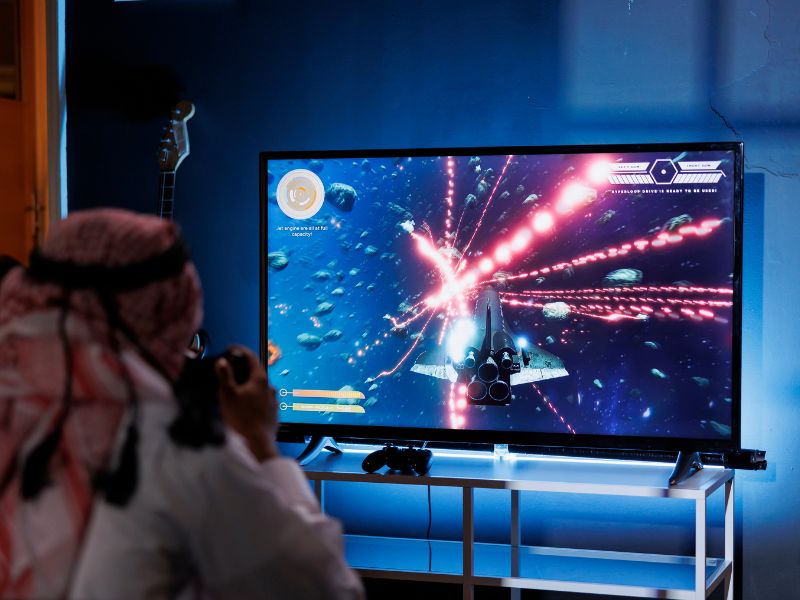
For gaming enthusiasts, both platforms offer unique advantages. Roku is designed for streaming and does not include advanced gaming features. It can run cloud-based gaming apps like Stadia or Xbox Cloud Gaming, but its focus is entertainment.Samsung Smart TVs, however, include a dedicated gaming hub, support for cloud gaming services, and integration with consoles. Features like low-latency mode, variable refresh rate, and HDMI 2.1 support on higher-end models make Samsung Smart TVs better suited for serious gaming. Additionally, Samsung’s Smart Hub allows multi-view setups and screen sharing, enhancing the overall gaming experience.
Smart Home Integration
Samsung Smart TVs possess a distinct advantage in terms of integration with smart home. SmartThings allows users to control lights, thermostats, cameras, and other smart devices right from the TV interface. Bixby, Alexa, or Google Assistant are not just voice assistants; they are integrated into the system, and the interaction with the larger smart home ecosystem is completely smooth. On the other hand, Roku provides smart home integration that is pretty much non-existent. There are some cases where devices can output from smart home apps and also be controlled like normal TVs, but it is not a home hub at all. For users who want to have their smart home ecosystem organized around the TV, the Samsung Smart TV is the ideal one.
Cost Considerations
Cost is a practical factor in the decision-making process. Roku offers highly affordable options, including budget sticks and low-cost TVs from manufacturers like TCL and Hisense. These options allow users to enjoy a complete smart TV experience at a fraction of the price of premium TVs.Samsung Smart TVs are generally more expensive due to superior hardware, display technology, and additional features. While the upfront cost is higher, many users find the investment worthwhile for the premium picture quality, advanced smart features, and integration with other Samsung devices.
Pros and Cons of Roku and Samsung Smart TV
Roku Pros:
- Extremely user-friendly interface
- Wide app and channel support
- Affordable devices and TVs
- Fast and responsive performance
Roku Cons:
- Limited smart home integration
- Fewer advanced features beyond streaming
- Display quality varies by manufacturer
Samsung Smart TV Pros:
- Premium display technology (QLED, Neo QLED)
- Deep smart home integration
- Advanced gaming and multi-view features
- Built-in voice assistants
Samsung Smart TV Cons:
- Higher cost
- Interface may feel complex to some users
- Slightly slower performance on older models
So, Is Roku Better Than Samsung Smart TV?
The answer depends on your priorities. If you value simplicity, speed, and broad app access at an affordable price, Roku is likely the better choice. However, if you are seeking premium display quality, advanced features, gaming support, and smart home integration, Samsung Smart TV offers more value despite the higher cost. Ultimately, both platforms continue to evolve, adding new apps, features, and improvements each year. Your choice should align with whether you prioritize ease of use and streaming convenience or premium hardware and advanced smart TV functionality.
Conclusion
The question of whether Roku is better than Samsung Smart TV boils down to a matter of personal preference. Roku is a winner in the areas of ease of use, the number of apps, and price, which is why it suits casual viewers and also streaming lovers the most. On the other hand, Samsung Smart TV comes with a fully-featured smart ecosystem, which includes display quality of the highest standard, advanced gaming features, and smart home integration, thus attracting the modern tech-savvy user and the affluent consumer. It is all about what you prefer to watch, how much you are willing to spend, and if you want the extra smart features or not when it comes to Panasonic vs. Samsung Smart TV. Both have their strengths and weaknesses and being clear about your priorities will guide you to the right choice for an enhanced entertainment experience.
Frequently Asked Questions (FAQs)
- Which is better for streaming apps Roku or Samsung Smart TV?
Roku generally offers broader app support and faster updates, though Samsung Smart TV supports major apps. - Is Roku easier to use than Samsung Smart TV?
Yes. Roku’s interface is simpler, more intuitive, and ideal for casual users. - Does Samsung Smart TV have better picture quality?
Yes, Samsung Smart TVs typically offer superior displays with QLED or Neo QLED technology, deep contrast, and enhanced brightness. - Can Roku TVs integrate with smart home devices?
Limited integration is possible, but Roku is not designed as a full smart home hub like Samsung Smart TV. - Are Roku devices cheaper than Samsung Smart TVs?
Yes. Roku devices and TVs are generally more affordable, making them accessible to budget-conscious buyers.

COMMENTS