
Creating three-dimensional models used to require specialized software, technical knowledge, and hours of manual work. Today, artificial intelligence
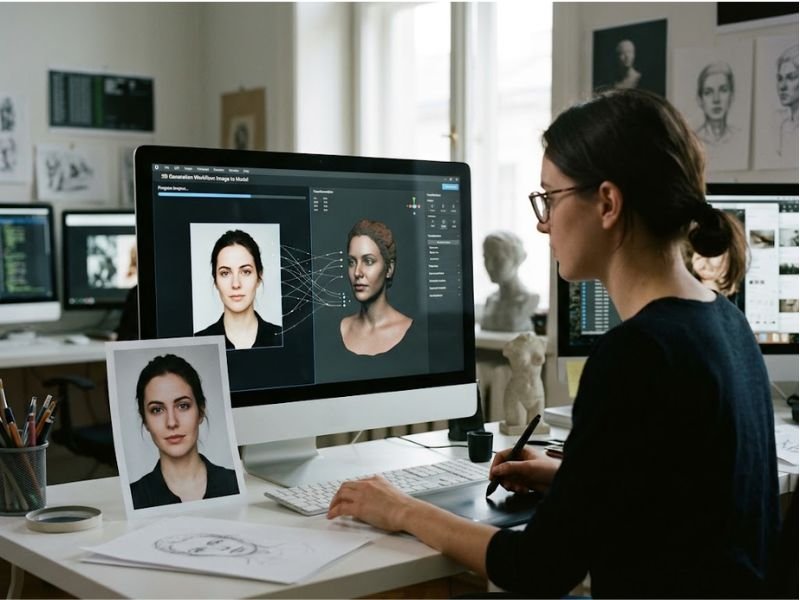
Creating three-dimensional models used to require specialized software, technical knowledge, and hours of manual work. Today, artificial intelligence is making this process more accessible to designers, content creators, hobbyists, and businesses. With the Photo to 3D Model process, users can turn ordinary images into three-dimensional digital objects without building every detail from scratch. AI-powered tools analyze visual information, estimate shapes and depth, and generate models that can be used in design projects, animation, gaming, product visualization, and other creative applications.
What Is Photo to 3D Model Technology?
Photo to 3D Model technology converts a two-dimensional image into a three-dimensional representation of an object, person, or scene. Traditional modeling often requires users to create shapes, adjust surfaces, and add textures manually. AI-based systems can automate some of these steps by predicting how an object might look from different angles.
Depending on the tool, users may upload a single photograph or several images of the same object. Some platforms generate a basic 3D shape from one image, while others use multiple photographs to capture more accurate geometry and surface details.
The quality of the result depends on image clarity, lighting, object complexity, and the technology used. A simple product photograph may be easier to process than an image containing overlapping objects or complicated backgrounds.
How Does AI Convert Photos into 3D Models?
The process usually begins when a user uploads an image to an AI-powered modeling platform. The system analyzes visible features such as outlines, colors, shadows, textures, and estimated depth. Using patterns learned during training, the AI predicts the object’s three-dimensional structure.
After analyzing the image, the software generates a digital model. Depending on the platform, this may include a mesh, surface texture, or a basic representation of the object’s shape. Some tools also allow users to refine the model, remove unwanted elements, adjust dimensions, and export the result into a supported file format.
When multiple images are available, the software may combine information from different angles to create a more complete representation. This can improve accuracy because the system has additional visual information about the object’s shape.
Key Features of AI 3D Modeling Tools
Modern AI modeling platforms offer features that simplify the process for beginners and experienced users. Image-based generation is one of the most useful options because it allows users to start with existing photographs rather than constructing objects manually.
Automatic texture generation can add colors and surface details to a model, making it more visually realistic. Some platforms also provide mesh editing, background removal, lighting adjustments, and model refinement features.
Export options are another important consideration. Depending on the intended use, users may need formats such as OBJ, STL, or GLB. These formats serve different purposes, including digital visualization, 3D printing, and interactive applications. Before choosing a tool, users should confirm that it supports the file types required for their projects.
Benefits of Photo to 3D Model Technology
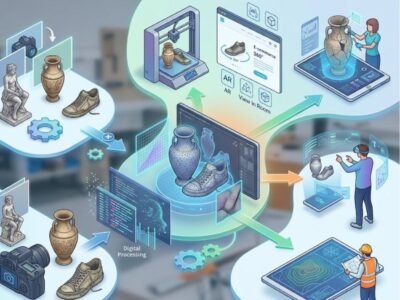
Photo to 3D Model
One major advantage of Photo to 3D Model technology is time savings. Creating a model manually can be complicated, particularly for users who have limited experience with 3D software. AI automation can provide a useful starting point and reduce the amount of initial modeling work.
Accessibility is another benefit. Designers, students, small businesses, and independent creators can experiment with three-dimensional content without needing advanced modeling skills. This makes it easier to explore new ideas and produce visual concepts.
AI-generated models can also support faster prototyping. Businesses may create preliminary product models for presentations, marketing materials, or design discussions. Although these models may need further editing, they can help teams communicate ideas more clearly and identify potential improvements before investing in detailed production work.
Practical Applications Across Different Industries
AI-based 3D modeling has applications in several fields. In e-commerce, businesses can use three-dimensional product representations to create interactive product displays and marketing visuals. Designers can turn reference images into starting points for product concepts, interior layouts, and visual presentations.
Game developers and digital artists may use generated models as early assets for virtual environments, animation, and creative experiments. In education, students can explore objects in three dimensions and better understand their shapes and structures.
The technology can also support architecture and visualization projects, although accurate measurements and professional verification are essential when models are used for technical planning or construction-related purposes.
Limitations and Challenges
Despite its advantages, converting photos into 3D models still has limitations. A single photograph does not reveal every side of an object, so the AI must estimate hidden areas. These predictions can produce incorrect shapes, missing details, or unrealistic surfaces.
Fine features may also be difficult to reproduce accurately. Reflective objects, transparent materials, complicated textures, and poor lighting can affect the final output. In some cases, users need to clean up the mesh, correct proportions, improve textures, or rebuild parts of the model manually.
For 3D printing, additional preparation may be necessary. The model may need a suitable mesh structure, correct dimensions, sufficient wall thickness, and a watertight surface. AI-generated output should therefore be checked before being used for manufacturing or other precision-based tasks.
Conclusion
Photo-to-3D model technology is making three-dimensional design more accessible by using artificial intelligence to simplify the conversion of images into digital objects. From product visualization and creative projects to education and game development, these tools offer practical ways to explore ideas and reduce initial modeling effort.
However, the quality of the final result depends on the source images, the AI platform, and the intended application. By selecting an appropriate tool, providing clear photographs, and reviewing generated models carefully, users can make better use of this technology and create useful 3D assets for a wide range of projects.

COMMENTS