

In July 2025, the electric-vehicle (EV) market in the United States witnessed a notable shift: the average transaction prices (ATPs) for new EVs decli
In July 2025, the electric-vehicle (EV) market in the United States witnessed a notable shift: the average transaction prices (ATPs) for new EVs declined, as major manufacturers — particularly Tesla — cut prices and increased incentives. These moves come amid intensifying competition, an impending change in federal tax-credit policy, and broader market dynamics. This article explores what happened with Tesla’s price reduction, the market context, the implications for buyers and for the company, and what it might mean going forward.
Market Context: Why the price reduction happened
Competitive & policy pressures
Several forces combined to motivate price reductions in July:
-
The federal EV tax credit in the U.S. was reaching a deadline or change, creating urgency among buyers and automakers. Benzinga+2teison.com+2
-
Automakers across the EV sector were competing more fiercely, with inventory pressures and a need to drive volume. Electrek+1
-
Consumers were facing economic headwinds such as relatively high vehicle prices and inflation, making affordability a growing concern.
-
For Tesla in particular, the mix of vehicles being sold had shifted toward more affordable models (such as the base versions of the Model 3 and Model Y), which pulls down the average transaction price. Benzinga+1
Fresh data: July’s average transaction prices & incentives
Key numbers to set the stage:
-
According to Kelley Blue Book (via Cox Automotive), the average transaction price for new EVs in July was US $55,689, which represented a 2.2 % decline from June’s US $56,915. Benzinga+2Cox Automotive+2
-
Year-on-year (July 2024 → July 2025) the average fell about 4.2 %. Cox Automotive+1
-
For Tesla specifically, its average transaction price in July was about US $52,949 — down about 2.4 % from June, and about 9.1 % year-on-year. Benzinga+1
-
Incentives also grew: average incentives for EVs rose to over 17.5 % of the ATP (a record modern high) and increased by over 40 % year-on-year. Benzinga+1
These figures show that not only were sticker prices or transaction prices coming down, but manufacturers/dealers were offering more incentives to close sales. This blend of lower ATPs and higher incentives helped drive demand.
Tesla’s Role: Leading the price cuts
Why Tesla led the reduction
Tesla’s prominence in the EV market makes its pricing moves influential. In July:
-
Tesla’s average price drop (9.1 % year-on-year) was steeper than the broader EV market. Benzinga+1
-
One contributing factor was that Tesla sold a higher proportion of its lower-cost models (Model 3 & Model Y base versions) in that month, which pulled down the average price. teison.com+1
-
Additionally, Tesla boosted incentives and perhaps adjusted production or delivery timing to meet demand ahead of policy changes. teison.com+1
Specific examples & implications
While Tesla did not publish public line-by-line discounts for every model in all markets (at least not in the sources consulted), industry commentary suggests:
-
Some reports mention cuts of up to US $5,000 on its best-selling Model Y and about US $3,000 on Model 3 in certain U.S. contexts. CryptoRank
-
In combination, the mix shift to more affordable trims + enhanced incentives = lower average transaction price.
-
For Tesla, this strategy seems dual-purposed: (1) stimulate volume ahead of tax-credit expirations or transitions, and (2) defend market share amid increasing competition from legacy automakers and EV-only competitors.
Tesla’s sales paradox
Interestingly, while Tesla cut prices and boosted incentives, Tesla’s sales volume in some geographies remained under pressure. Some commentary highlights:
-
In China, Tesla Model Y deliveries fell ~15 % year-on-year and Model 3 by ~40 % in July. Benzinga
-
Meanwhile, the U.S. EV market overall enjoyed a strong month (which we’ll cover next).
This suggests that while price cuts help, they are not a cure-all for all market challenges Tesla faces (e.g., competition, product lifecycle, regional dynamics). 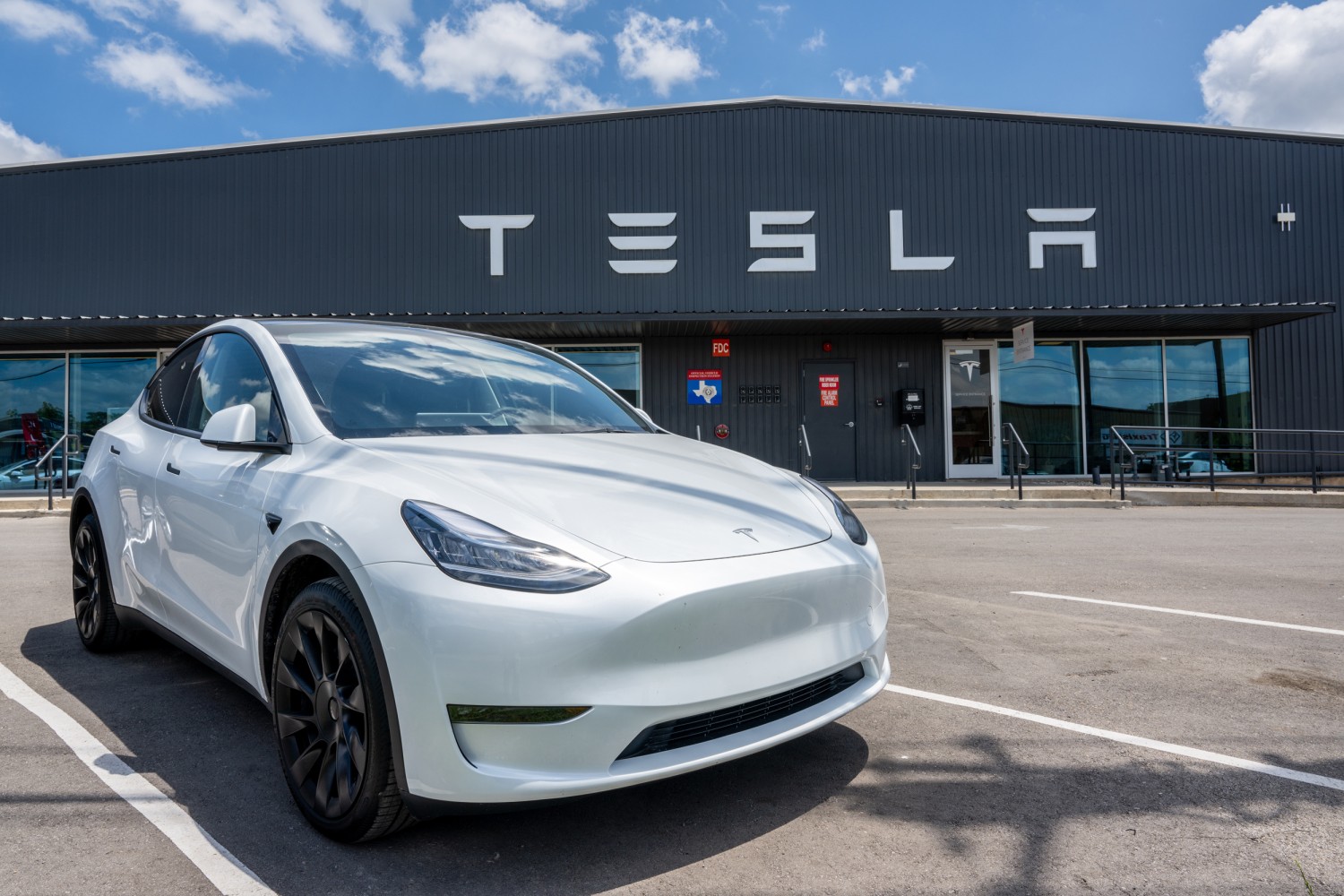
Market Impact & Buyer Implications
Jump in EV sales
The price cuts and incentives appear to have helped boost EV sales in July:
-
July was among the highest-ever months for U.S. EV sales, with one estimate at ~130,000+ units for new EVs (a ~20 % year-on-year increase) according to Cox Automotive. teison.com
-
Tesla’s price reduction was cited as a major contributor to the broader EV market momentum. Yahoo Finance+1
Buyer benefits
For buyers, the July period presented some favourable conditions:
-
A lower entry point into EV ownership (at least in terms of transaction prices) thanks to manufacturer price cuts and heightened incentives.
-
Possibly shorter waiting times or more favourable delivery terms (though actual availability varies).
-
A better cost-value proposition in some markets, particularly if the base trims meet a buyer’s needs.
However, caution is warranted: -
Lower transaction price does not always mean a dramatically lower total cost of ownership (insurance, maintenance, charging infrastructure, resale value still apply).
-
Some of the ‘discounts’ may reflect strategic timing (buyers rushing to secure delivery before policy changes) rather than purely steady long-term pricing.
-
With Tesla cutting prices, margin pressures may increase (for Tesla) which could affect service, future product investment, or resale values.
Strategic implications for Tesla
From Tesla’s perspective, the price reduction strategy carries both opportunities and risks:
Opportunities:
-
It may help maintain or grow market share in an increasingly crowded EV field.
-
By accelerating sales ahead of policy cliffs, Tesla could benefit from improved cash flow and production volume.
-
Lowering the barrier to entry (via lower entry prices) may enable Tesla to tap more price-sensitive customers, especially in the U.S. market.
Risks:
-
Margin erosion: Lower selling prices plus higher incentives put pressure on profit per vehicle.
-
Brand prestige dilution: Tesla’s brand has positioned itself somewhat as premium; deeper discounts may affect perceived value.
-
Future pricing expectations: If customers anticipate further discounts, full-price sales might become harder.
-
Competitive retaliation: Other manufacturers may respond with their own price cuts or incentives, leading to a margin race.
Why July? The Timing Factor
The timing of the price cuts in July was not accidental. Key factors include:
-
Impending policy change: The federal EV tax credit in the U.S. was nearing its expiration or change-over, which created an incentive for buyers to act ahead of time. Benzinga+1
-
Pre-quarter push: Automakers often push volume ahead of quarter ends or policy deadlines; July sits right at the start of Q3, making it a strategic window.
-
Inventory & model-mix shifts: As newer models and trims await rollout, older builds or base versions may receive price support to clear or keep volume.
-
Market signalling: By reducing prices visibly, Tesla signals to the market (dealers, customers, competitors) its commitment to volume and competitive pricing.
Hence, July served as a tactical moment for Tesla and the broader EV industry to align price strategies with external pressures and internal goals.
Broader Implications & Outlook
For the EV industry
-
Price cuts like these may become more prevalent as EV makers chase volume, adapt to policy transitions, and face more competitive landscapes.
-
Rising incentives (a 40 % year-on-year increase in EV incentives) suggest that simply sticker pricing is becoming less of an obstacle, but the margin trade-off is increasing. Benzinga+1
-
Legacy automakers that are scaling EVs may respond with their own aggressive pricing or financing offers, potentially making the EV market more buyer-friendly but more margin-challenged for manufacturers.
For Tesla
-
Tesla’s price reduction strategy may help short-term volume and market share, but long-term profitability and brand positioning will require new product cycles, cost management, and margin discipline.
-
With increasing global competition (especially from Chinese EV makers), Tesla will have to continue cost innovation and perhaps new lower-cost models to defend its position.
-
The next few quarters will be telling: if Tesla cannot maintain profitability while supporting volume, the market may begin to penalize margin contraction.
For the consumer
-
July may have offered one of the better windows in the near term for purchasing an EV (especially a Tesla) with favourable pricing and incentives.
-
However, buyers should remain mindful of the total cost of ownership: charging infrastructure availability, service network, resale value and battery longevity still matter.
-
Additionally, if Tesla (or other EV makers) continue to cut prices, waiting might bring further savings—but that must be weighed against current incentives and delivery times.
Challenges & Caveats
-
A price cut is not a guarantee of a “deal” for all buyers: regional incentives vary, delivery times can be long, and availability of the exact trim/spec may be limited.
-
Clearing excess inventory via discounts may occur, but the underlying demand and macro conditions still matter – a one-month cut does not guarantee sustained volume.
-
Tesla’s global performance remains mixed: while the U.S. showed strong EV sales in July, Tesla faced declines in other markets (e.g., China) which may offset gains. Benzinga
-
Margin pressure for Tesla might lead to cost-cutting in service, quality, or innovation investment, which could hurt brand value or customer satisfaction down the line.
Conclusion
July 2025 represented a key juncture in the U.S. EV market, with Tesla leading price reductions and higher incentives that helped lower the average transaction price for EVs. Tesla’s ATP of about US $52,949 — down ~9.1 % year-on-year — underscores the scale of the adjustment. These moves reflect broader strategic imperatives: policy deadlines (tax credits), intensifying competition, and shifting product mix.
For buyers, the window opened in July offered a relatively favourable environment: lower prices, more incentives, and improved value propositions. For Tesla, the strategy carries both opportunity (volume, market share) and risk (margin erosion, brand positioning). In the big picture, the July price reductions highlight how the EV market is evolving: affordability is becoming more critical, incentives are rising, and established players must adapt rapidly.
Going forward, the landscape will hinge on whether Tesla and other EV makers can sustain profitable growth while adapting to cost, competition, and policy headwinds. For consumers, the July moment may be a helpful benchmark in understanding pricing dynamics, but it also underscores that timing, incentives, and model-mix matter more than ever in the EV purchasing decision.

COMMENTS