
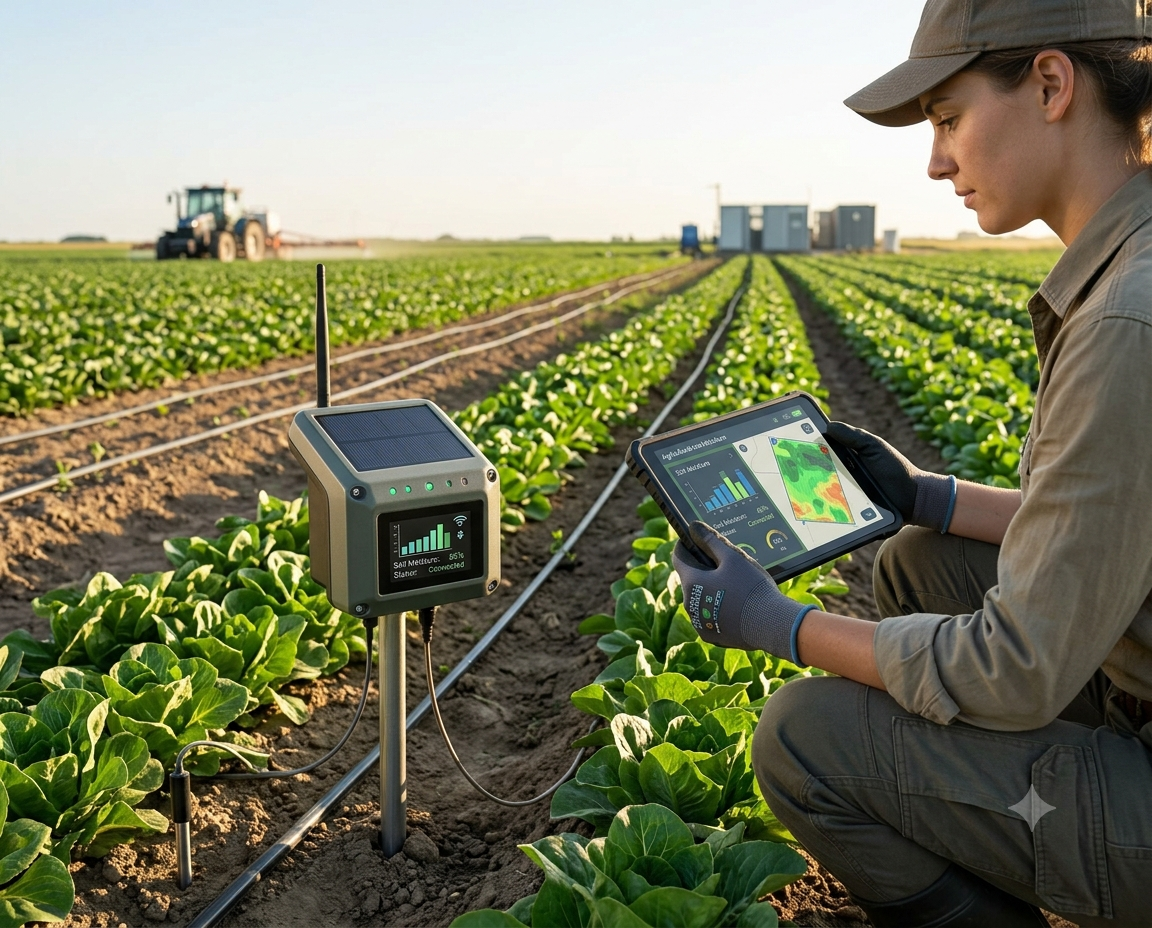
Introduction Modern agriculture is becoming increasingly dependent on data, automation, and smart technologies to improve productivity while using re
Introduction
Modern agriculture is becoming increasingly dependent on data, automation, and smart technologies to improve productivity while using resources more efficiently. Moisture Monitoring Technology: How Smart Sensors Improve Modern Agriculture explores how intelligent monitoring systems are helping farmers make better decisions about irrigation, crop health, and water management. By combining sensors, connected devices, and IoT agriculture solutions, farmers can obtain real-time information about soil conditions instead of relying only on visual inspection or fixed irrigation schedules. As climate conditions become less predictable and water conservation becomes more important, Moisture Monitoring Technology is becoming a valuable part of modern farming.
Moisture Monitoring Technology in Modern Agriculture
Moisture Monitoring Technology uses sensors and digital systems to measure the amount of moisture available in soil and other growing environments. These systems provide farmers with useful information that can help determine when crops need water and when irrigation can be reduced or delayed.
Traditional irrigation often follows schedules based on time rather than actual soil conditions. This can lead to overwatering or underwatering. Smart monitoring systems provide a more accurate picture of what is happening beneath the surface, allowing farmers to make decisions based on real-time information.
How Smart Moisture Sensors Work
Smart moisture sensors are installed in soil at appropriate depths near crops. They measure moisture levels and send information to a monitoring system or connected agricultural platform.
Depending on the technology, sensors may communicate through wireless networks, cellular connections, or other IoT systems. The collected data can then be viewed through dashboards or mobile applications.
A typical process includes:
- Measuring soil moisture levels
- Sending sensor readings to a connected platform
- Analyzing the collected information
- Identifying irrigation requirements
- Sending alerts or recommendations
- Activating irrigation equipment when appropriate
This creates a more responsive approach to agricultural water management.
IoT Agriculture and Moisture Monitoring
The growth of IoT agriculture has made moisture monitoring more powerful and accessible. Internet-connected sensors can continuously collect and transmit information from different areas of a farm.
Farmers can potentially monitor multiple fields without physically visiting every location. Data from moisture sensors can also be combined with information from weather stations, temperature sensors, crop monitoring systems, and irrigation equipment.
This interconnected approach allows farmers to develop a more complete understanding of field conditions.
Soil Moisture Monitoring
Soil moisture monitoring is one of the most important applications of smart agricultural sensors. Knowing how much water is available around plant roots helps farmers determine whether irrigation is actually necessary.
Accurate monitoring can help prevent unnecessary watering and ensure crops receive sufficient moisture during important growth stages.
For example, if sensors detect that soil moisture remains high after rainfall, an automated irrigation system may delay watering. If moisture levels fall below a predefined threshold, the system can notify the farmer or trigger an appropriate irrigation response.
Farm Automation
Modern farm automation is increasingly connected to real-time environmental data. Moisture sensors can become part of automated irrigation systems that respond to actual field conditions.
Automated systems can reduce the need for farmers to manually inspect fields and operate irrigation equipment. Instead, predefined conditions can trigger specific actions.
Benefits may include:
- Reduced manual labor
- More consistent irrigation
- Better water management
- Faster responses to changing conditions
- Improved operational efficiency
Automation does not eliminate the need for agricultural expertise. Instead, it gives farmers better information and tools for making informed decisions.
Reducing Water Waste
Water conservation is one of the strongest reasons to adopt smart moisture monitoring systems. Irrigating without knowing actual soil conditions can result in unnecessary water consumption.
Smart sensors provide information that can help farmers apply water when and where it is needed. This approach can be particularly useful in areas where water availability is limited.
By avoiding unnecessary irrigation, farms may improve resource efficiency while supporting more sustainable agricultural practices.
Supporting Crop Health
Both excessive and insufficient water can negatively affect crops. Too little moisture can cause plants to experience water stress, while excessive moisture can contribute to root problems and other growing issues.
Moisture Monitoring Technology helps farmers maintain a more appropriate moisture environment by providing continuous information about soil conditions.
When combined with crop observations and weather data, moisture information can support better decisions throughout the growing season.
Benefits for Different Types of Farms
Moisture Monitoring Technology
Smart moisture monitoring can be used across a variety of agricultural operations.
Applications include:
- Vegetable farms
- Fruit orchards
- Greenhouses
- Vineyards
- Grain production
- Nurseries
- Commercial landscaping
- Controlled-environment agriculture
The size and complexity of the monitoring system can be adjusted according to the farm’s requirements.
Combining Moisture Sensors with Weather Data
Moisture monitoring becomes even more useful when combined with weather information. Rainfall forecasts, temperature, humidity, and evaporation conditions can all influence irrigation requirements.
For example, if significant rainfall is expected, irrigation may be reduced. During hot and dry conditions, farmers may need to monitor soil moisture more frequently.
Combining multiple data sources creates a more comprehensive approach to farm management.
Data-Driven Farming Decisions
Agricultural data can help farmers identify patterns over time. Instead of looking at individual moisture readings, growers can examine historical information to understand how soil conditions change throughout different seasons.
This data can support decisions involving:
- Irrigation schedules
- Crop selection
- Planting strategies
- Water allocation
- Field management
- Resource planning
As more data becomes available, farmers can develop increasingly precise management strategies.
Challenges of Smart Moisture Monitoring
Despite its benefits, smart monitoring technology also has some challenges. Initial equipment costs, sensor placement, connectivity, maintenance, and data management can affect implementation.
Sensors must be installed correctly and maintained regularly to produce reliable measurements. Wireless systems may also require dependable connectivity, particularly across large agricultural areas.
Farmers should therefore evaluate equipment quality, environmental conditions, technical support, and long-term operating costs before investing.
The Future of Moisture Monitoring Technology
The future of Moisture Monitoring Technology is closely connected with artificial intelligence, machine learning, IoT networks, and advanced farm automation.
Future systems may become better at predicting irrigation requirements by analyzing historical soil data, weather forecasts, crop growth, and environmental conditions simultaneously.
More advanced platforms may also provide automated recommendations rather than simply displaying sensor readings. This could make agricultural technology easier to use while helping farmers manage increasingly complex growing environments.
Conclusion
Moisture Monitoring Technology: How Smart Sensors Improve Modern Agriculture highlights the growing importance of real-time environmental data in farming. Through soil moisture monitoring, IoT agriculture, and intelligent farm automation, growers can make more informed irrigation decisions, reduce unnecessary water use, and support healthier crops. While smart sensors require proper installation, maintenance, and investment, their ability to provide continuous field information makes them a valuable tool for modern agriculture. As connected technologies and data-driven farming continue to develop, moisture monitoring will likely play an increasingly important role in creating efficient and sustainable agricultural systems.
Frequently Asked Questions
What is Moisture Monitoring Technology?
Moisture Monitoring Technology uses sensors and digital systems to measure moisture levels in soil or growing environments and provide information that can support irrigation and crop management decisions.
Why is soil moisture monitoring important?
Soil moisture monitoring helps farmers understand how much water is available to plants. This can help reduce unnecessary irrigation while ensuring crops receive adequate moisture.
How does IoT agriculture use moisture sensors?
IoT agriculture connects moisture sensors to digital platforms so farmers can collect, transmit, and analyze soil data remotely.
How does farm automation benefit from moisture sensors?
Farm automation can use moisture readings to help control irrigation equipment, reduce manual work, and respond more efficiently to changing field conditions.
Can moisture monitoring reduce water consumption?
Yes. By providing real-time information about soil conditions, smart monitoring systems can help farmers avoid watering when soil already contains sufficient moisture, potentially improving overall water-use efficiency.

COMMENTS