
Introduction Data has become one of the most valuable assets for modern organizations, but the increasing volume and complexity of information also c
Introduction
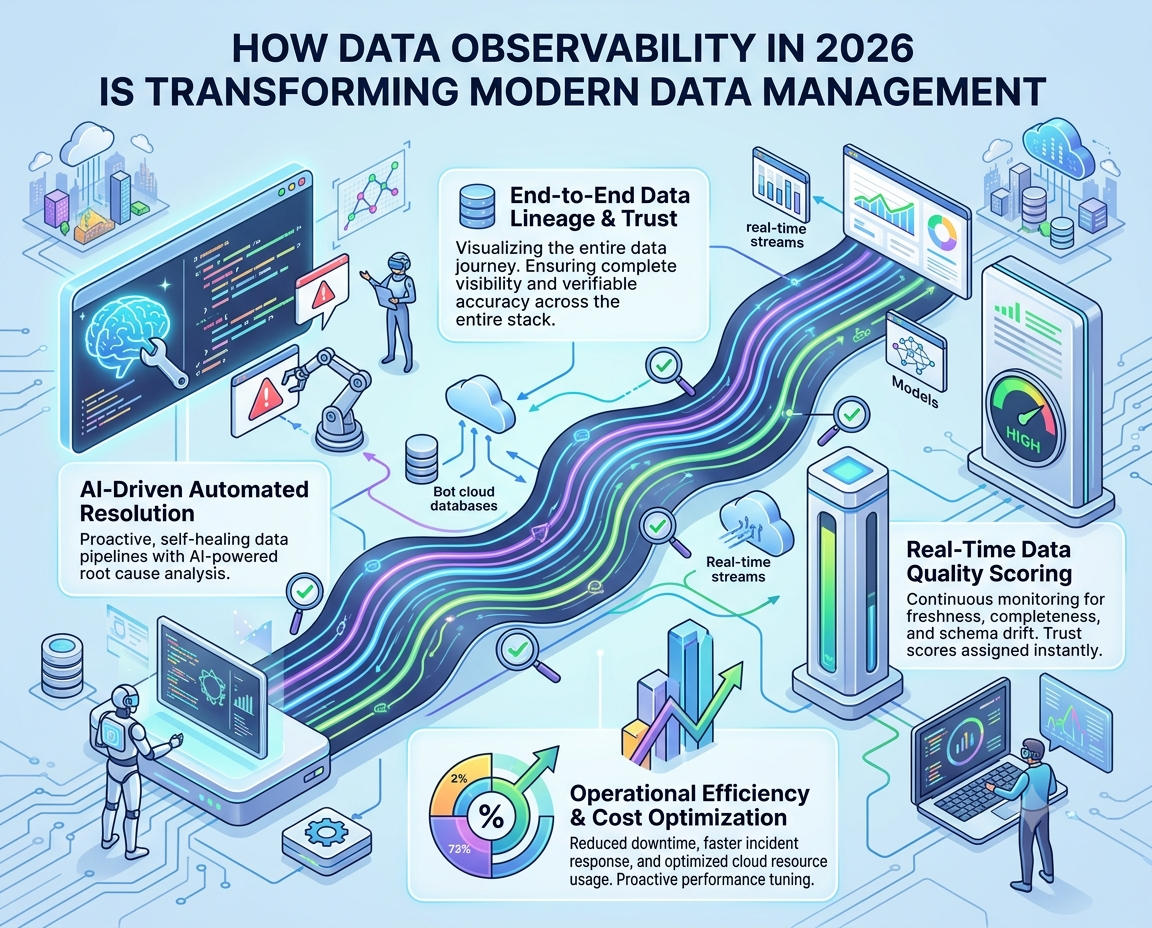
Data has become one of the most valuable assets for modern organizations, but the increasing volume and complexity of information also create new challenges for businesses. How Data Observability in 2026 Is Transforming Modern Data Management is an important topic as companies increasingly depend on reliable information for analytics, artificial intelligence, automation, and everyday decision-making. Modern organizations need to know where their data comes from, whether it is accurate, and how it moves through different systems. By combining data monitoring with stronger data governance, advanced AI data infrastructure, and modern data analytics, businesses can improve data reliability and identify problems before they affect important operations.
How Data Observability in 2026 Is Transforming Modern Data Management
Traditional data monitoring often focuses on whether systems are running. Data observability takes a broader approach by helping organizations understand the health and reliability of their data itself.
Data observability in 2026 is increasingly becoming an essential part of modern data management because businesses are working with information from cloud platforms, applications, databases, APIs, customer systems, and automated pipelines.
When data becomes incorrect, delayed, incomplete, or unavailable, the impact can spread across dashboards, reports, applications, and AI systems. Data observability helps teams identify these issues earlier and understand their potential impact.
What Is Data Observability?
Data observability refers to the ability to understand the condition, quality, and behavior of data across an organization’s technology environment.
It can help teams monitor areas such as:
- Data freshness
- Data volume
- Data distribution
- Data quality
- Pipeline performance
- Schema changes
- Data dependencies
- Unexpected anomalies
Instead of discovering a problem after a business report is incorrect, teams can receive alerts when unusual data behavior occurs.
The Role of Data Governance
Strong data governance is essential for organizations that want to use their information responsibly and effectively.
Data governance establishes policies and processes for managing data quality, security, access, ownership, and compliance. Data observability can complement these practices by providing continuous visibility into what is happening across data systems.
For example, governance teams may establish rules about which data should be accurate, secure, and accessible. Observability tools can help identify when those expectations are not being met.
This combination creates a stronger foundation for trustworthy data management.
Data Quality Monitoring
Poor-quality data can negatively affect business decisions. Duplicate records, missing values, outdated information, and unexpected changes can reduce confidence in reports and applications.
Modern observability systems can monitor data quality continuously and identify unusual patterns.
Instead of manually checking every dataset, data teams can use automated monitoring to detect potential issues and investigate them more quickly.
This is particularly valuable for organizations managing thousands of datasets across multiple platforms.
AI Data Infrastructure
Artificial intelligence is increasing the importance of reliable data. Modern AI applications depend on large amounts of structured and unstructured information for training, testing, retrieval, and real-time processing.
Reliable AI data infrastructure requires data pipelines that are accurate, available, and properly monitored.
If an AI system receives incomplete or outdated information, its results may become less reliable. Data observability can help teams understand the health of data pipelines supporting AI applications.
As organizations deploy more AI solutions, monitoring the data behind those systems will become increasingly important.
Data Pipeline Monitoring
Data pipelines move information from source systems into databases, warehouses, lakes, and analytics platforms. A problem at any stage can affect downstream systems.
Data observability in 2026 is helping organizations improve pipeline visibility by identifying issues such as:
- Failed pipeline jobs
- Delayed data
- Schema changes
- Missing records
- Unexpected data volumes
- Broken dependencies
This allows engineering teams to investigate problems faster and reduce the time required to restore reliable data.
Improving Data Analytics
Modern data analytics depends heavily on reliable information. Businesses use analytics platforms to understand customers, measure performance, identify trends, and make strategic decisions.
When underlying data is incorrect, even sophisticated analytics systems can produce misleading results.
Data observability provides additional visibility into the datasets supporting analytics platforms. Teams can identify potential quality problems before they significantly affect dashboards and reports.
This helps organizations build greater confidence in their analytical processes.
Reducing Data Downtime
Data downtime occurs when information becomes unavailable, incomplete, or unreliable for users and applications.
For businesses that rely heavily on real-time analytics and automated processes, data downtime can create significant operational problems.
Observability systems can detect unusual behavior and alert responsible teams quickly. Faster detection can reduce the amount of time employees spend searching for the source of a problem.
Automation and AI-Powered Detection
One of the major developments in data observability in 2026 is the increasing use of artificial intelligence and automation.
AI-powered monitoring can analyze large volumes of historical data and identify patterns that may be difficult for humans to recognize manually.
Automated systems can potentially detect anomalies, identify unusual changes, and help teams prioritize the most important incidents.
This can make data monitoring more scalable as organizations continue to expand their technology environments.
Cloud Data Management
Data Observability in 2026
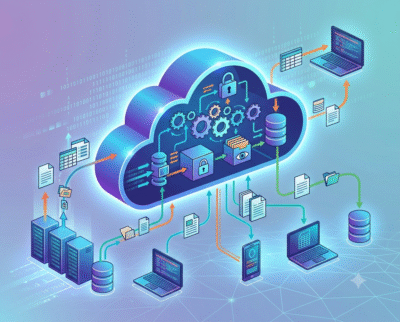
Cloud platforms have changed how organizations store and process information. Businesses may now operate data across multiple cloud services, warehouses, lakes, databases, and SaaS applications.
This distributed environment creates additional monitoring challenges.
Data observability can provide a unified view of data health across different systems, helping teams understand how changes in one platform may affect downstream processes.
Benefits for Modern Businesses
Organizations can gain several benefits from adopting modern data observability practices.
Faster Problem Detection
Automated monitoring can identify data problems before they become major business issues.
Better Data Reliability
Continuous visibility helps teams maintain more dependable datasets.
Improved Decision-Making
Reliable data gives business leaders greater confidence in reports and analytics.
Stronger AI Systems
High-quality data supports more reliable AI applications and workflows.
Reduced Engineering Work
Automation can reduce the amount of time teams spend manually investigating data problems.
Challenges of Data Observability
Although data observability provides significant advantages, implementation can present challenges.
Organizations may need to address:
- Large data volumes
- Complex data environments
- Tool integration
- Monitoring costs
- Alert fatigue
- Data privacy
- Lack of specialized skills
Successful implementation requires clear objectives and careful selection of monitoring strategies.
Best Practices for Data Observability in 2026
Businesses can improve their approach by following several practices.
First, identify the most important datasets and pipelines rather than attempting to monitor everything immediately. Next, establish clear data quality expectations and ownership.
Organizations should also configure meaningful alerts so teams are notified about important issues without being overwhelmed by unnecessary notifications.
Finally, observability should be integrated with existing data engineering, governance, security, and incident-management processes.
The Future of Data Management
The future of data management will likely involve greater automation, artificial intelligence, and real-time monitoring.
As businesses adopt more AI applications and increasingly complex cloud architectures, understanding data health will become just as important as monitoring traditional infrastructure.
Data observability in 2026 represents an important shift toward proactive data management. Instead of waiting for users to report incorrect information, organizations can continuously monitor their data environments and respond to potential problems earlier.
Conclusion
How Data Observability in 2026 Is Transforming Modern Data Management highlights the growing importance of trustworthy information in today’s digital economy. By combining observability with data governance, reliable AI data infrastructure, and modern data analytics, organizations can improve data quality, detect problems faster, and make more confident decisions. As data environments become increasingly distributed and AI-driven, proactive monitoring will be essential to effective data management. Organizations that invest in visibility, automation, and strong data practices can build more reliable systems and create greater value from their information.
Frequently Asked Questions
What is data observability?
Data observability is the ability to monitor and understand the health, quality, reliability, and behavior of data across different systems and pipelines.
Why is data observability important in 2026?
Data observability in 2026 is increasingly important because organizations are managing complex cloud environments, large datasets, real-time analytics, and AI applications that depend on reliable information.
How does data governance work with data observability?
Data governance establishes rules for data ownership, quality, security, and compliance, while observability provides visibility into whether data systems are operating according to those expectations.
Why does AI need reliable data infrastructure?
AI data infrastructure supports the collection, processing, storage, and delivery of information used by AI systems. Poor-quality or incomplete data can reduce the reliability of AI applications.
How does data observability improve analytics?
Reliable data analytics requires accurate and timely information. Observability can help identify data-quality issues before they negatively affect dashboards, reports, and business decisions.
Is data observability useful for small businesses?
Yes. Small businesses can also benefit from monitoring important datasets and pipelines. The scope of implementation can be adjusted according to the organization’s data volume and technical requirements.

COMMENTS