
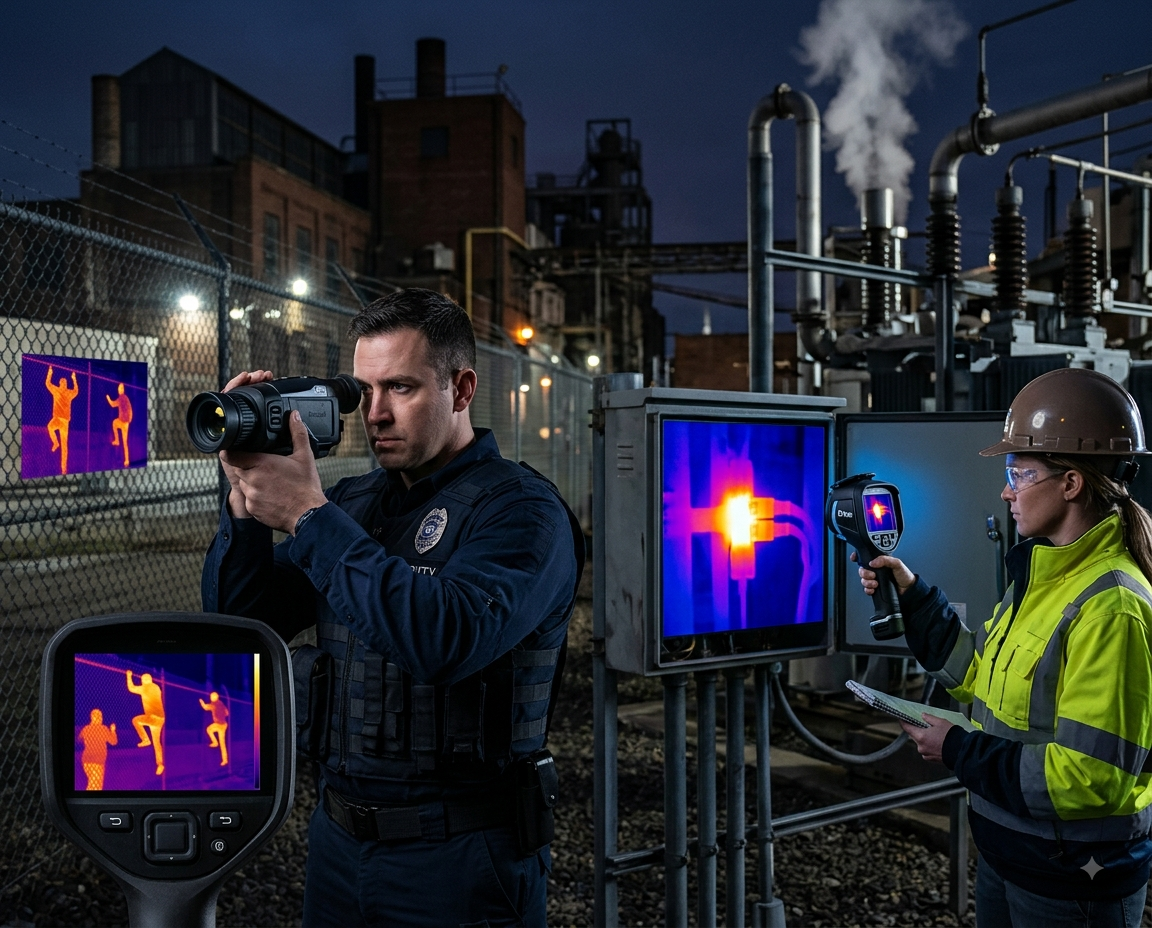
Introduction Modern security, manufacturing, construction, and maintenance operations increasingly depend on technologies that can identify problems
Introduction
Modern security, manufacturing, construction, and maintenance operations increasingly depend on technologies that can identify problems before they become serious. Thermal imaging cameras are playing an important role in this transformation by detecting infrared radiation and converting differences in heat into visible images. Unlike conventional cameras that primarily capture visible light, thermal imaging technology can reveal temperature variations that may not be visible to the human eye. This makes it valuable for industrial inspection, equipment monitoring, building assessments, and smart security systems. As businesses look for more proactive approaches to safety and maintenance, thermal imaging is becoming an increasingly useful technology for identifying potential issues early.
How Thermal Imaging Cameras Work
Thermal imaging cameras detect infrared energy emitted by objects and surfaces. Every object with a temperature above absolute zero emits some amount of infrared radiation. The camera’s sensor detects these differences and converts them into a thermal image.
The resulting image represents temperature variations using different shades or colors. Warmer areas may appear differently from cooler areas, allowing operators to quickly identify unusual heat patterns.
This capability is particularly useful when inspecting equipment that cannot easily be evaluated through traditional visual inspection. A machine may appear normal from the outside while producing abnormal heat because of friction, electrical resistance, poor connections, or component failure.
Thermal imaging allows technicians to investigate these temperature differences without necessarily touching the equipment.
Thermal Imaging Cameras for Industrial Inspection
Industrial inspection is one of the most valuable applications of thermal imaging technology. Manufacturing facilities contain electrical panels, motors, bearings, pumps, conveyors, transformers, and other equipment that can generate heat during operation.
An unexpected temperature increase can sometimes indicate an emerging problem. For example, an electrical connection with excessive resistance may produce abnormal heat, while a mechanical bearing experiencing excessive friction may also become warmer than expected.
Thermal cameras allow technicians to scan equipment while it is operating and identify areas that require additional investigation.
This can make inspection processes more efficient because technicians can focus their attention on areas showing unusual thermal patterns instead of manually examining every component in the same way.
The Role of Predictive Maintenance
Predictive maintenance focuses on identifying potential equipment problems before they result in unexpected failure. Thermal imaging can support this strategy by providing information about equipment temperature and heat distribution.
Traditional maintenance programs may rely on fixed schedules, meaning equipment is inspected or serviced at predetermined intervals. Predictive approaches instead use condition-related information to determine when attention may be necessary.
Thermal imaging can become one part of this condition-monitoring strategy. If a motor, electrical component, bearing, or other machine part begins producing an unusual heat pattern, technicians can investigate before the issue potentially develops into a more serious failure.
The technology does not automatically diagnose every problem, but it can provide an important early warning signal.
Electrical System Inspections
Electrical systems are another major application for thermal imaging.
Loose connections, overloaded circuits, damaged components, and unbalanced electrical loads can sometimes produce abnormal heat. Thermal cameras can help technicians identify temperature differences across electrical panels and components.
Because inspections can often be performed while systems are operating, thermal imaging can provide useful information without requiring technicians to physically touch energized components.
However, thermal images should be interpreted by appropriately trained professionals. A hot spot does not automatically identify a specific failure, and additional testing may be required to determine the actual cause.
Building and Construction Inspections
Thermal imaging is also useful outside industrial environments. Building professionals can use infrared technology to identify temperature differences associated with insulation problems, air leakage, moisture-related concerns, or other building-envelope issues.
For example, areas with inadequate insulation may appear different from properly insulated sections because of differences in heat transfer.
Thermal cameras can therefore support building assessments by showing patterns that may not be obvious during a normal visual inspection.
This can help professionals determine where additional investigation may be worthwhile.
Smart Security Systems
The use of thermal technology is expanding within smart security systems. Conventional security cameras rely on visible light, which means their performance can be affected by darkness, glare, shadows, or changing lighting conditions.
Thermal cameras detect heat rather than visible light. This allows them to identify people, animals, vehicles, and other heat-emitting objects in situations where ordinary cameras may struggle.
When integrated with other security technologies, thermal imaging can provide an additional layer of situational awareness.
For example, a security system could combine thermal information with conventional video, motion detection, alarms, or analytics to help security teams identify unusual activity.
Thermal Imaging for Nighttime Monitoring
Thermal imaging cameras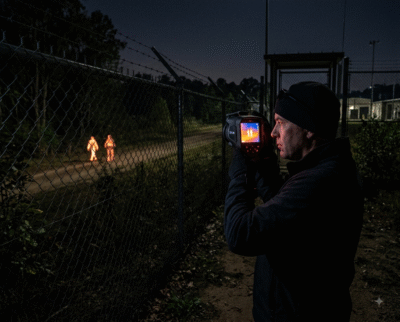
One of the major advantages of thermal imaging is its ability to operate in complete darkness.
Because thermal cameras detect infrared energy rather than relying on visible illumination, they can produce images at night without requiring the same level of ambient light as conventional cameras.
This can be useful for industrial sites, warehouses, utility facilities, construction locations, and large properties that require continuous monitoring.
Thermal imaging does not necessarily replace conventional video cameras. Instead, the two technologies can complement each other by providing different types of visual information.
Fire and Heat Detection
Thermal technology can also support early detection of unusual heat conditions.
In industrial environments, overheating equipment can potentially create safety risks. Thermal monitoring can identify abnormal temperature increases and provide alerts when temperatures reach predefined thresholds, depending on the system.
Some applications also use thermal cameras to monitor large areas where conventional temperature sensors may not provide sufficient spatial information.
Early detection can give personnel more time to investigate a potential problem and take appropriate action.
Advantages of Thermal Imaging Technology
Thermal imaging provides several important advantages across different industries.
Non-Contact Inspection
Technicians can often evaluate equipment from a safe distance without physically touching the inspected surface.
Early Problem Detection
Unusual heat patterns may provide early indications of electrical, mechanical, or structural issues.
Operation in Darkness
Thermal cameras can detect heat-emitting objects even when visible lighting is limited.
Faster Screening
Large areas and multiple pieces of equipment can be scanned relatively quickly.
Preventive Maintenance Support
Thermal information can help maintenance teams identify equipment that may require closer examination.
Limitations to Consider
Although thermal imaging cameras are powerful tools, they have limitations.
Thermal cameras measure infrared radiation and surface temperature characteristics rather than directly seeing through objects. They generally cannot see through walls or solid materials simply because they detect heat.
Environmental conditions can also affect thermal measurements. Wind, reflections, sunlight, moisture, distance, and surface properties can influence what appears in a thermal image.
For this reason, thermal imaging should be used as part of a broader inspection process rather than treated as an automatic diagnosis system.
Choosing the Right Thermal Imaging Camera
The best camera depends on the intended application.
Industrial users may prioritize temperature measurement accuracy, durability, thermal sensitivity, resolution, and reporting capabilities. Security professionals may focus more on detection range, image processing, integration capabilities, and nighttime performance.
Other factors can include lens options, refresh rate, connectivity, storage, software compatibility, and whether the camera supports automated alerts.
Understanding the actual inspection or monitoring requirement before purchasing equipment can help prevent unnecessary spending.
The Future of Thermal Imaging Cameras
The future of thermal imaging cameras is closely connected to automation, artificial intelligence, cloud monitoring, and connected sensor systems.
AI-powered analytics can potentially help identify unusual thermal patterns automatically. Instead of requiring an operator to constantly watch thermal feeds, intelligent software can flag temperature changes that may require attention.
In industrial environments, thermal information could become part of broader predictive maintenance platforms. In security environments, thermal cameras may work alongside conventional cameras, sensors, and automated analytics.
These developments could make thermal monitoring more proactive and useful across a growing range of applications.
Conclusion
Thermal imaging cameras are transforming how organizations approach security, maintenance, and inspection by revealing temperature patterns that conventional cameras cannot easily detect. From industrial inspection and electrical testing to predictive maintenance and smart security systems, infrared technology provides valuable information that can support earlier investigation of potential problems. Although thermal imaging has limitations and should not replace professional diagnosis, it can serve as a powerful additional inspection tool. As AI, automation, and connected monitoring continue to develop, thermal imaging is likely to become even more integrated into modern industrial and security operations.
Frequently Asked Questions
What are thermal imaging cameras used for?
Thermal imaging cameras are used for applications such as equipment inspection, electrical testing, building assessments, security monitoring, fire detection, and maintenance.
How do thermal imaging cameras work?
They detect infrared radiation emitted by objects and convert differences in infrared energy into a thermal image that shows temperature variations.
Can thermal cameras see through walls?
Generally, no. Thermal cameras detect infrared radiation from surfaces and do not normally see through solid walls. They may, however, reveal temperature patterns on a wall’s surface that indicate differences behind or within the building structure.
How does thermal imaging support predictive maintenance?
Thermal imaging can identify unusual heat patterns in equipment. These patterns may indicate potential electrical or mechanical problems that require further investigation, supporting predictive maintenance strategies.
Are thermal cameras useful for security?
Yes. Thermal cameras can support smart security systems by detecting heat-emitting people, animals, or vehicles in darkness and other low-visibility conditions.
Can thermal imaging replace traditional cameras?
Not always. Thermal and conventional cameras provide different types of information. Combining both technologies can provide broader security and inspection coverage.
What industries use thermal imaging?
Thermal imaging is used across manufacturing, electrical services, construction, building inspection, energy, transportation, security, utilities, and many other industries.

COMMENTS