
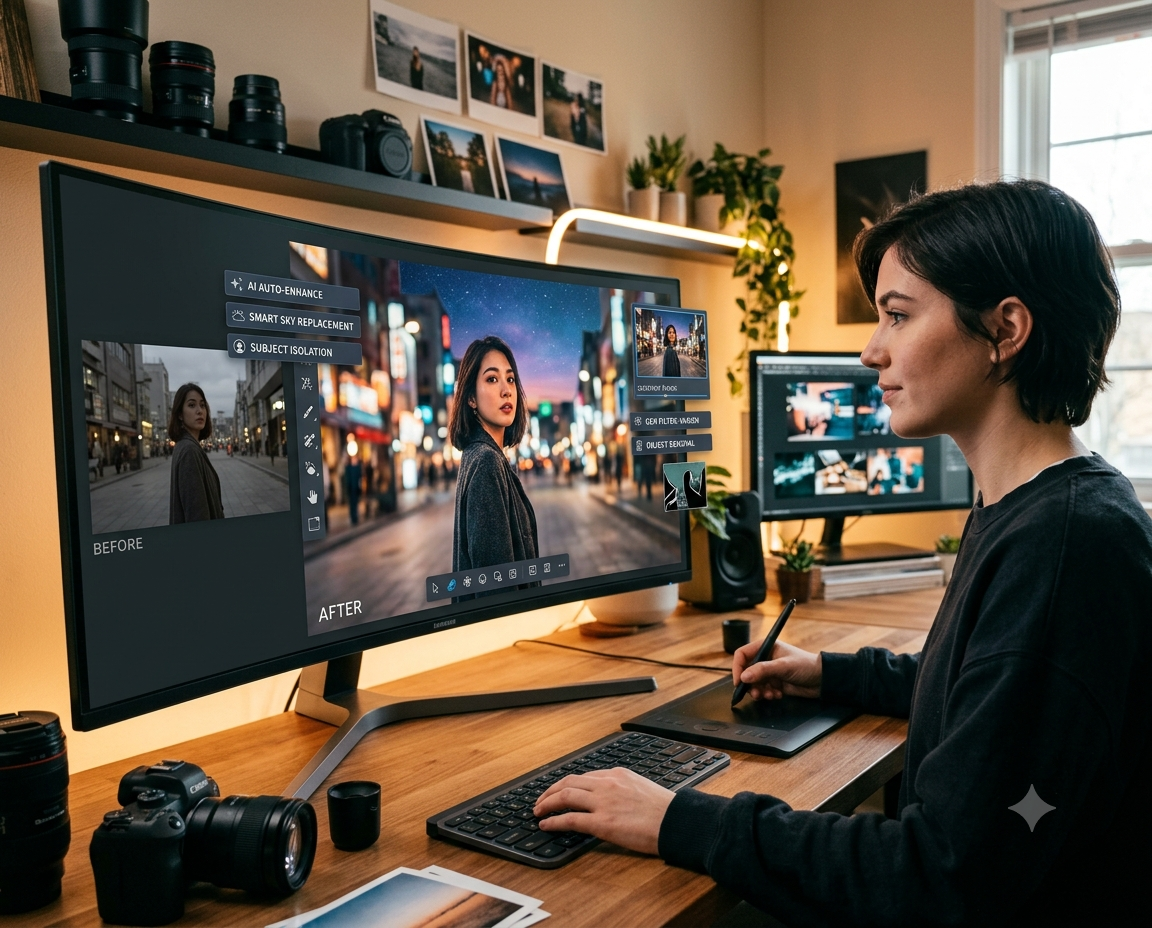
Introduction Photography and digital content creation have changed significantly as artificial intelligence becomes part of modern creative workflows
Introduction
Photography and digital content creation have changed significantly as artificial intelligence becomes part of modern creative workflows. AI Is Transforming Image Editing by helping photographers, designers, marketers, and content creators complete tasks that once required considerable time and technical expertise. From automatically improving image quality to removing unwanted objects and generating new visual elements, Generative AI is making advanced editing capabilities more accessible. Modern image editing software is also integrating intelligent features that allow users to make complex changes with simpler instructions. As a result, AI Is Transforming Image Editing and creating new possibilities for digital photography and visual content creation.
How AI Is Transforming Image Editing
Traditional image editing often requires users to manually adjust exposure, colors, backgrounds, objects, and other elements. Although professional editing tools provide extensive control, achieving a polished result can take significant time.
Artificial intelligence changes this process by analyzing images and identifying different elements automatically. AI-powered tools can recognize subjects, backgrounds, faces, objects, lighting conditions, and other visual characteristics.
Instead of performing every adjustment manually, users can describe the desired result or select an intelligent editing feature. The software then analyzes the image and applies appropriate changes.
This approach does not necessarily eliminate creative control. Instead, it gives photographers and designers additional tools that can speed up repetitive tasks while allowing them to focus on creative decisions.
The Role of Generative AI
Generative AI is one of the most important technologies influencing modern image editing. Unlike traditional editing systems that mainly modify existing pixels, generative models can create or reconstruct visual content based on instructions.
For example, a creator may use an AI tool to expand an image beyond its original boundaries, replace a background, generate missing portions of a photograph, or create new visual elements.
Generative AI can also help users experiment with different creative concepts without having to produce every element manually.
However, users should carefully review AI-generated results because generated content can sometimes contain visual inconsistencies or details that do not accurately represent the intended subject.
AI-Powered Image Editing Software
Modern image editing software increasingly includes AI-powered features designed to simplify professional and everyday editing.
Common capabilities include:
- Automatic background removal
- Object removal
- Image enhancement
- Noise reduction
- Smart cropping
- Face and subject detection
- Lighting adjustments
- Background replacement
- Image expansion
- Automatic color correction
These features can make advanced editing more accessible to people who may not have extensive experience with professional photography software.
Improving Photo Quality
One of the most practical applications of AI is automatic image enhancement. AI systems can analyze image characteristics and determine how brightness, contrast, sharpness, and other properties can be adjusted.
This can be particularly useful for older photographs, low-light images, or pictures captured with limited camera equipment.
AI-based enhancement can help improve clarity while reducing some forms of noise and unwanted visual artifacts. However, the quality of the final result depends on the original image and the technology being used.
AI Background Removal and Replacement
Removing a background manually can be a time-consuming process, especially when photographs contain complicated edges such as hair, clothing, plants, or other detailed objects.
AI systems can identify the main subject and separate it from the background automatically.
Creators can then replace the original background with another image, a solid color, or an AI-generated environment.
This capability is particularly useful for product photography, marketing materials, social media content, and professional portraits.
Object Removal and Image Restoration
AI Is Transforming Image Editing
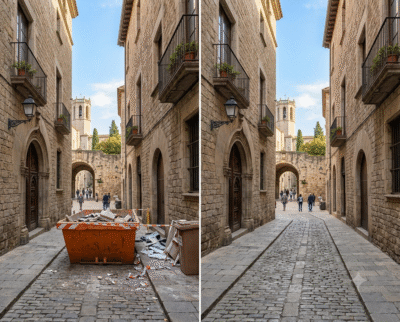
AI can also help remove unwanted objects from photographs. Instead of manually selecting an object and reconstructing the surrounding area, intelligent tools can analyze nearby pixels and generate a replacement area.
This technology can be useful when photographers want to remove distractions such as signs, people in the background, cables, or other unwanted elements.
AI restoration tools can also help repair damaged or low-quality photographs by improving clarity and reconstructing missing visual information.
AI and Visual Content Creation
Visual content creation has become increasingly important for businesses, publishers, influencers, and online brands.
Companies often need large quantities of images for websites, advertisements, social media posts, product pages, presentations, and marketing campaigns.
AI can help speed up this process by assisting with editing, resizing, background creation, image variations, and other repetitive activities.
This means a small creative team can potentially produce more visual content without manually completing every editing step.
AI Is Transforming Image Editing for Photographers
Professional photographers can benefit from AI without giving up their creative style.
AI can handle repetitive tasks such as selecting subjects, organizing photographs, correcting common image problems, and preparing multiple versions of a photograph.
This can allow photographers to spend more time on composition, storytelling, client requirements, and artistic decisions.
AI can therefore function as a creative assistant rather than simply an automated replacement for traditional photography skills.
AI Editing for Social Media
Social media creators need visually appealing content that can be produced quickly. AI-powered editing tools can help creators adapt images for different platforms and formats.
For example, a single photograph can be resized, enhanced, cropped, or modified for different aspect ratios.
AI tools can also help create variations of visual content, making it easier for creators to test different styles and concepts.
This is particularly valuable for creators who publish frequently and need to maintain a consistent visual identity.
Benefits of AI Image Editing
The growing adoption of AI image technology provides several potential advantages.
Faster Editing
AI can automate repetitive tasks that previously required manual work.
Greater Accessibility
People without advanced editing skills can use intelligent features to perform complex adjustments.
More Creative Possibilities
Generative tools can help creators experiment with new concepts and visual styles.
Improved Productivity
Automating routine editing can allow creative professionals to focus on more valuable work.
Consistent Results
AI-powered workflows can help apply similar adjustments across large collections of images.
Challenges and Limitations
Despite its benefits, AI image editing also creates challenges.
AI-generated results are not always perfect. Small visual errors, unrealistic details, distorted objects, or inaccurate textures can sometimes appear.
There are also concerns about copyright, image ownership, authenticity, and the ethical use of AI-generated content. Photographers and businesses should understand the terms of the tools they use and ensure that their workflows comply with applicable laws and platform requirements.
Human review remains important, particularly when images are being used for journalism, advertising, professional documentation, or other situations where accuracy matters.
The Future of Digital Photography
AI Is Transforming Image Editing in ways that are likely to become even more significant as AI models improve.
Future editing systems may provide more precise controls through natural-language instructions, allowing users to describe complex changes without navigating numerous menus.
AI could also become better at understanding artistic style, lighting, composition, and context. This may lead to editing platforms that function more like intelligent creative assistants.
At the same time, traditional photography skills will remain valuable. Understanding composition, lighting, color, storytelling, and visual communication gives creators the knowledge needed to evaluate and direct AI-generated results effectively.
How Creators Can Use AI Responsibly
Creators should treat AI as a tool that supports their creative process rather than assuming every automated result is accurate.
Before publishing an AI-edited image, users should inspect important details, confirm that generated elements look realistic, and consider whether disclosure is appropriate for the context.
For commercial work, creators should also check licensing requirements and the terms of the AI platform being used.
Responsible use can help creators benefit from AI while maintaining quality, transparency, and originality.
Conclusion
AI Is Transforming Image Editing by making sophisticated editing techniques faster, more accessible, and increasingly automated. Through Generative AI, intelligent image editing software, and advanced tools for visual content creation, photographers and creators can improve images, remove unwanted elements, generate new content, and streamline repetitive workflows. Although AI offers significant creative opportunities, human judgment remains essential for quality control, authenticity, and responsible use. As the technology continues to develop, AI is likely to become an increasingly important part of digital photography while giving creators new ways to turn their ideas into compelling visual experiences.
Frequently Asked Questions
How is AI transforming image editing?
AI Is Transforming Image Editing by automating tasks such as background removal, object removal, image enhancement, restoration, and content generation.
What is Generative AI in photography?
Generative AI uses artificial intelligence models to create or modify visual content based on instructions, allowing users to generate or reconstruct parts of an image.
Is AI image editing suitable for beginners?
Yes. Modern AI-powered image editing software can simplify many advanced tasks, making professional-style editing more accessible to beginners.
Can AI replace professional photographers?
AI can automate certain editing tasks, but photography involves creativity, composition, storytelling, lighting, and human judgment. Professional photographers can use AI as a productivity and creative tool rather than relying on it to replace their expertise.
How does AI help visual content creation?
AI can accelerate visual content creation by assisting with image editing, background generation, resizing, enhancement, variations, and other repetitive creative tasks.
What are the main concerns with AI image editing?
Major concerns include accuracy, copyright, ownership, authenticity, privacy, and the ethical use of generated or heavily modified images. Human review and responsible use remain important.

COMMENTS