
Introduction The demand for AI 3D Creation has grown rapidly as businesses, designers, game developers, architects, and content creators look for fas
Introduction
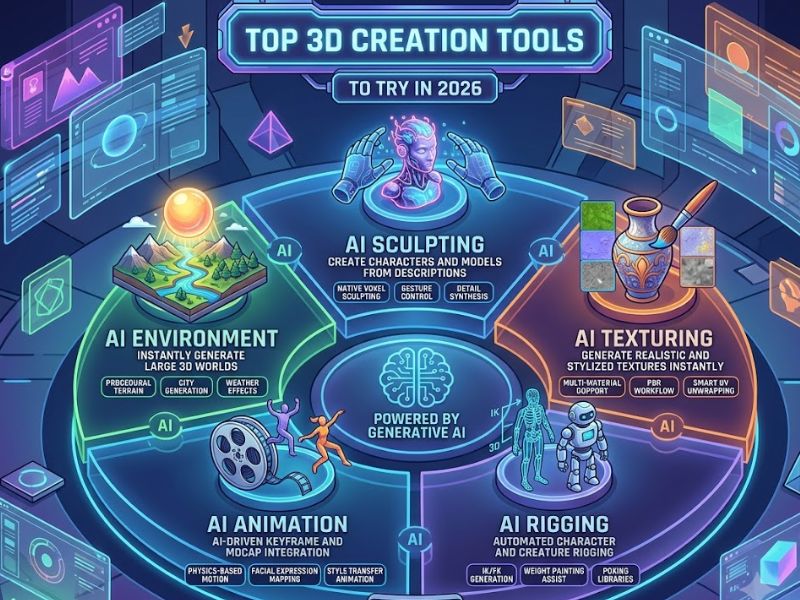
The demand for AI 3D Creation has grown rapidly as businesses, designers, game developers, architects, and content creators look for faster and smarter ways to produce high-quality 3D models. Instead of spending hours or even days creating objects from scratch, modern AI-powered tools can generate detailed 3D assets in just a few minutes. Whether you are building games, creating virtual reality experiences, designing products, or producing marketing visuals, AI 3D Creation tools help improve productivity while maintaining impressive quality. In 2026, these platforms have become more powerful than ever, offering advanced features such as text-to-3D generation, image-to-3D conversion, automatic texture creation, and real-time editing.
Why AI 3D Creation Is Becoming So Popular
The rise of AI 3D Creation is transforming the creative industry because it makes professional-quality 3D design accessible to everyone. In the past, creating realistic models required years of experience with complex software. Today, AI simplifies the entire workflow by automating repetitive tasks and generating models from simple prompts or reference images. This allows beginners to produce professional results while helping experienced artists complete projects much faster. Companies also benefit from reduced production costs, shorter development cycles, and increased creative flexibility.
Top AI 3D Creation Tools to Try in 2026
1. Meshy AI
Meshy AI has become one of the most popular platforms for creating 3D assets from text prompts and images. Users simply describe the object they want, and the AI generates a high-quality 3D model within minutes. It supports game development, virtual reality, animation, and product visualization. Meshy AI also includes automatic texture generation, making it an excellent option for creators who want realistic results with minimal effort.
2. Luma AI
Luma AI is widely recognized for turning photos and videos into detailed 3D models using advanced AI technology. The platform is especially useful for architects, designers, and digital artists who need realistic objects without spending hours modeling manually. Its intuitive interface makes it suitable for beginners while offering advanced features for professionals.
3. Spline AI
Spline AI combines collaborative design tools with artificial intelligence to simplify 3D creation. Designers can generate objects, edit scenes, and build interactive web experiences directly in their browser. Because it supports real-time collaboration, teams can work together efficiently on creative projects.
4. Kaedim
Kaedim specializes in converting 2D images into production-ready 3D models. Game developers and digital artists frequently use this platform to speed up asset creation without sacrificing quality. The software automatically generates clean geometry, helping creators reduce manual modeling time.
5. Masterpiece X
Masterpiece X offers AI-powered 3D generation for artists, game studios, and creative professionals. Users can generate, edit, and refine models with intuitive controls while maintaining full creative freedom. Its fast workflow makes it ideal for rapid prototyping and concept development.
6. Tripo AI
Tripo AI focuses on generating realistic 3D models from simple text descriptions. It produces highly detailed objects suitable for games, augmented reality, virtual reality, and e-commerce. The platform continues to improve with faster rendering and better texture quality.
7. Autodesk Fusion with AI Features
Autodesk continues to integrate AI into its professional design software. Fusion now includes intelligent design assistance, automated modeling suggestions, and optimized workflows that help engineers and product designers create complex models more efficiently.
Features to Look for in AI 3D Creation Tools
Choosing the right AI 3D Creation platform depends on your specific needs. The best tools should provide text-to-3D generation, image-to-3D conversion, realistic texture creation, fast rendering, multiple export formats, and compatibility with popular software like Blender, Unity, and Unreal Engine. Cloud-based access, collaboration features, and affordable pricing are also important factors when selecting the right platform.
Benefits of Using AI 3D Creation Tools

AI 3D Creation
Modern AI-powered 3D software offers numerous advantages for professionals and beginners alike. One of the biggest benefits is speed, allowing creators to generate assets much faster than traditional modeling methods. AI also reduces the learning curve, enabling users with limited experience to create professional-quality designs. Businesses can lower production costs, improve efficiency, and bring products to market more quickly. Additionally, AI-generated models can easily be refined and customized, providing greater flexibility throughout the creative process.
How to Choose the Right AI 3D Creation Tool
Before selecting a platform, consider your project goals and budget. If you primarily create game assets, tools like Meshy AI and Kaedim may be the best choice. For realistic environment scanning, Luma AI offers excellent capabilities. Designers who need browser-based collaboration may prefer Spline AI, while engineers and product designers can benefit from Autodesk Fusion’s AI-powered workflow. Beginners should prioritize platforms with simple interfaces, tutorials, and affordable subscription plans.
The Future of AI 3D Creation
The future of AI 3D Creation looks incredibly promising as artificial intelligence continues to evolve. Future tools are expected to generate even more realistic models, improve animation capabilities, automate rigging, and create complete 3D scenes from simple text prompts. As AI becomes more accurate and efficient, industries including gaming, architecture, healthcare, education, manufacturing, and e-commerce will increasingly rely on AI-powered 3D design solutions to accelerate innovation.
Conclusion
The rapid advancement of AI 3D Creation is changing the way digital assets are designed across multiple industries. Whether you are a beginner exploring 3D design or an experienced professional looking to streamline your workflow, today’s AI tools provide faster, smarter, and more efficient ways to create stunning 3D models. Platforms such as Meshy AI, Luma AI, Spline AI, Kaedim, Masterpiece X, Tripo AI, and Autodesk Fusion are leading the industry in 2026 by making professional-quality 3D creation more accessible than ever. As technology continues to improve, AI-powered 3D modeling will become an essential part of every creative workflow.
FAQs
1. What is AI 3D Creation?
AI 3D Creation is the process of using artificial intelligence to generate, edit, and enhance 3D models from text prompts, images, or other digital inputs.
2. Which AI 3D Creation tool is best for beginners?
Meshy AI, Spline AI, and Luma AI are excellent choices because they offer user-friendly interfaces and require minimal technical experience.
3. Can AI replace traditional 3D modeling?
AI can automate many tasks and significantly speed up modeling, but professional artists are still essential for creative direction, customization, and complex projects.
4. Are AI 3D Creation tools useful for businesses?
Yes. Businesses use AI-powered 3D tools for product design, marketing, gaming, architecture, e-commerce, virtual reality, and industrial visualization.
5. What industries benefit most from AI 3D Creation?
Gaming, animation, architecture, manufacturing, healthcare, education, e-commerce, product design, and virtual reality are among the industries benefiting the most from AI-powered 3D technology.

COMMENTS