
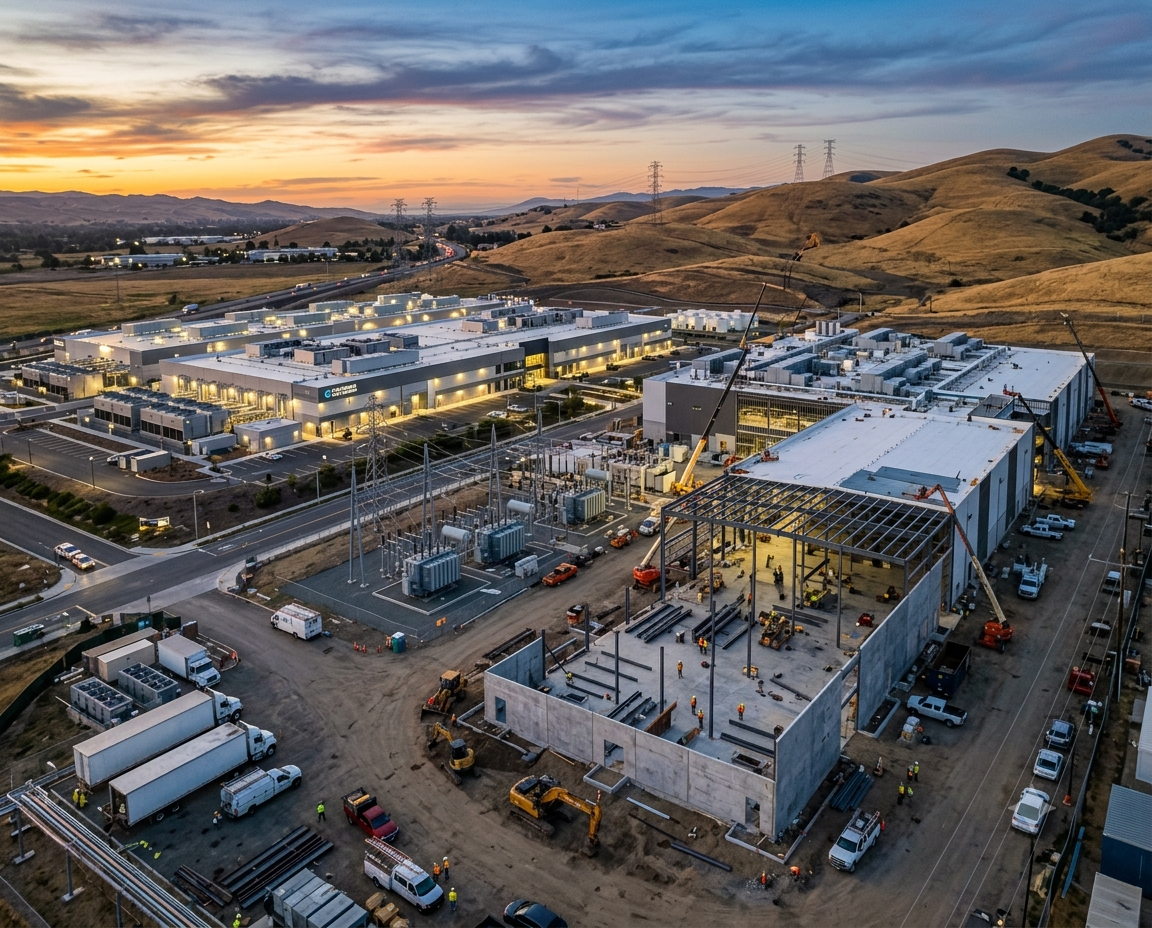
Introduction The rapid growth of artificial intelligence is reshaping the technology industry, creating an unprecedented demand for computing power a
Introduction
The rapid growth of artificial intelligence is reshaping the technology industry, creating an unprecedented demand for computing power and digital infrastructure. As AI applications become more advanced, businesses require faster processing, larger storage capacities, and highly reliable cloud services. In response, California data centers expand to support the growing needs of AI development, cloud computing, and enterprise digital transformation. Home to many of the world’s leading technology companies, California remains a strategic location for building next-generation data centers capable of powering the future of artificial intelligence.
Why California Is a Leading Data Center Hub
California has long been one of the world’s most important technology regions. Its proximity to major technology companies, research institutions, and innovation ecosystems makes it an ideal location for advanced data centers.
Several factors contribute to California’s leadership:
- Strong technology infrastructure
- Access to skilled professionals
- High demand for cloud services
- Large enterprise customer base
- Robust internet connectivity
- Innovation-focused business environment
These advantages continue to attract investment in new data center projects.
The Growing Impact of Artificial Intelligence
Artificial intelligence requires enormous computing resources. AI models process vast amounts of data, perform billions of calculations, and rely on powerful graphics processing units (GPUs).
AI applications include:
- Generative AI
- Machine learning
- Natural language processing
- Computer vision
- Predictive analytics
- Autonomous systems
As these technologies become more sophisticated, organizations need scalable infrastructure capable of supporting increasingly complex workloads.
How Data Centers Support AI Infrastructure
Modern AI infrastructure depends heavily on high-performance data centers.
These facilities provide:
High-Performance Computing
Advanced servers process AI workloads efficiently.
Massive Data Storage
Large-scale storage systems manage enormous datasets required for AI training.
Reliable Networking
High-speed networking enables rapid communication between computing resources.
Continuous Availability
Redundant systems ensure uninterrupted service for mission-critical applications. These capabilities form the foundation of modern artificial intelligence.
The Role of Cloud Computing
Cloud computing has become one of the primary drivers of data center expansion.
Cloud platforms allow businesses to:
- Access computing resources on demand
- Scale infrastructure quickly
- Reduce hardware investments
- Improve collaboration
- Support remote work
- Deploy AI applications globally
Rather than maintaining expensive on-premises hardware, organizations increasingly rely on cloud providers to meet growing computational demands.
Expansion Trends in California Data Centers
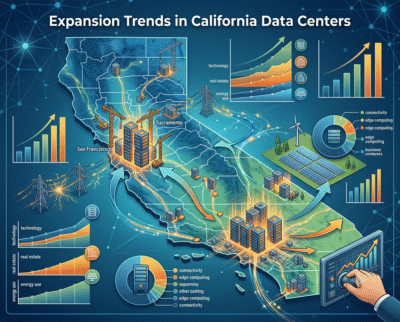
California data centers expand
The continued growth of AI has accelerated investments in California’s digital infrastructure.
Current expansion trends include:
Larger AI-Optimized Facilities
New facilities are designed specifically to support AI processing and GPU-intensive workloads.
Edge Computing
Smaller regional data centers reduce latency for real-time applications.
Sustainable Infrastructure
Operators invest in energy-efficient cooling systems and renewable energy sources.
Modular Construction
Modular designs enable faster deployment and easier expansion. These trends help organizations meet increasing customer demands while improving operational efficiency.
Sustainability and Energy Efficiency
Data centers consume significant amounts of electricity, making sustainability an important priority.
Many California facilities are adopting:
- Renewable energy sources
- Liquid cooling technologies
- AI-powered energy optimization
- Water-efficient cooling systems
- Carbon reduction initiatives
Sustainable infrastructure helps reduce environmental impact while supporting long-term growth. Energy efficiency also lowers operating costs for data center operators.
Benefits for Businesses
The expansion of California data centers provides several advantages for organizations.
Faster AI Development
Greater computing capacity accelerates AI model training.
Improved Cloud Performance
Businesses gain access to faster and more reliable cloud services.
Enhanced Scalability
Organizations can increase computing resources as demand grows.
Better Disaster Recovery
Modern data centers improve business continuity through redundant infrastructure.
Stronger Security
Advanced facilities offer enterprise-grade physical and cybersecurity protections. These benefits enable businesses to innovate more quickly and operate more efficiently.
Challenges Facing Data Center Expansion
Despite strong demand, expanding AI infrastructure presents several challenges.
These include:
- Rising energy consumption
- Land availability
- Construction costs
- Skilled workforce shortages
- Environmental regulations
- Grid capacity limitations
Addressing these challenges requires collaboration between technology companies, utility providers, and government agencies. Long-term planning will be essential for sustainable growth.
Future of AI Infrastructure
The future of AI will require even greater computing capabilities.
Emerging trends include:
- AI-specific processors
- Quantum computing research
- Advanced cooling technologies
- Automated infrastructure management
- Hybrid cloud environments
- Greater edge computing adoption
California is expected to remain a global leader in supporting these technological advancements. Continued investment in digital infrastructure will help drive innovation across multiple industries.
Conclusion
As artificial intelligence continues transforming business and society, California data centers expand to provide the computing power required for next-generation applications. Through investments in advanced data centers, scalable cloud computing, and powerful AI infrastructure, California remains at the forefront of digital innovation.
Organizations that rely on AI, machine learning, and cloud services will benefit from these infrastructure improvements through greater performance, scalability, and reliability. As technology continues to evolve, California’s expanding data center ecosystem will play a vital role in supporting the future of artificial intelligence and the global digital economy.
FAQs
1. Why are California data centers expanding?
California data centers are expanding to meet increasing demand for AI computing, cloud services, and enterprise digital infrastructure.
2. How do data centers support artificial intelligence?
Data centers provide the processing power, storage, networking, and reliability needed to train and run AI models.
3. What role does cloud computing play in AI?
Cloud computing gives organizations scalable access to high-performance infrastructure without requiring expensive on-premises hardware.
4. Why is sustainability important for modern data centers?
Sustainable technologies reduce energy consumption, lower operating costs, and minimize environmental impact while supporting growing computing demands.
5. What is the future of AI infrastructure?
Future AI infrastructure will include more powerful processors, energy-efficient data centers, advanced automation, edge computing, and improved cloud technologies.

COMMENTS